
13 Common Jade Plant Problems: Fixes for Indoor Crassula Ovata
13 Common Jade Plant Problems: Fixes for Indoor Crassula Ovata
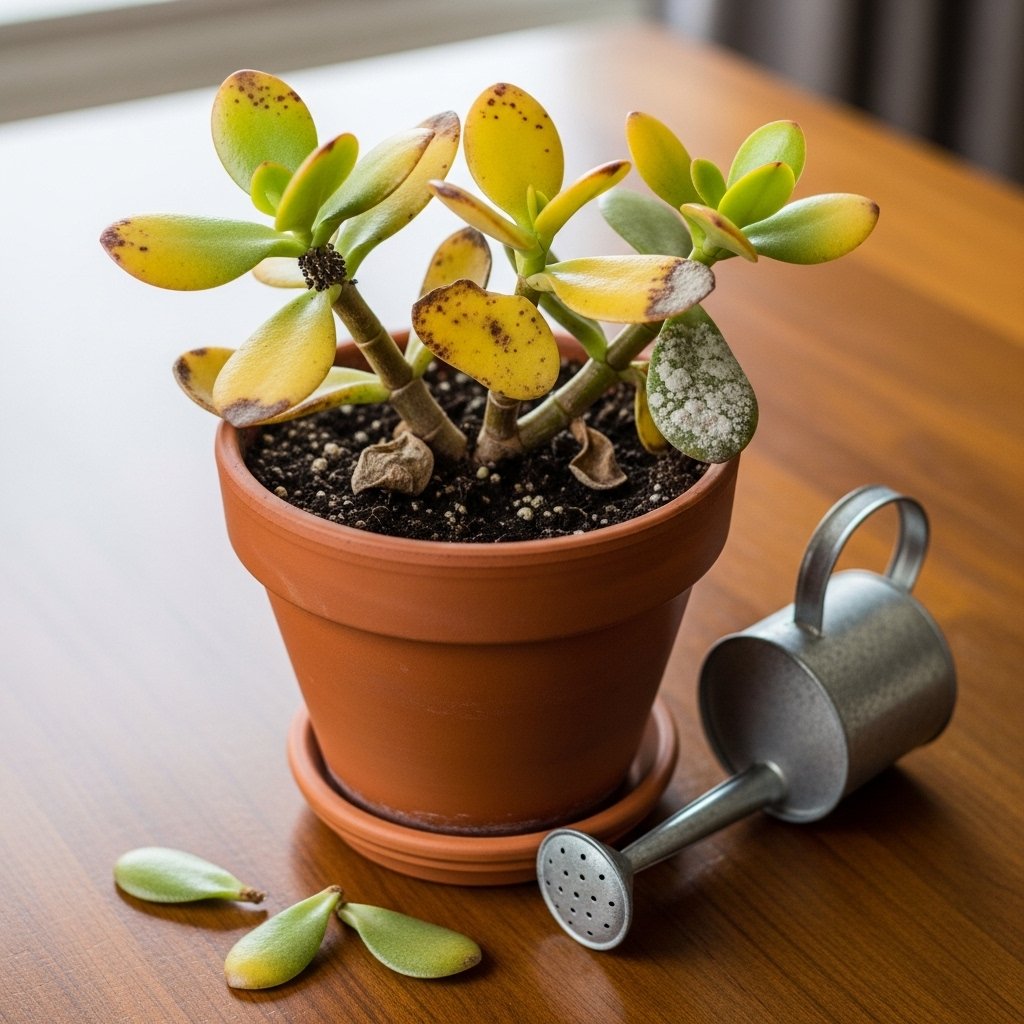
Jade plants (Crassula ovata) thrive as low-maintenance succulents indoors, but issues like overwatering or insufficient light can cause problems. This guide covers all 13 frequent problems with practical, expert fixes to restore your plant’s health.
Shriveled Leaves
Shriveled or wrinkled leaves mean your jade plant needs water. The leaves become less plump as they use up the moisture stored in dry soil.
Before watering, check if the soil is dry about two inches down. When you water, do it deeply until the water drains out. With regular deep watering every 2-3 weeks, your plant should recover quickly.
If the leaves have yellow edges and wrinkles, you may be overwatering. Let the soil dry out completely before watering again.
Soft, Mushy Leaves
Mushy or squishy leaves usually mean your jade plant has been overwatered or the soil doesn’t drain well. Too much moisture can rot the plant and cause leaves to fall off easily.
Stop watering right away and take off any mushy leaves. Repot your plant in a gritty, fast-draining soil mix with perlite to help with airflow.
Make sure your pot has drainage holes to keep water from sitting at the bottom. Standing water is one of the main reasons jade plants die.
Yellowing Leaves
Yellow leaves on jade plants are often caused by overwatering, which can lead to root rot. Jade plants, like most succulents, do not like wet roots.
Pick up the pot—if it still feels heavy even though the top looks dry, wait before watering. You can also use a moisture meter to check the soil.
Too much fertilizer can also turn leaves yellow. Only use half-strength fertilizer in the spring.
Black Leaves or Spots
Black leaves or spots usually indicate severe root rot caused by consistently wet soil. Fungal infections can also cause stems to become mushy.
Take the plant out of its pot, cut off any black roots with clean scissors, and rinse the healthy roots in a mix of water and hydrogen peroxide. Let the roots dry, then repot in fresh soil.
Pests like aphids can cause sooty mold, which shows up as black spots. Wipe the leaves with neem oil once a week to help.
Brown Leaves
Brown leaves on jade plants can be caused by too little or too much water, or by too much sun. Dry edges indicate underwatering, while brown from the center is usually due to overwatering and rot.
Water your plant well, then let the soil dry out completely before watering again. If you want to give it more light, do it slowly by adding an extra hour of brightness each day.
High humidity or cold drafts can worsen browning. Try to keep the temperature steady between 50 and 70°F.
Brown Spots on Leaves
Small brown spots on jade leaves can be caused by bumps or by pests that suck sap. If pests are the cause, you might see yellow rings around the spots.
Check the undersides of the leaves for pests. If you see mealybugs, dab them with an alcohol swab. Carefully trim off any damaged leaf tips.
Sunburn can also cause spots. If your plant is getting direct sunlight, move it to a spot with indirect light.
Red Leaves or Edges
A red tint on jade leaves is a normal sign of stress from strong sunlight or small nutrient shortages. This color helps protect the plant from too much light.
You can enjoy the red color for its brightness, or give the plant a little more shade if you want it to turn green again. Keep watering and feeding it regularly.
Cold weather or not enough phosphorus can also make leaves turn red. Use fertilizer sparingly during the growing season.
White Spots on Leaves
White specks on jade leaves are usually salt left behind when tap water dries. You can wipe them off easily.
Wipe the leaves with a damp microfiber cloth once a week. For the long term, try using filtered or rainwater instead of tap water.
Too much fertilizer can leave salts in the soil. Flush the soil with plain water once a month to remove them.
White Fluff on Leaves
Fluffy white patches on your jade plant could indicate mealybugs or powdery mildew. Pests hide in the fuzz, and mildew grows in humid, still air.
Spray the plant thoroughly with neem oil, and repeat every 5 days. Use a fan to improve airflow around your plant.
Keep any affected plants away from your other houseplants to stop pests or mildew from spreading indoors.
Leaf Drop
If your jade plant suddenly drops its leaves, it could be due to overwatering, insufficient light, or sudden cold. Overwatering is the most common cause.
To help your plant recover, only water when the soil is completely dry, keep it in bright but indirect light, and make sure the temperature stays above 50°F.
With steady care, your jade plant should start growing new leaves again in a few weeks.
No New Growth
Jade plants may stop growing if they don’t get enough sunlight or if their roots are crowded. It’s normal for them to grow slowly indoors.
Give your jade plant at least six hours of bright, indirect light or morning sun each day. If the roots are circling the pot, repot it once a year.
Don’t use too much fertilizer. Feed your jade plant with a diluted succulent fertilizer no more than twice a year.
Leggy or Stretched Stems
If your jade plant has long, thin stems, it’s probably reaching for more light. Not enough light makes the plant grow weak and stretched out.
Move your plant to a south-facing window or use grow lights for 12 to 14 hours each day. Turn the plant once a week to keep it growing evenly.
Trim back the long, thin stems to help your jade plant grow fuller and bushier.
No Flowers
Jade plants grown indoors rarely bloom unless they receive certain triggers, such as a little dryness or cooler nights. The plant also needs to be mature before it can flower.
In the fall, water your plant a little less, let nighttime temperatures drop to 50°F, and make sure it gets plenty of sun. If the leaves turn red, that’s a sign it’s getting enough light.
A pot with crowded roots can help your jade plant form flower buds. If your plant is blooming, don’t repot it.
FAQs
Why are my jade plant leaves shriveled?
Underwatering causes shriveled leaves; water deeply when the soil is fully dry.
How do I fix yellow leaves on a jade plant?
Yellowing from overwatering; let the soil dry out completely before next watering.
What causes mushy leaves in jade plants?
Overwatering leads to mushy rot; repot immediately in well-draining soil.
Why is my jade plant dropping leaves?
Stress from water imbalance or cold; stabilize light and temps above 50°F.
How to get rid of white spots on jade?
Salt buildup from water; wipe leaves and use filtered water ongoing.