
Foolproof Standing Prime Rib Roast
Foolproof Standing Prime Rib Roast
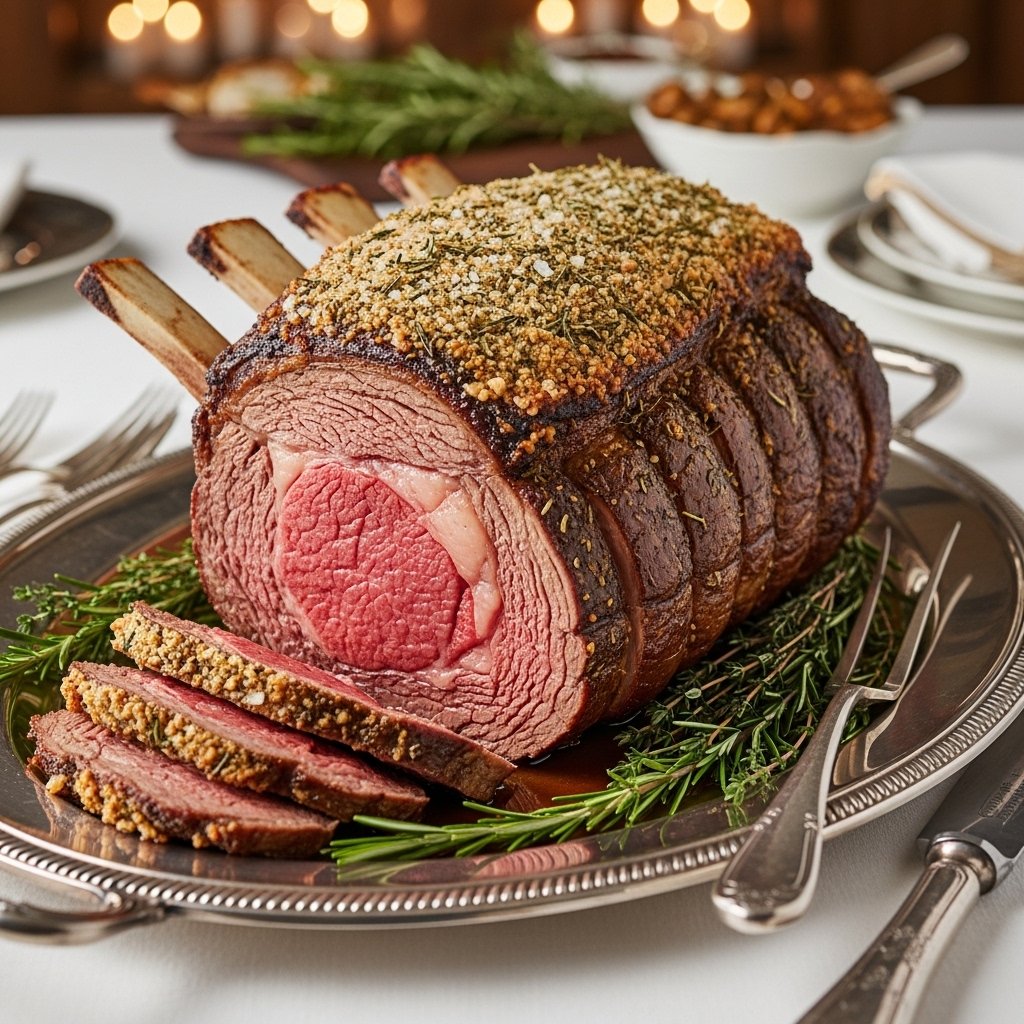
A standing prime rib roast is one of the most impressive—and surprisingly simple—main courses you can serve for Christmas, New Year’s, or any special gathering. Using a no-fuss, no-peek roasting method inspired by Paula Deen, you get a beautifully browned crust and a juicy, tender interior with very little hands-on time.
This guide walks you through choosing the roast, making the signature seasoning, following the no-peek oven method, and serving it with confidence.
Ingredients and Essential Equipment
Prime Rib and Seasoning
- 1 standing rib roast (5–6 lb), bone-in
- Bone-in is preferred for richer flavor and moisture.
- 1 tablespoon “house seasoning” (or more to taste)
House Seasoning Mix
- ¼ cup salt
- ¼ cup black pepper
- ¼ cup garlic powder
Mix well and store any extra in an airtight container for future use.
Recommended Equipment
- Large roasting pan
- Roasting rack (to elevate the roast)
- Oven thermometer (to verify oven temperature accuracy)
- Meat thermometer (for internal temp)
- Sharp carving knife and carving fork
How to Choose the Perfect Standing Rib Roast
For the best prime rib:
- Go bone-in:
The bones help insulate the meat, retain moisture, and add flavor. - Look for marbling:
Fine streaks of white fat running through the meat indicate tenderness and flavor. - Check color and fat cap:
- Meat should be a bright, vibrant red.
- Fat cap should be creamy white and firm, not yellowed or dry.
Ask your butcher for a well-marbled roast from the rib section, sized to your guest count (about 1–1.5 pounds per person for bone-in, including bone weight).
Step-by-Step “No-Peek” Standing Prime Rib Roast
1. Bring the Roast to Room Temperature
- Remove the roast from the refrigerator at least 1 hour before roasting.
- Letting the roast sit at room temperature promotes more even cooking and better tenderness.
If it’s very large or your kitchen is cool, you can allow up to 1½–2 hours, but don’t leave it out for an extended time beyond that.
2. Season Generously
- Pat the roast dry with paper towels.
- Rub the entire surface (all sides and ends) with house seasoning, pressing it into the meat.
- Be generous—this seasoning forms a flavorful crust.
Optional flavor boosts:
- Make small slits in the meat and tuck in sliced or whole garlic cloves.
- Sprinkle with chopped fresh rosemary or thyme over the fat cap.
- Add a light dusting of smoked paprika for deeper color and subtle smokiness.
3. Preheat the Oven and Prepare the Pan
- Preheat your oven to 375°F (190°C).
- Place a roasting rack inside a large roasting pan.
- Position the roast bone-side down, fat-side up on the rack.
Fat-side up allows the fat to baste the meat as it cooks.
4. Start the Roast (High-Heat Phase)
- Place the pan in the preheated oven.
- Roast uncovered at 375°F for 1 hour.
This initial high-heat stage:
- Helps develop a deep brown crust.
- Starts rendering the fat and locking in juices.
5. The No-Peek Slow Cooking Phase
- After the first hour, turn the oven off.
- Do not open the oven door. Leave the roast inside the closed oven for 3 hours.
During this time:
- Residual heat continues to slowly cook the roast.
- The temperature equalizes from edge to center, helping achieve even doneness.
Resist the urge to open the door; even a quick peek lets out a significant amount of heat and can affect the final result.
6. Final Heat Blast Before Serving
About 30–45 minutes before serving time:
- Turn the oven back on to 375°F (190°C) with the roast still inside.
- Roast again until the exterior is hot and the crust is refreshed.
Use a meat thermometer inserted into the thickest part (avoiding bone) to confirm internal temperature.
Doneness Guide for Prime Rib
Use these temperature ranges as a guide; pull the roast a few degrees before your target, as it will rise slightly while resting.
| Doneness | Final Internal Temperature | Appearance |
|---|---|---|
| Rare | 120–125°F (49–52°C) | Bright red, very juicy |
| Medium-rare | 130–135°F (54–57°C) | Warm red center |
| Medium | 140–145°F (60–63°C) | Pink center |
| Medium-well | 150–155°F (65–68°C) | Slight hint of pink |
| Well done | 160°F+ (71°C+) | Brown throughout |
For most holiday tables, medium-rare to medium (about 130–140°F) is the sweet spot.
7. Rest and Carve
- Take the roast out of the oven and transfer it carefully to a carving board.
- Loosely tent with foil and let it rest for 10–15 minutes.
Resting:
- Allows juices to redistribute through the meat.
- Helps prevent slices from drying out once cut.
Carving options:
- For dramatic presentation:
- Slice between the ribs to serve bone-in pieces.
- For easier serving:
- Cut the rib bones away in one piece using a sharp knife.
- Slice the boneless roast into ½–1-inch thick slices.
- You can serve the bone section separately or use it for stock.
Expert Tips and Troubleshooting
- Let it rest at each stage:
- Before roasting (to remove chill) and after roasting (to retain juices).
- Check oven accuracy:
- If your oven runs hot or cool, a small oven thermometer inside can help you adjust and get repeatable results.
- Bone-in vs. boneless:
- Bone-in roasts hold heat and moisture better and bring extra flavor.
- Boneless can still be delicious—just monitor internal temperature closely.
- If you peeked or opened the door:
- Don’t panic.
- Expect the roast to be slightly less cooked at the end of the no-peek phase.
- Use your thermometer and allow extra time in the final roasting stage to reach your desired doneness.
- Seasoning flexibility:
- House seasoning is a great base, but you can add herbs, mustard, or even a light smear of softened butter under the seasoning for a richer crust.
Side Dishes and Sauces That Pair Beautifully
Prime rib shines with classic, rich accompaniments. Consider:
- Creamy horseradish sauce or horseradish cream
- Yorkshire pudding or popovers
- Garlic mashed potatoes or potato gratin
- Roasted root vegetables (carrots, parsnips, potatoes, beets)
- Green beans, asparagus, or Brussels sprouts
- Red wine jus or simple pan au jus
- Crisp Caesar salad or a simple green salad with vinaigrette
A mix of rich sides and a fresh, acidic salad keeps the meal balanced.
Presentation and Serving Suggestions
For a show-stopping centerpiece:
- Place the whole roast on a large platter.
- Garnish with fresh rosemary or thyme sprigs, roasted garlic bulbs, or halved roasted onions.
- Carve at the table so guests can see the crust and rosy interior.
- Serve slices alongside small pitchers of jus or sauce so each person can customize.
Storing and Reheating Leftover Prime Rib
Storing
- Cool leftovers slightly, then refrigerate promptly.
- Wrap tightly or store in an airtight container.
- Use within 3–4 days for best quality.
Reheating Without Drying Out
- Preheat oven to 275°F (135°C).
- Place slices in a shallow baking dish, adding a spoonful of broth or pan juices.
- Cover with foil and warm gently until just heated through.
Avoid high heat or prolonged microwave reheating, which can toughen the meat.
Leftover Ideas
- Prime rib sandwiches with horseradish or garlic aioli
- Steak and eggs or breakfast hash
- Stir-fries with vegetables and rice
- Beef and vegetable soup using the bones for broth
FAQs
1. How do I select the right size standing prime rib roast?
Choose about 1 pound per adult, or 2 ribs for every 3 guests.
2. Should I cover the roast while it cooks?
No, cook uncovered for the best crust and flavor.
3. Can I prepare this recipe ahead of time?
It’s best freshly roasted, but leftovers warm up beautifully.
4. How long should I let the roast rest?
Let it rest for at least 30 minutes so juices redistribute.
5. What’s the best way to reheat leftover prime rib?
Warm slices gently in a 250°F oven, covered with foil to prevent drying.