
Cat Peeing on Bed: Top Reasons and Proven Solutions to Stop It
Cat Peeing on Bed: Top Reasons and Proven Solutions to Stop It
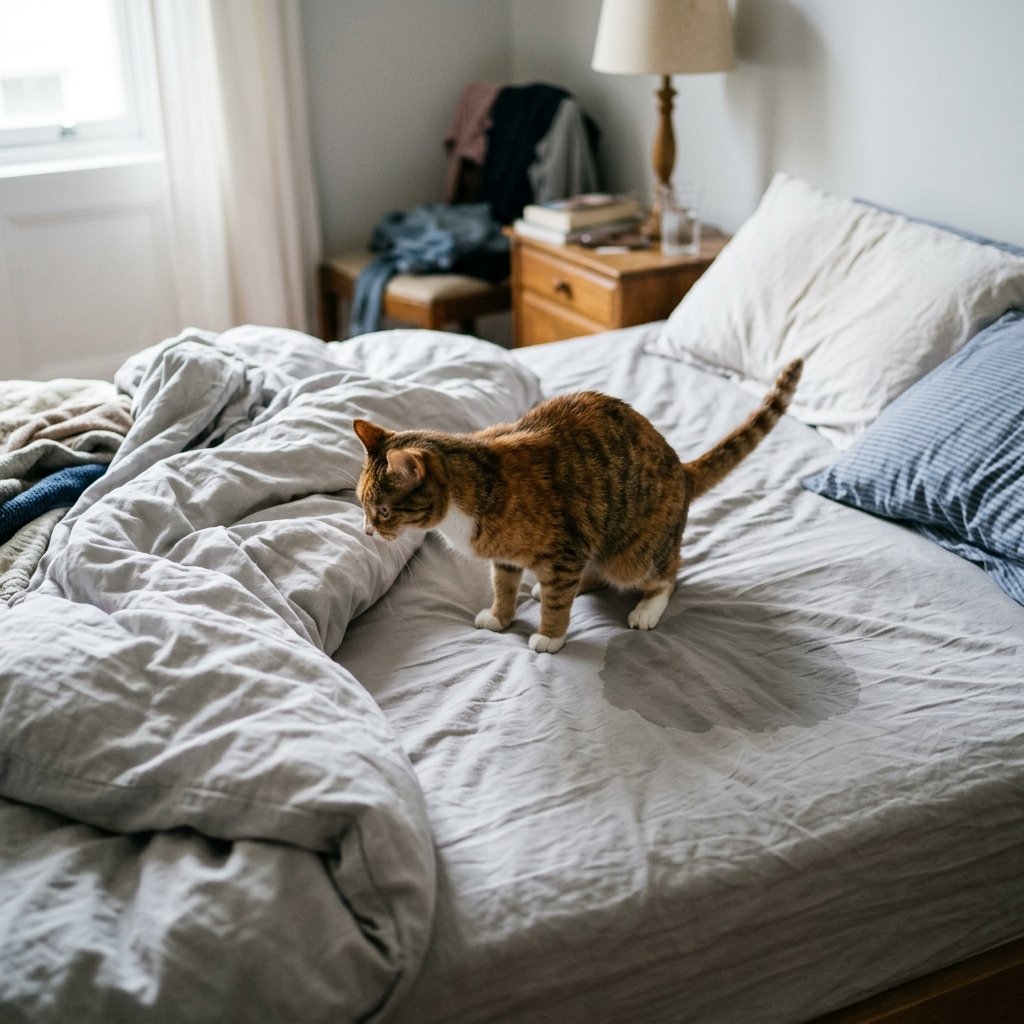
Cat peeing on the bed is one of the most frustrating problems cat guardians face, but it’s almost always a solvable one when you understand the “why” behind the behavior. This guide walks you through the main reasons it happens and gives you practical, step‑by‑step solutions you can start using today.
Understanding Why Cats Pee On the Bed
Before you can fix the problem, you need to understand that your cat is not being “spiteful.” Cats communicate and cope with stress through scent and litter box habits. When a cat pees on your bed, it’s usually because:
- Something is wrong medically.
- Something feels unsafe or stressful in their environment.
- Something about the litter box setup is bothering them.
Your goal is to become a detective: rule out health issues first, then look at behavior and environment.
Medical Causes You Must Rule Out (Non‑Negotiable)
Why Health Issues Come First
Any sudden change in litter box behavior can be a symptom of an underlying medical problem. Ignoring this and treating it as “bad behavior” can delay treatment and make your cat suffer in silence.
Common Medical Reasons
- Urinary tract infection (UTI)
UTIs can cause pain, urgency, and the sensation of needing to pee frequently. A soft, absorbent bed may feel more comfortable than a hard litter box when peeing hurts. - Bladder stones or crystals
These can cause inflammation, blood in the urine, pain, and even life‑threatening urinary blockages (especially in male cats). - Feline lower urinary tract disease (FLUTD)
This is an umbrella term for various conditions affecting the bladder and urethra. Stress often makes FLUTD worse. - Kidney disease or diabetes
Cats may drink and urinate more, leading to accidents because they simply can’t hold it as well or don’t make it to the box in time.
Warning Signs That Need a Vet Immediately
- Straining to pee but producing little or no urine.
- Crying out in pain when using the box.
- Licking the genital area excessively.
- Blood in the urine.
- Repeated trips to the box or random spots with small urine amounts.
If you see any of these signs, treat it as urgent: male cats, in particular, can develop a blocked urethra, which is an emergency.
What To Do
- Schedule a vet visit as soon as you notice bed peeing, especially if it’s new.
- Ask for a urinalysis and, if recommended, blood work or imaging.
- Follow treatment instructions carefully and keep the litter area calm and clean during recovery.
Behavioral and Emotional Reasons
If your vet rules out medical issues, the next likely cause is behavioral or emotional. Cats are sensitive; your bed is where your scent is strongest, and that makes it an emotional “safe zone.”
Stress and Anxiety
Common stressors include:
- New pets or people in the home.
- Changes in schedule (new job, night shifts, travel).
- Moving to a new house or rearranging furniture.
- Loud noises (construction, fireworks, parties).
- Tension between household cats or other animals.
In a stressed cat, peeing on the bed can be:
- A way to self‑soothe by mixing their scent with yours.
- A way to mark territory when they feel insecure.
- A reaction to feeling unsafe near the litter box.
Territorial or Social Conflicts
- Multi‑cat homes may have silent tensions—staring, blocking, chasing.
- One cat may ambush another on the way to or from the litter box, making the bed feel like the “safer” option.
Changes in Routine and Attachment
Some cats pee on the bed when:
- Their primary person is away more often.
- There has been a breakup, a new partner, or a roommate change.
- A new baby arrives or attention patterns shift.
Your scent on the bed becomes a comfort object. Peeing there is often about anxiety, not mischief.
Litter Box Problems (The Silent Culprit)
Even a healthy, emotionally stable cat may pee on the bed if they don’t like something about the litter box.
Common Litter Box Mistakes
- Not enough boxes
General rule: number of cats + 1. Two cats = at least three boxes. - Box location issues
- Placed in noisy, high‑traffic areas (next to washer, dryer, loud bathroom).
- Near food and water bowls (many cats dislike this).
- In places where another pet can corner or ambush them.
- Litter box type
- Covered boxes may trap odors and feel cramped.
- High‑sided boxes may be tough for senior or arthritic cats.
- Tiny boxes may not allow comfortable turning and digging.
- Litter issues
- Strongly scented litters can be overwhelming.
- Abrupt changes in brand or texture.
- Very deep or very shallow litter levels.
- Cleanliness
Some cats will avoid boxes if there are even 1–2 clumps in them, especially in multi‑cat homes.
How Cats “Vote” With Their Paws
If your cat uses the box sometimes but the bed other times, they might be telling you:
- “I like this type of litter, but not that box location.”
- “I use the box when it’s clean, but when it’s dirty, I go to the bed.”
- “I’m afraid of being trapped near that one box.”
Step‑By‑Step Solutions: How To Stop Bed Peeing
Step 1: Protect and Manage the Bed
While you work on the underlying cause, prevent new accidents and protect your mattress.
- Use a waterproof mattress protector.
- Add washable bed covers or throw blankets as the top layer.
- When not in use, you can keep the bedroom door closed if possible.
- Alternatively, lay a shower curtain liner under your sheets for extra protection.
This doesn’t fix the cause, but it stops the situation from getting worse and reduces frustration.
Step 2: Deep Clean Any Soiled Areas
Cats have a powerful sense of smell. If they can still detect urine, they’re more likely to go there again.
- Immediately blot up fresh urine; don’t rub.
- Use an enzymatic cleaner specifically designed for pet urine.
- Avoid ammonia‑based products—ammonia smells like urine to a cat.
- Wash bedding with an enzyme laundry additive if possible.
- Let everything dry completely before remaking the bed.
Step 3: Optimize the Litter Box Setup
Think in terms of “more options, less stress.”
- Add more boxes
Place them in different, quiet locations. Spread them out so one cat can’t “guard” them all. - Experiment with open vs. covered
Many cats prefer large, open boxes with plenty of space. - Adjust litter type and depth
- Try a fine‑grained, unscented clumping litter.
- Start with about 5–7 cm depth and adjust based on your cat’s behavior.
- Improve cleanliness
- Scoop at least once or twice daily.
- Wash the boxes with mild soap and water every 1–2 weeks.
Watch which boxes your cat prefers. That’s valuable feedback about what they like.
Step 4: Reduce Stress and Build Security
Create a calmer, more predictable world for your cat.
- Establish a predictable routine
Feed, play, and interact at roughly the same times daily. - Provide safe spaces
- Cat trees, shelves, or window perches for vertical territory.
- Cozy hideouts (cat beds, boxes, covered resting spots).
- Use play to drain tension
Daily interactive play (wand toys, chasers) helps reduce anxiety and builds confidence. - Consider calming aids
- Synthetic feline pheromone diffusers or sprays.
- Calming treats or supplements (after vet approval).
- Manage multi‑cat tensions
- Provide multiple feeding stations and water bowls.
- Ensure each cat has separate resting areas.
- Increase vertical territory so cats can avoid each other.
Step 5: Gently Rebuild Positive Associations With the Bed
If your cat is medically cleared and your litter setup is better, you can help them see the bed as a “no bathroom” zone again.
- Temporarily change the bed’s function
- During the retraining period, you can place a clean litter box near (not on) the bed if accidents still happen, then gradually move it farther away.
- Spend calm, positive time with your cat on or beside the bed (petting, treats, quiet play) so it becomes a relaxation area instead of a toilet.
- Avoid punishment
Never yell, hit, or rub their nose in urine. This increases fear and stress, making the problem worse and damaging trust.
Expert Tips To Fix and Prevent Bed Peeing
1. Keep a Behavior Journal
Track:
- When the accidents happen (time of day).
- What was happening right before (loud noise, visitor, other pet interaction).
- Any changes in food, litter, or routine.
Patterns in your notes can reveal triggers you may not notice day‑to‑day.
2. Think Like a Cat: Safety First
Ask yourself for every location:
- “Do I feel trapped here?”
- “Is something noisy or scary nearby?”
- “Can another animal block the exit?”
If a spot feels exposed or unsafe to you, it likely does to your cat too. Adjust accordingly.
3. Make the Litter Box the Best Option in the House
Your goal is to make the box more attractive than the bed:
- Clean, quiet, easy to access, and comfortable.
- No strong smells (neither urine nor heavy perfumes).
- Enough boxes so there’s never a “line.”
4. Reward Good Litter Habits
You don’t have to hover, but:
- When you see your cat use the box, calmly offer praise or a small treat afterward.
- Over time, the box becomes associated with positive attention.
5. When To Call a Behaviorist
If:
- Your vet has cleared medical issues.
- You’ve improved the litter boxes and reduced stress.
- The bed peeing still continues or worsens.
Then a certified feline behaviorist can:
- Evaluate your home layout and routines.
- Spot subtle stressors and cat‑to‑cat dynamics.
- Create a tailored behavior modification plan.
Frequently Asked Questions (FAQ)
Why did my cat suddenly start peeing on my bed?
A sudden change almost always has a cause. Common triggers include:
- A new medical issue causing pain or urgency.
- A recent stressor (move, new pet, schedule change).
- A change in litter, litter box, or cleaning routine.
Start with a vet exam, then review any changes in your home over the last few weeks.
Is my cat peeing on the bed out of spite?
No. Cats don’t understand “revenge” the way humans do. What feels like spite is usually pain, fear, or confusion. Viewing it as communication rather than misbehavior helps you respond more effectively.
My cat only pees on my partner’s side of the bed—why?
This can be about scent and social dynamics:
- Your cat may feel less familiar or secure with that person’s scent.
- There may have been a recent change (partner moved in, started staying over).
- Sometimes it’s simple coincidence based on where the cat jumps up.
Focus on helping your cat form positive associations with that person through gentle play, treats, and calm interactions.
How long will it take to stop my cat from peeing on the bed?
It depends on the cause:
- Medical issues may improve quickly once treated, though habits can take time to change.
- Behavioral and stress‑related issues may take weeks to a few months of consistent work.
Consistency is key; small, steady improvements usually lead to success.
Should I confine my cat to one room?
Temporary confinement can help in some cases, especially during medical recovery or retraining, but it must be done thoughtfully:
- The room should have a comfortable bed, litter boxes, food, water, and enrichment.
- Never use confinement as punishment; think of it as a safe retreat.
- Gradually reintroduce your cat to the full home once habits improve.
Conclusion
A cat peeing on the bed is distressing, but it’s also a powerful signal that something is wrong—physically, emotionally, or environmentally. By calmly ruling out medical issues, improving the litter box setup, reducing stress, and rebuilding positive associations with the bed, you can almost always resolve the problem. It takes patience and consistency, but the payoff is a happier, more secure cat and a dry, peaceful bed again.