
Coffee Grounds for Plants: A How-To Guide
Coffee Grounds for Plants: A How-To Guide
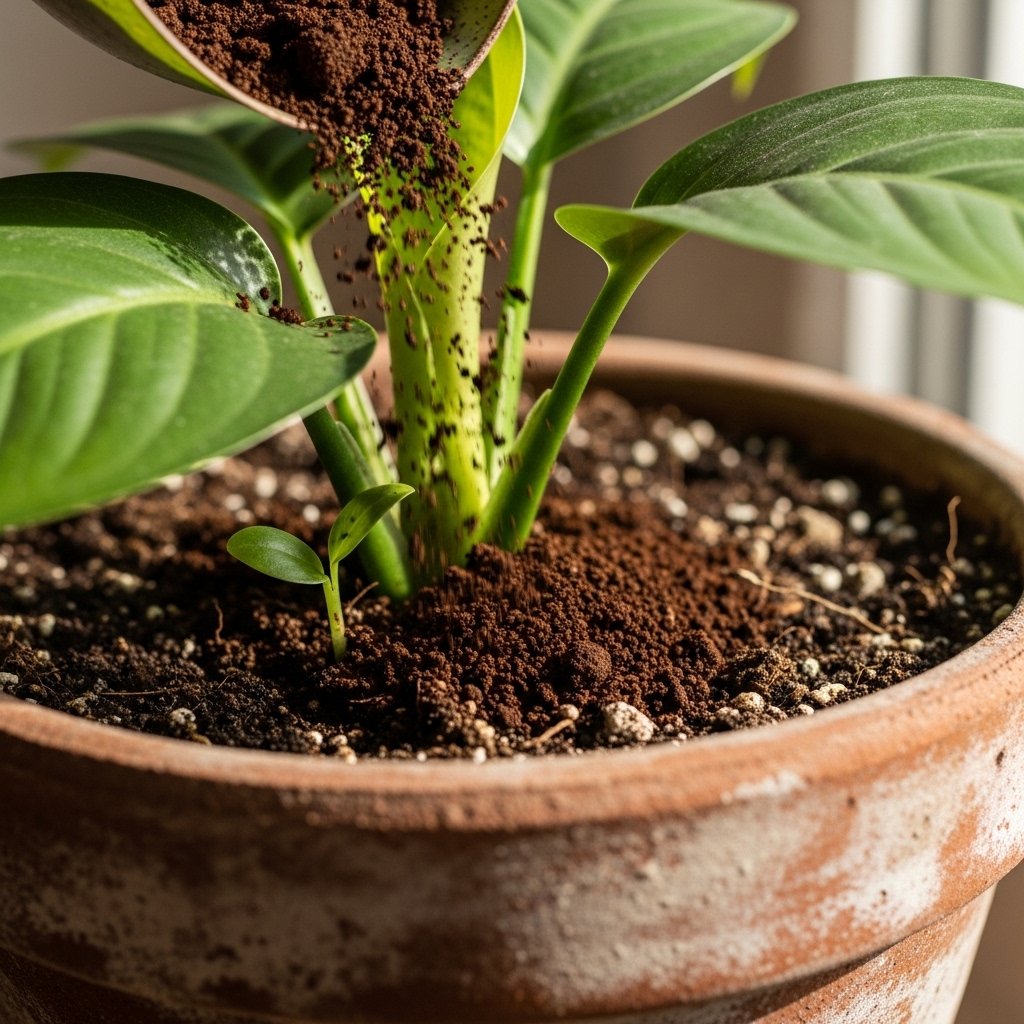
If you garden long enough, someone will eventually tell you to “just throw your coffee grounds on the soil—plants love them.” It sounds wonderfully simple and sustainable, but the truth about coffee grounds for plants is far more nuanced. Research and extension trials show they can improve soil, boost compost, and even deter slugs—but used the wrong way, they can stunt growth, repel water, and stress sensitive plants. In this guide, we’ll unpack the real benefits and risks, then walk through precisely how to use coffee grounds in gardens, containers, and indoor plants without sabotaging your soil.
Coffee Grounds for Plants: The Short Answer
Used coffee grounds can be a helpful soil amendment and compost ingredient when applied in thin layers or well mixed with other organic matter—but they are not a complete fertilizer and can inhibit growth if overused or applied as a thick surface layer. After brewing, the grounds are close to pH neutral, so they won’t significantly acidify your soil, and their nitrogen content is released only as they decompose.
Put simply: coffee grounds are best treated as a supplement to good soil and compost, not a magic fix or standalone feed.
What’s Actually in Coffee Grounds?
Understanding what you’re adding to the soil makes it much easier to use coffee wisely.
- Nutrients: Used grounds contain nitrogen plus smaller amounts of potassium and magnesium, but they’re low in key nutrients like phosphorus and calcium. That means they help as part of a wider fertility plan but can’t replace a balanced fertilizer.
- Organic matter: The coarse particles help improve soil structure, aeration, and water retention when mixed into compacted or sandy soils.
- Caffeine and other compounds: Coffee plants evolved caffeine to suppress competition; in high concentrations, it can inhibit seed germination and slow root growth in nearby plants.
This cocktail of benefits and potential drawbacks explains why some gardeners swear by coffee grounds while others see nothing but stunted seedlings; it all comes down to dose, placement, and timing.
Myth vs Reality: Do Coffee Grounds Acidify Soil?
One of the most persistent myths is that dumping coffee grounds around your plants will dramatically lower soil pH for acid-lovers like blueberries and azaleas.
Here’s what research and lab tests show:
- Fresh grounds test mildly acidic, often around pH 5–5.5.
- Used/brewed grounds usually fall between pH 6.5 and 6.8—close to neutral.
- Any pH change in soil from adding grounds is typically small and short-lived as the material breaks down.
Extension specialists are clear: coffee grounds alone will not reliably acidify soil, and you should not depend on them to maintain low pH for acid-loving plants. If you need genuine acidification, you’re better off with sulfur, acid-forming fertilizers, or dedicated ericaceous compost.
The Proven Benefits of Coffee Grounds (When Used Correctly)
1. Improving Soil Structure and Water Balance
When mixed into the top layer of soil or potting mix, coffee grounds can:
- Help loosen compacted soils and improve aeration.
- Enhance water-holding capacity for moisture-loving plants in dry climates.
They are especially useful in beds where you struggle with heavy, cloddy soil that drains poorly, or very sandy soil that dries out too fast—provided you blend grounds with other organic matter rather than using them alone.
2. Feeding Soil Life
Like other nitrogen-rich organic materials, coffee grounds support microbial activity and can boost earthworm populations in balanced compost or soil. Healthy microbial life improves nutrient cycling and can reduce some soil-borne disease pressure over time.
3. Compost Powerhouse (When Balanced Correctly)
In composting terms, coffee grounds are a “green”—a nitrogen-rich component similar to fresh grass clippings. A widely recommended ratio for compost piles is roughly:
- 1 part coffee grounds
- 1 part fresh grass clippings
- 3 parts “browns” like dry leaves, cardboard, or shredded paper.
Used in these proportions, coffee grounds break down readily and help produce a fine, nutrient-rich compost that you can safely add to most beds and containers.
4. Mild Pest Deterrent
Some trials and anecdotal reports suggest caffeine in coffee grounds can deter slugs and snails when sprinkled lightly around vulnerable seedlings. This effect isn’t bulletproof, but it can be a useful, low-toxicity addition to an integrated pest management approach.
The Risks: How Coffee Grounds Can Harm Plants
Used carelessly, coffee grounds can do more harm than good.
1. Growth Suppression and Poor Germination
Multiple reports and at least one controlled study show coffee grounds can inhibit seed germination and stunt growth when mixed into soil at high rates or applied fresh and uncomposted. Caffeine and other allelopathic compounds are likely responsible.
That means you should avoid using coffee grounds:
- Directly in seed trays or around very young seedlings.
- In high concentrations in potting mixes for delicate plants.
2. Water-Repellent Crust on Soil
One of the most common practical problems is that dried coffee grounds on the surface can clump together and form a dense, water-resistant layer. This crust can:
Experts recommend never applying more than a very thin “dusting” of grounds as a surface mulch, and raking or mixing them in with other materials rather than leaving them as a solid layer.
3. Unbalanced Nitrogen and Microbial Effects
Because coffee grounds are moderately high in nitrogen, too much can skew your soil towards leafy growth at the expense of flowers and fruits, especially for crops like tomatoes or ornamentals. In addition, strong concentrations can temporarily tie up nitrogen as microbes decompose the material, causing short-term deficiency symptoms.
There’s also evidence that while coffee grounds may suppress some harmful fungi and bacteria, they can also reduce beneficial species if used excessively. Moderation and dilution are key.
Exactly How to Use Coffee Grounds for Plants (Safely)
1. In the Compost Pile
This is the safest, most broadly recommended use.
- Add coffee grounds as a “green” ingredient, not more than about 20–25% of the total volume.
- Balance with plenty of “browns” like leaves, straw, or shredded cardboard.
- Mix well to avoid wet pockets that can go anaerobic.
Once fully composted, the resulting material has far lower caffeine levels and can be applied generously to beds without the same risk of growth inhibition.
2. Mixed into Garden Soil
When you want to use coffee grounds directly in beds:
- Limit to thin applications, typically no more than about 0.5–1 cm (1/4–3/8 inch) total per season, worked into the top 5–8 cm of soil.
- Always combine with other organic matter (compost, leaf mold) instead of using grounds alone.
- Keep them away from seedlings and freshly sown areas.
This approach lets you tap into the structural and microbial benefits without provoking the downsides of high concentration.
3. As a Light Mulch or Top Dressing
If you want to top-dress around established shrubs, perennials, or trees:
- Sprinkle a very light layer—no more than about 3 mm (1/8 inch).
- Immediately mix or rake it into existing mulch or soil so it doesn’t form a crust.
- Keep a small gap around the stem or trunk to avoid moisture sitting right against plant tissue.
Think of it as dusting, not paving.
4. As a Dilute “Coffee Tea”
Some gardeners like to steep grounds in water and use the liquid as a gentle feed.
A common method is:
- Add about 2 cups of used grounds to 5 gallons (roughly 19 liters) of water.
- Steep overnight, then strain and use to water containers or garden beds.
This produces a very dilute nutrient solution, less likely to inhibit growth than raw grounds, although it is still a supplement rather than a complete fertilizer.
Which Plants Like (or Tolerate) Coffee Grounds?
Because pH change is minor, the question is less “acid-loving or not?” and more “mature, robust plant or fragile seedling?”
Generally more tolerant (in small amounts, mixed into soil or compost):
- Established shrubs and perennials (roses, hostas, many ornamentals).
- Leafy edibles like lettuce and spinach, when composted material is used.
- Moisture-loving plants needing better water retention, such as primroses and canna lilies, again with composted or well-blended grounds.
Use extreme caution or avoid around:
- Seedlings and germinating seeds of any type.
- Very sensitive or slow-growing species that react poorly to allelopathic compounds.
If in doubt, test coffee grounds on a small area first, observe for a few weeks, and only scale up if growth remains vigorous.
Coffee Grounds for Houseplants: Special Considerations
Indoor plants live in much smaller soil volumes, so any imbalance hits harder. For houseplants, most experts recommend:
- Using only well-composted grounds, not fresh ones.
- Applying sparingly—mixed into potting soil during repotting, or as an occasional, very light top-dressing.
- Watching closely for fungus gnats or mold, which can thrive in constantly moist, organic-rich top layers.
If you’re new to using coffee grounds, it’s usually safer to reserve them for the compost bin rather than sprinkling them directly on your philodendron.
FAQ Section
1. Are coffee grounds good fertilizer for plants?
Not by themselves; coffee grounds contain nitrogen and some minerals but lack key nutrients like phosphorus and calcium, so they work best as a supplement within a broader fertilization plan.
2. Will coffee grounds make my soil more acidic?
Used coffee grounds are close to neutral in pH, and research shows any acidifying effect is small and short-lived, so they won’t significantly lower soil pH for acid-loving plants.
3. Can coffee grounds harm plants?
Yes, if overused; thick layers can repel water, and high concentrations or fresh grounds can inhibit seed germination, stunt growth, and disrupt soil microbes.
4. What is the safest way to use coffee grounds in the garden?
The safest approach is to add them to compost as a nitrogen-rich “green,” balanced with plenty of browns, then use the finished compost in beds and containers.
5. How much coffee grounds is too much?
Extension sources note that piling on thick layers can “ruin” a raised bed; keep grounds to under about 20–25% of compost volume and use only thin, well-mixed additions in soil or as surface dressings.