
How To Get Rid Of Fleas On Kittens
How To Get Rid Of Fleas On Kittens
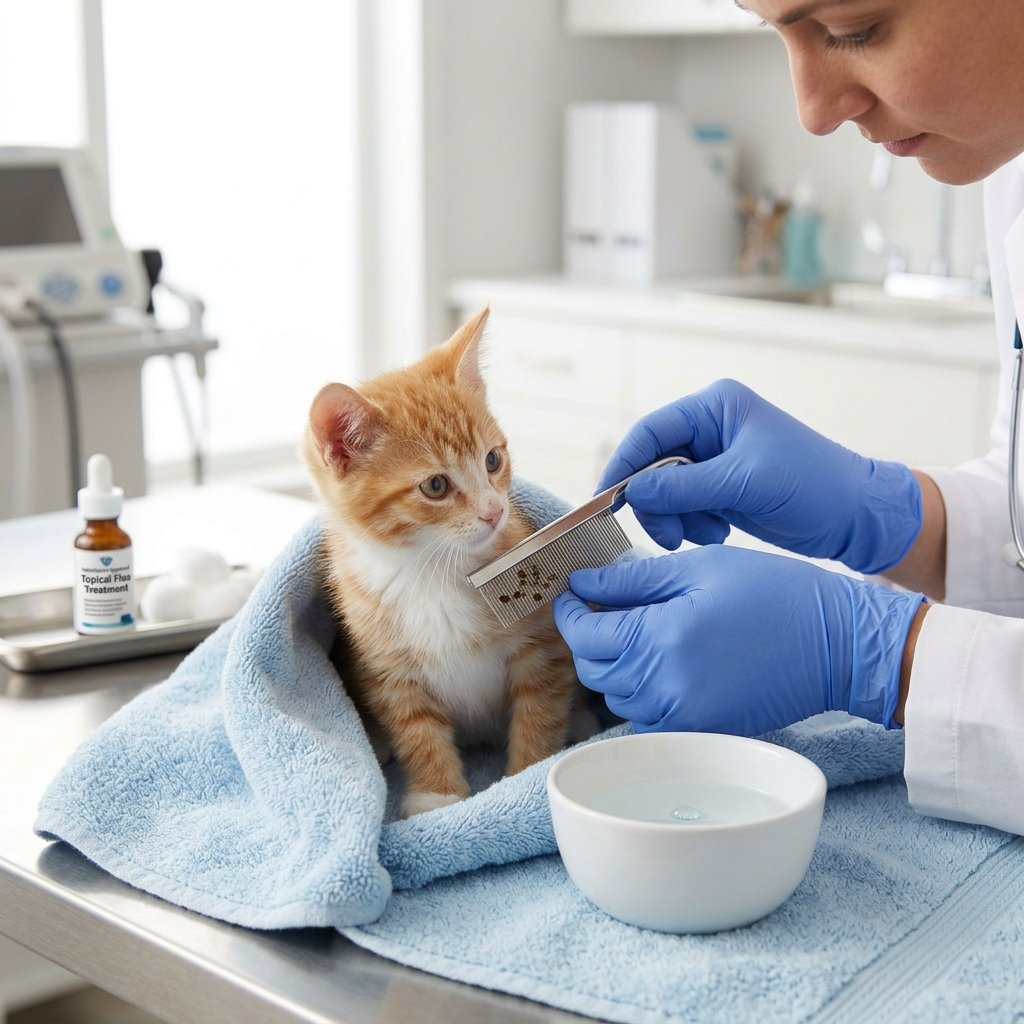
Fleas on kittens are serious because they can cause anemia, weakness, and even death in very young or tiny kittens, so you need to act quickly but gently—and avoid most chemical flea products until your vet says they are safe. The safest approach combines careful bathing and combing for the kitten with thorough cleaning of bedding and the home environment.
Understanding Fleas on Kittens
Fleas are tiny blood-sucking parasites that live on your kitten’s skin, hide in the fur, and lay eggs in your home. Because kittens are small and still developing, even a moderate number of fleas can remove enough blood to cause anemia and make them very sick.
You may see fast-moving dark brown specks (fleas) or “flea dirt,” which looks like black pepper at the base of the fur, especially along the back and tail. If you put flea dirt on a damp paper towel and it turns reddish, that means it is digested blood from fleas.
Step 1: Check Your Kitten Safely and Confirm Fleas
How to look for fleas
- Gently run your fingers or a fine flea comb through your kitten’s fur, focusing on the neck, belly, groin, and base of the tail.
- Look for tiny moving insects and black specks of flea dirt at the skin level.
- Use a white towel or paper towel under the kitten to better see anything that falls off as you comb.
If you see live fleas or flea dirt, you need to start treatment right away, but in a way that is safe for your kitten’s age and weight.
Watch for signs of anemia or serious illness
Call a vet urgently if your kitten has:
These can be signs that fleas have already caused serious blood loss or infection.
Step 2: Know What Is Safe by Age (Avoid Most Chemicals in Young Kittens)
Kittens do not tolerate chemicals like adult cats do, and many flea products that are safe for adults are dangerous or deadly for kittens.
General age guide (always confirm with your vet)
- Under 8 weeks: No standard over-the-counter topical flea treatments or flea collars; focus on baths and combing (“mechanical” removal).
- Around 8–12 weeks: Some prescription spot-on products may be used under vet guidance only.
- Over 12 weeks: You can usually start using vet-recommended topical treatments, oral treatments, or collars designed for kittens of that age and weight.
Never use:
- Dog flea products on cats (can be fatal).
- Essential oils or home oil remedies (many are toxic to cats).
- Random supermarket sprays or powders not clearly labeled and dosed for kittens, unless your vet approves.
Some vets may prescribe specific kitten-safe products like low-dose selamectin (for “kittens under 5 pounds”), but this must only be done on veterinary direction.
Step 3: Bathing Kittens to Remove Fleas (Mechanical Removal)
For very young kittens, the main safe way to get rid of fleas is mechanical: gentle bathing plus flea combing.
How to safely bathe a kitten with fleas
Vet and rescue guidelines suggest these steps:
- Use warm (not hot) water in a sink or small tub; test on your wrist first.
- Use a mild, unscented dish soap, kitten-safe shampoo, or baby shampoo—no harsh flea shampoos for tiny kittens unless your vet approves.
- Make a ring of soapy water around the kitten’s neck first, to stop fleas from escaping to the head.
- Gently lather the body from the neck down, including under legs, tail, and between toes, but avoid eyes, nose, mouth, and ears.
- Keep the whole bath under about 2 minutes to prevent chilling and stress.
- Rinse thoroughly with clean warm water until all soap is gone.
- Immediately towel dry the kitten and then keep them warm; you can carefully use a low, distant hair dryer that moves back and forth, or just warm towels, depending on what your kitten tolerates.
For very small kittens, warming afterwards is critical because they can easily become hypothermic after a bath.
Step 4: Comb Out Fleas and Flea Dirt
Bathing kills or loosens many fleas, but combing helps remove the rest.
Using a flea comb properly
- Use a fine-toothed flea comb and gently comb through the fur in sections, focusing on the neck, back, tail base, and belly.
- Keep a bowl of warm water with a bit of dish soap next to you.
- Each time you catch fleas on the comb, dip the comb into the soapy water to drown them so they do not jump back onto your kitten.
Mechanical removal may need to be repeated daily or every couple of days in heavy infestations, especially in very young kittens who cannot yet use chemical treatments.
Step 5: Clean the Environment (Bedding, Home, and Other Pets)
Only a small percentage of fleas are actually on the kitten; most are in the environment as eggs, larvae, and pupae. If you do not treat the surroundings, fleas will keep coming back.
In your home
- Wash all kitten bedding, blankets, and washable soft toys in hot water and dry them thoroughly.
- Vacuum carpets, rugs, and upholstery thoroughly and frequently; empty the vacuum bag or canister outside immediately.
- Pay extra attention to areas where the kitten sleeps or hides.
- For serious infestations, your vet may recommend a home spray or fogger that is safe for cats; follow directions carefully and remove pets during treatment.
Other pets in the home
Adult cats and dogs can act as flea hosts and bring fleas back to your kitten.
- Speak to your vet about safe flea treatment for all other pets in the household.
- Never use dog flea products on cats; ingredients like permethrin can be highly toxic.
When and How to Use Vet-Prescribed Flea Treatments
Once your kitten reaches the safe age/weight threshold, your vet may add chemical flea treatment to keep them protected long term.
Vet options may include
- Prescription spot-on (topical) treatments specifically labeled for kittens of a given age and weight.
- Oral flea medications for older kittens, again only those labeled and dosed for their age and weight.
- Integrated parasite plans that also protect against worms and other pests.
Always:
- Check the label carefully for minimum age and weight.
- Follow your vet’s dosing schedule and do not combine products unless instructed.
Expert Tips for Dealing With Fleas on Kittens
- Treat the kitten and home together: Doing only baths or only home sprays will not solve the problem; you need both.
- Focus on warmth and safety for newborns: With tiny kittens, keeping them warm and avoiding harsh chemicals is more important than killing every flea instantly.
- Repeat gentle baths and combing rather than using unsafe products if your kitten is under 8–10 weeks old.
- Ask your vet before trying “home remedies” like essential oils, vinegar, or garlic; many popular internet remedies are dangerous for cats.
- Start a regular flea prevention plan once your vet says your kitten is old enough, so you do not have to face another heavy infestation.
FAQ: Getting Rid of Fleas on Kittens
Can I use normal flea drops or collars on a young kitten?
Most flea drops and collars are not safe for very young kittens; many should not be used under 8–12 weeks of age, so always follow the label and ask your vet.
How often can I bathe a flea-ridden kitten?
In serious infestations, you may need to give short, warm, gentle baths every few days, but watch carefully for chilling and stress, and talk to your vet if you are unsure.
Are essential oils safe for flea control on kittens?
No. Many essential oils are toxic to cats, and they should not be used directly on kittens or in strong diffusers as a flea “treatment.”
How long will it take to get rid of fleas completely?
Even with good treatment, it can take several weeks to break the flea life cycle because eggs and pupae in the home keep hatching, so you must keep cleaning and protecting your kitten consistently.
When should I see a vet urgently?
Seek urgent veterinary care if your kitten is very young, has pale gums, is very weak, is not eating, or if you feel overwhelmed by the infestation and home treatment is not working.
Conclusion and Call to Action
To safely get rid of fleas on kittens, match your approach to their age: use gentle baths and flea combing plus thorough home cleaning for very young kittens, and add vet-approved flea preventatives when they are old enough. Staying away from unsafe chemicals, watching closely for anemia, and working with your vet will help your kitten recover quickly and stay flea-free.