
How to Grow Butterfly Bushes Responsibly
How to Grow Butterfly Bushes Responsibly
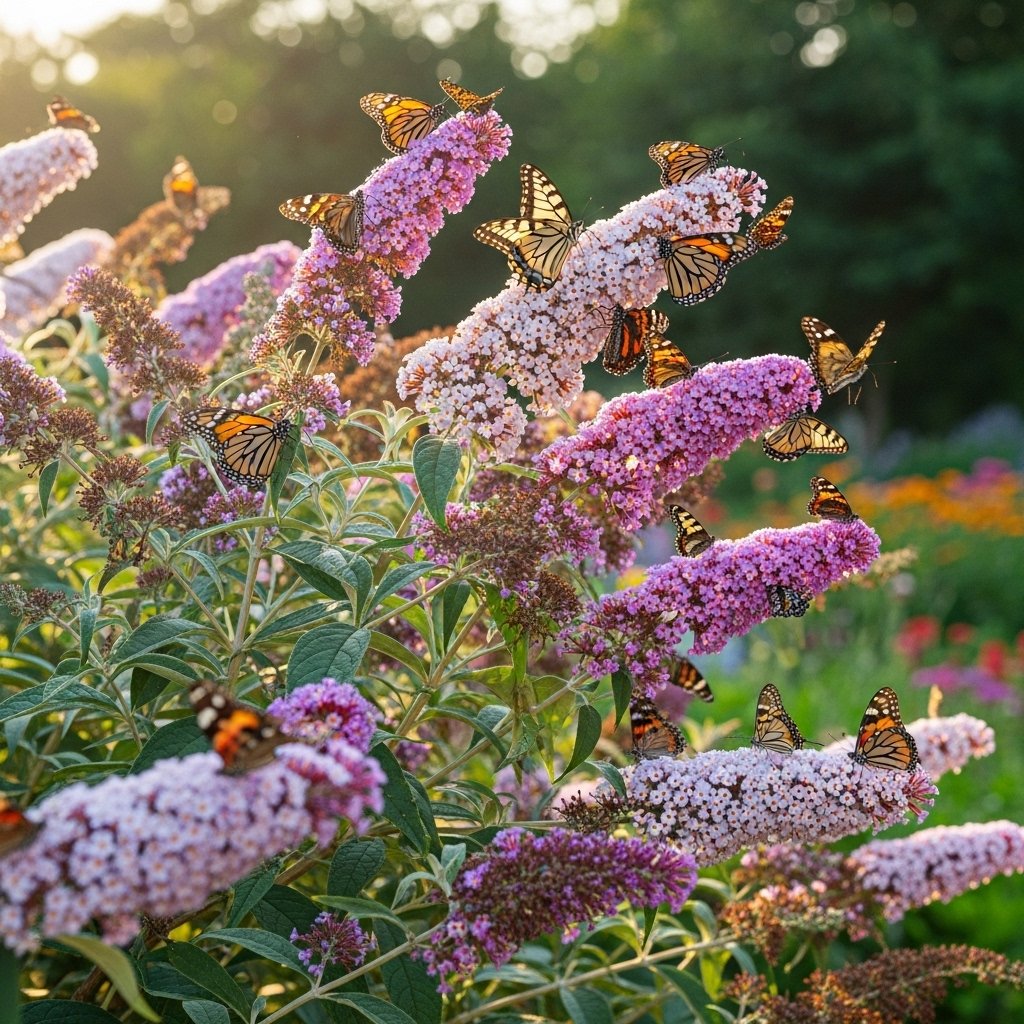
Butterfly bushes draw in pollinators with their sweet-smelling flowers. To keep them from spreading too much, choose sterile types.
When you grow butterfly bushes responsibly, you support your local ecosystem. This guide will show you how to plant, care for, and prune them properly.
Butterfly Bush Basics
Butterfly bush (Buddleja davidii) grows best in zones 5-9. Some varieties can also thrive in zone 10.
These plants range from 18 inches tall to 7 feet tall and wide.
They need full sun and bloom from summer until frost, displaying flowers in pink, purple, blue, orange, or white.
These shrubs are great at attracting butterflies, bees, and hummingbirds.
Non-Invasive Varieties
Pick sterile varieties, such as ‘Miss Molly’, which has red-pink flowers.
The ‘Lo & Behold’ series, such as ‘Blue Chip Jr.’ and ‘Pink Microchip’, stays compact at just 2 to 3 feet tall.
Pugster varieties give you bright colors and won’t spread by seed.
‘Asian Moon’ mimics ‘Black Knight’ with purple-orange blooms up to 7 feet.
Flutterby Petite Tutti Fruitti Pink is a good choice for borders, growing 2 to 3 feet tall with fuchsia flowers.
These varieties are 98-100% sterile and safe to plant in most areas.
Planting Butterfly Bushes
Plant butterfly bushes in spring or fall to give their roots time to settle in.
Select a spot with full sun and well-drained soil to help your butterfly bush bloom.
Dig holes twice as wide as the roots, add some compost, and plant so the top of the root ball is level with the ground.
Water deeply during the first season. New plants usually settle in after four to six weeks.
Space dwarf varieties about 2 feet apart and larger ones 4 to 5 feet apart.Soil and Site Needs
Butterfly bushes prefer average, well-drained soil with a pH between 6.0 and 7.5.
Keep them out of wet spots to prevent root rot.
Full sun helps the flowers retain their bright colors, while shade can cause the blooms to fade.
Test your soil and improve drainage if needed.
Watering and Fertilizing
Water your butterfly bush often during the first year to help its roots grow strong.
Once established, butterfly bushes can withstand dry periods, but provide extra water during hot weather.
In spring, use a small amount of slow-release fertilizer or compost.
Excessive fertilizer can cause the plant to produce more leaves than flowers.
If you live in a cold area, add mulch around the roots in winter to protect them.
Pruning Techniques
Prune late winter or early spring on new wood.
In cold climates, cut the plant back a lot. In milder areas, trim it lightly.
Remove dead stems, shape above buds for vigorous growth.
Dwarfs require minimal pruning; deadhead to promote rebloom.
Use sharp tools for clean cuts.
Pests and Diseases
Sterile butterfly bush varieties rarely have problems with pests or diseases.
Avoid using pesticides to avoid harming pollinators.
Monitor for aphids; gently hose off.
Making sure your soil drains well helps prevent root problems.
Garden Design Ideas
Plant larger butterfly bushes at the back of borders and smaller ones in the front.
Combine butterfly bushes with spring-blooming plants to enjoy color all season.
Plant butterfly bushes near patios so you can watch butterflies up close.
Butterfly bushes also work well in containers with other perennials.
Companion Plants
Include host plants such as milkweed, violets, and asters to support caterpillars.
Joe-Pye weed, coneflowers, and goldenrod extend the nectar supply.
Bee balm and lantana boost pollinator diversity.
Planting black cherry or spicebush helps support the entire life cycle of butterflies.
Invasive Concerns
Traditional Buddleia davidii invades the Pacific Northwest, coastal California, and the eastern US.
It crowds natives and alters soils.
Sterile types prevent seeding; check local bans.
If you have older butterfly bush varieties, remove spent flowers to prevent them from spreading.
Native Alternatives
Consider planting Orange Woolly Butterfly Bush, native to the Chihuahuan Desert.
Rio Grande and Utah Butterfly Bush are good native options for the Southwest.
Clethra alnifolia ‘Ruby Spice’ offers fragrant pink blooms.
Kobold Liatris or Fizzy Mizzy Sweetspire for compact natives.
These sustain local butterflies without risks.
FAQs
Are butterfly bushes deer-resistant?
Yes, deer rarely eat butterfly bushes, so they are a good choice for gardens without fencing.
Is butterfly bush toxic?
No, butterfly bushes are safe for people and pets, unlike butterfly weed, which is toxic.
When to prune butterfly bush?
Late winter or early spring, cutting to new buds on new wood.
What zones for butterfly bush?
Most butterfly bushes grow in zones 5 to 9, but some can grow in zone 10 if they get full sun and good drainage.
Best non-invasive butterfly bush?
Lo & Behold series or Pugster for sterile, compact growth.