
How to Harvest, Cure, and Store Butternut Squash
How to Harvest, Cure, and Store Butternut Squash
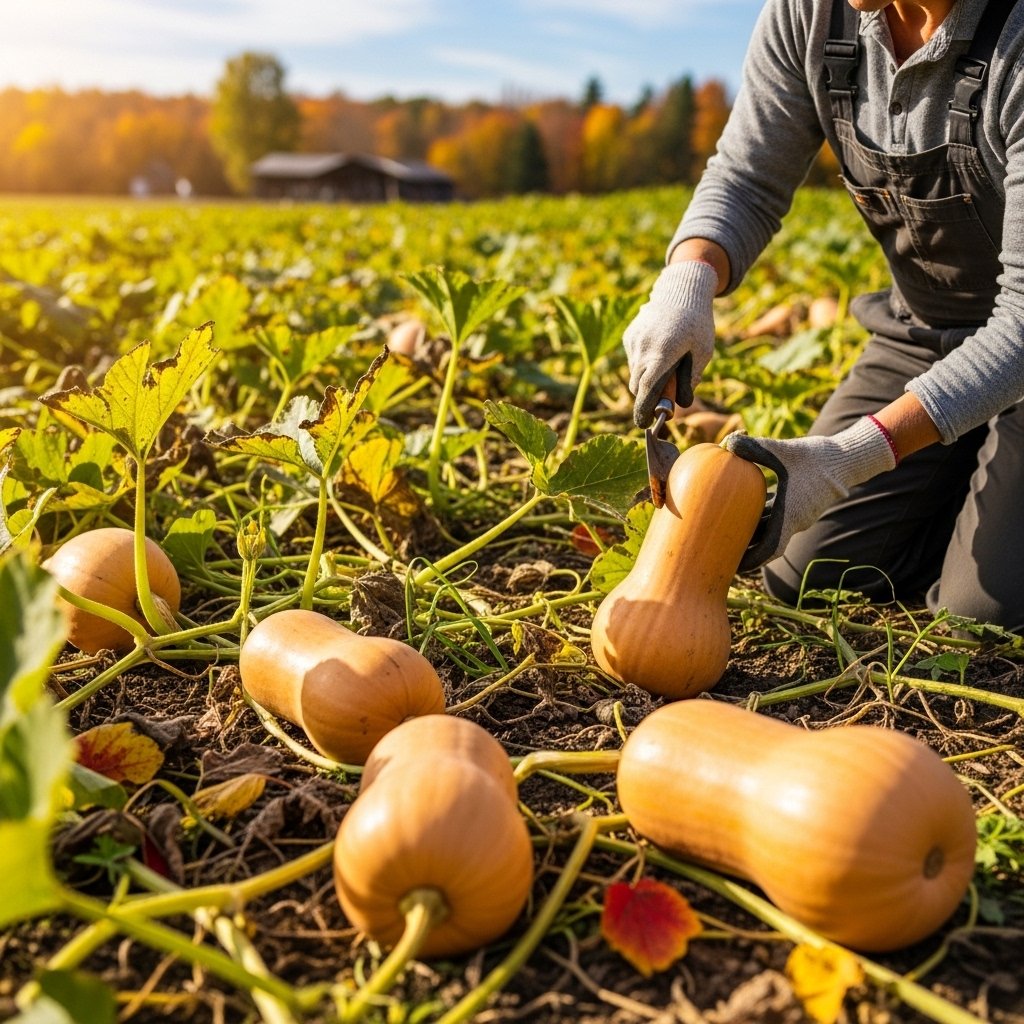
If you’re patient, butternut squash will reward you with sweet, nutty flesh that’s great for soups, roasts, and pies. Learning how to harvest, cure, and store it will help your crop last all winter.
Why Proper Handling Matters
Picking butternut squash when it’s fully ripe makes it taste better and helps it last up to six months. If you pick too soon, it won’t taste as good and will spoil faster. Curing helps heal cuts and toughens the skin, making it last longer.
Squash that isn’t fully mature won’t be as sweet because the starch hasn’t turned to sugar yet. If it gets too ripe, it can start to rot as the vine dies back. Use the tips below each fall to get it right.
Signs of Ripeness
Look for deep tan or beige skin fully covering the squash, free of green patches. The rind feels hard—press a thumbnail, and it won’t dent.
Check the stem: dry, brown, and corky, about 2-5 inches long. Vine leaves yellowing or wilting also signal maturity.
Tap the squash; if it sounds deep and hollow, it’s ready. Pick one up—it should feel heavy for its size, which means the flesh inside is dense and flavorful.
Ideal Harvest Timing
Plant butternut seeds after the last frost, and expect them to take 80 to 110 days to mature, depending on the variety. Plan to harvest from late summer through early fall, before the first frost damages the vines.
If you live in a warm climate, your squash will ripen faster. In cooler areas, it takes longer. Start checking your plants about 90 days after planting. For example, in southern India, places like Telangana harvest in October or November when it’s still warm.
Choose dry days to avoid moisture that encourages mold growth. With good care, one vine yields 4-6 squash.
Step-by-Step Harvesting
Use sharp pruners or a knife to cut the squash from the vine. Don’t pull it off. Cut the stem 2 to 5 inches above the fruit to help prevent rot.
Handle gently to prevent bruising, as bruised fruit shortens storage. Place in baskets, not piles. Harvest all if frost threatens, even slightly green ones—they’ll ripen off-vine.
Clean dirt with a dry cloth only—no water. Inspect for pests such as squash borers or powdery mildew; discard any damaged items.
Curing Process Explained
Curing makes the skin tougher, helps heal small cuts, and makes the flesh sweeter by letting some moisture evaporate. You can skip this step for acorn squash, but it’s essential for butternut squash.
Try to keep the squash at 80 to 85°F and about 80% humidity for 10 to 14 days. Indoors, use a warm room with a fan. Outdoors, choose a sunny, sheltered spot and turn the squash each day.
Skin darkens and hardens—ready when the thumbnail won’t pierce. Uncured squash lasts weeks; cured ones months.
How to Cure Effectively
Wipe squash dry post-harvest. Spread a single layer on screens or racks for airflow.
Rotate every 2-3 days for even drying. Cover loosely if dew forms. In humid areas, use fans and dehumidifiers as needed.
To check whether they’re cured, the rind should be very hard and the stem still attached. Once they’re ready, move them to storage.
Storage Best Practices
Store cured squash at 50-55°F, 50-75% humidity—basement or cool garage ideal. Single layer on shelves, stems up, with space between for air circulation.
Don’t put a whole squash in the fridge because it’s too cold and will dry them out. Check your stored squash every month and throw out any that are soft or moldy to protect the rest.
Stored this way, your squash can last three to six months. If you cut it up, keep the pieces in the fridge in an airtight container for four to five days.
Common Mistakes to Avoid
If you pick squash too early, the flesh will be stringy and watery. If you wait too long, pests or frost can damage it.
Short stems let bacteria in. Wet curing breeds mold—always dry start.
Stacking squash can bruise the bottoms, and poor airflow can make them rot. If you overcrowd them, they won’t last as long in storage.
Pests and Diseases Watch
Cucumber beetles spread bacterial wilt—handpick or row covers pre-bloom. Powdery mildew causes leaves to whiten; improve airflow; and, if severe, use a fungicide.
Vine borers tunnel into the stems, so slit the stem and remove any larvae you find. Rotate your crops each year. Healthy vines will give you a great harvest.
Delicious Ways to Use Your Harvest
Roast squash chunks for salads and top with a tahini dressing. You can also puree it for creamy soups or as a base for miso ramen.
Try stuffing squash halves with chickpeas for a tagine, or bake the nutty flesh into pies. It’s also great in vegan curries or as a spiced side dish.
FAQs
How do I know butternut squash is ready to harvest?
Deep tan skin, hard rind, dry brown stem signal ripeness—thumbnail won’t dent.
How long to cure butternut squash after harvest?
Cure 10-14 days at 80-85°F with good airflow for tough skin.
What’s the best storage temperature for butternut squash?
Keep at 50-55°F and 50-75% humidity in a dark, well-ventilated spot.
Can I eat butternut squash right after harvest?
Yes, but cure first for a sweeter flavor and longer life.
How long does cured butternut squash last?
Up to 3-6 months if stored cool, dry, and uncrowded.