
How to Get Rid of Whiteflies Naturally
How to Get Rid of Whiteflies Naturally
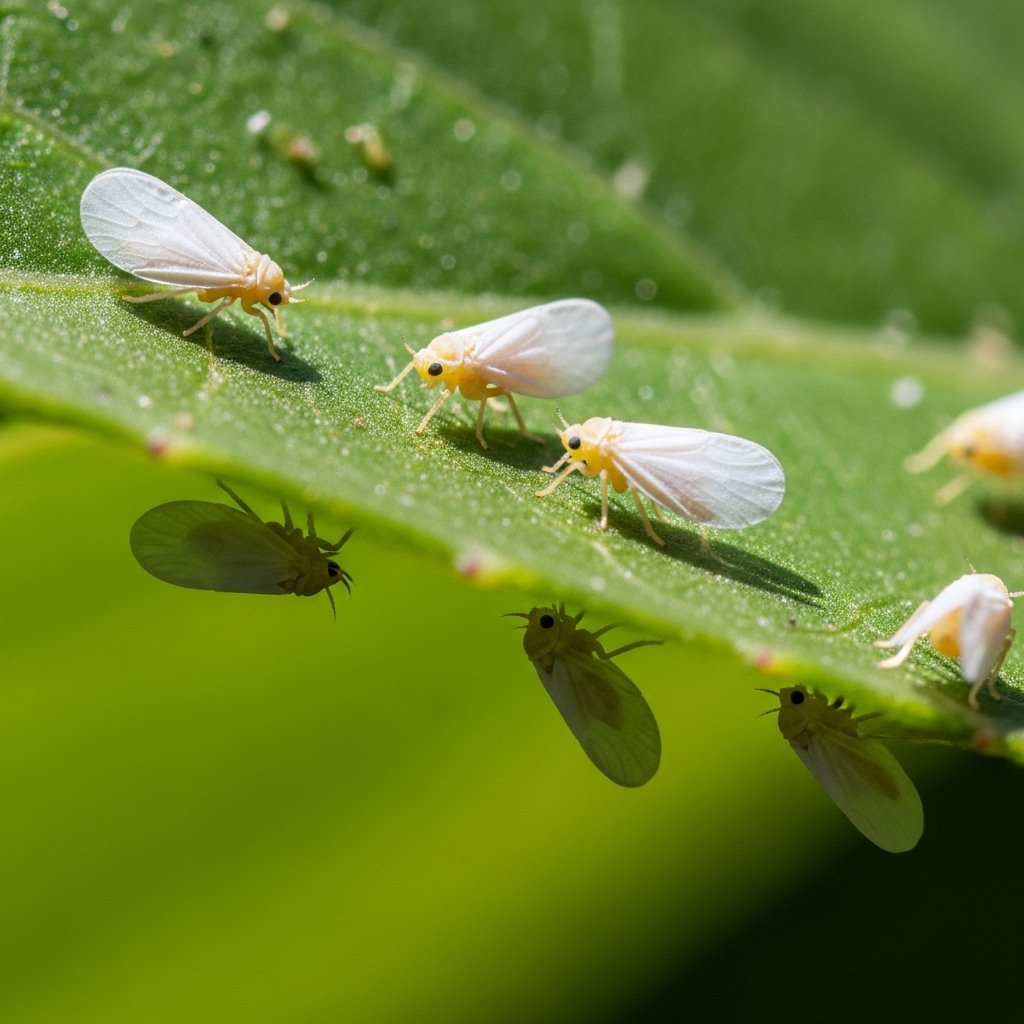
If you brush against a plant and a tiny white “snowstorm” flies up, you’re dealing with whiteflies. They look harmless, but in warm weather these sap‑sucking insects multiply fast, weaken plants, spread disease, and coat everything in sticky residue and black mold. Fortunately, you can get whiteflies under control without nuking your garden—if you act early, target their whole life cycle, and combine several methods instead of relying on a single spray.
This guide shows you how to identify whiteflies at every stage, knock back a bad infestation, and set up an integrated pest management (IPM) routine that keeps them from coming back.
How to Recognize Whiteflies on Your Plants
Whiteflies are closely related to aphids and scale but behave a bit differently in the garden.
What Adults Look Like
Adult whiteflies are:
- Tiny, about 1–2 mm long.
- Pure white or slightly yellowish, with powdery wings.
- Moth‑like in appearance, resting with wings folded tent‑style.
The classic sign: disturb an infested plant and you’ll see a small cloud of white insects fly up, then quickly resettle on the undersides of leaves.
Eggs and Nymphs (The Hidden Majority)
Most of the feeding damage comes from immature stages that cling to the underside of leaves.
- Eggs: Tiny, pale or yellowish ovals laid in circles or arcs on leaf undersides.
- Crawlers (young nymphs): Very small, translucent, mobile for a short time as they search for a feeding spot.
- Older nymphs: Flattened, scale‑like, almost immobile discs stuck to the leaf, where they feed continuously.
Because nymphs don’t move once they’ve settled, washing or brushing them off leaves is surprisingly effective—they can’t crawl back.
Damage and Honeydew
Even if you miss the insects, you’ll notice their impact:
- Yellowing, mottled, or stippled leaves.
- Wilting and stunted, weak growth.
- Sticky honeydew on foliage and nearby surfaces.
- Black sooty mold growing on that honeydew.
Heavy infestations can cause leaves to curl, dry, and drop prematurely, and can transmit viral diseases in some crops.
Whitefly Life Cycle (And Why They’re Hard to Eradicate)
Whiteflies complete their life cycle quickly in warm conditions, which is why populations explode seemingly overnight.
- Eggs hatch in a few days.
- Crawlers move briefly, then settle on the leaf underside.
- Nymphs (several stages) feed for 2–3 weeks, then pupate in place.
- Adults emerge, mate, and start laying eggs again within days.
Because all stages can be present simultaneously on the same plant, one treatment won’t solve the problem. You need repeated, layered tactics to interrupt this cycle.
Step‑by‑Step: How to Get Rid of Whiteflies
Step 1: Knock Them Back With Water and Vacuuming
Start with mechanical controls—cheap, fast, and surprisingly effective.
- Syringe leaves with water: Use a strong but controlled stream on the undersides of leaves to wash off eggs, crawlers, and nymphs. UC field trials found that “syringing” performed as well or better than several insecticides for reducing whiteflies.
- Vacuum adults: In early morning when they’re sluggish, use a handheld vacuum on infested plants to suck up adults before they lay more eggs. Seal and discard or freeze the vacuum bag.
Repeat this 1–2 times per week while you bring the population down.
Step 2: Use Yellow Sticky Traps to Monitor and Reduce Adults
Whiteflies are strongly attracted to yellow.
- Hang yellow sticky traps just above plant tops, near heavily infested areas.
- Adults fly to the traps and get stuck, reducing mating and egg‑laying.
- Replace traps when they’re covered in insects or dust.
Sticky traps won’t solve a severe infestation alone, but they’re excellent for early detection and as a supporting control tool.
Step 3: Spray With Insecticidal Soap or Horticultural Oil
For moderate to heavy infestations, targeted contact sprays are your next move.
Insecticidal soap
- Breaks down the protective outer coating of soft‑bodied pests, causing dehydration and death.
- Commercial ready‑to‑use soaps or a DIY mix (for example, ~1 tablespoon pure Castile soap per quart of water) can be effective—always test first.
Horticultural oils / neem oil
- Smother eggs, nymphs, and adults and suppress sooty mold.
- Often used in rotation with soap for broader coverage of life stages.
Application tips:
- Spray in early morning or evening to avoid leaf burn.
- Thoroughly wet the undersides of leaves; that’s where most whiteflies live.
- Repeat every 5–7 days several times to catch new hatchlings.
Avoid using soap or oil sprays in very high heat or on drought‑stressed plants.
Step 4: Bring in Natural Enemies
Biological control is one of the best long‑term solutions, especially in greenhouses or large plantings.
Key beneficials include:
- Encarsia formosa: A tiny parasitic wasp that lays eggs inside whitefly nymphs. Parasitized nymphs turn black and die, and new wasps emerge to parasitize more.
- Ladybird beetles and larvae (e.g., Delphastus) and green lacewing larvae, which devour eggs and nymphs.
- Predatory mites such as Amblyseius swirskii on some crops.
- Entomopathogenic fungi like Beauveria bassiana or Isaria fumosorosea formulated as biopesticide sprays.
For best results, release beneficials when populations are low to moderate and avoid broad‑spectrum insecticides that would kill them.
Step 5: Reflective Mulch and Cultural Controls
Reflective mulch is a surprisingly powerful preventative tactic.
- Silver or metallic plastic laid around crops like tomatoes and peppers confuses whiteflies and makes it hard for them to locate host plants.
- Apply early in the season and secure edges under soil to keep it in place.
Other cultural practices:
- Remove infested plant debris and weeds that can host whiteflies between crops.
- Rotate crops, avoiding planting highly susceptible species in the same bed year after year.
- Improve airflow by proper spacing and pruning; dense, humid foliage favors sap‑sucking pests and sooty mold.
These steps reduce pressure on your garden and make future outbreaks less likely.
Step 6: Chemical Insecticides (If You Really Need Them)
Whiteflies have developed resistance to many synthetic insecticides, and broad‑spectrum products often kill beneficial insects as well. For that reason, universities and IPM experts generally recommend exhausting non‑chemical options first.
If you do decide to use a chemical:
- Choose products labeled specifically for whiteflies on your crop.
- Follow all label directions, including pre‑harvest intervals for vegetables.
- Spray the undersides of leaves thoroughly, where whiteflies actually are.
- Avoid spraying when plants are in bloom or when bees and other pollinators are active.
Even with chemicals, multiple applications at 5–7 day intervals are often needed due to overlapping life stages.
Preventing Whiteflies From Coming Back
Once you push an outbreak under control, prevention keeps it that way.
- Inspect weekly. Tap plants and watch for adults flying up; check leaf undersides for eggs and nymphs.
- Maintain yellow sticky traps near susceptible plants as an early warning system.
- Keep plants vigorous. Healthy plants tolerate mild feeding far better than stressed ones—focus on proper watering, soil health, and nutrition.
- Encourage beneficials. Plant nectar and pollen sources for predators and parasitoids, and avoid unnecessary broad‑spectrum insecticides.
Combining these simple habits with occasional water sprays or soap/oil treatments during peak season usually keeps whiteflies to a minor nuisance rather than a crisis.
FAQ Section
1. How can I be sure it’s whiteflies and not something else?
Whiteflies are tiny, powdery white insects that swarm up when you disturb plants and mostly sit on leaf undersides; you’ll often see sticky honeydew and sooty mold along with flattened nymphs stuck to the leaves.
2. Are whiteflies harmful to people or pets?
No, whiteflies don’t bite or sting and don’t harm humans or pets; their impact is limited to plants, where heavy infestations can weaken growth and spread some plant diseases.
3. What’s the fastest way to knock down a heavy infestation?
Combine strong water sprays, removal of the worst leaves, yellow sticky traps, and repeated applications of insecticidal soap or horticultural oil to leaf undersides every 5–7 days until populations drop.
4. Do whiteflies live in soil?
No, whiteflies complete their life cycle on plant leaves; eggs, nymphs, and pupae are all on foliage, so control focuses on the canopy rather than the soil.
5. How do I stop whiteflies from attacking my tomatoes and peppers every year?
Use reflective mulch early in the season, remove crop residues and host weeds promptly, rotate crops, monitor with sticky traps, and introduce or conserve beneficial insects to keep populations low