
Alton Brown’s Brined Turkey
Alton Brown’s Brined Turkey
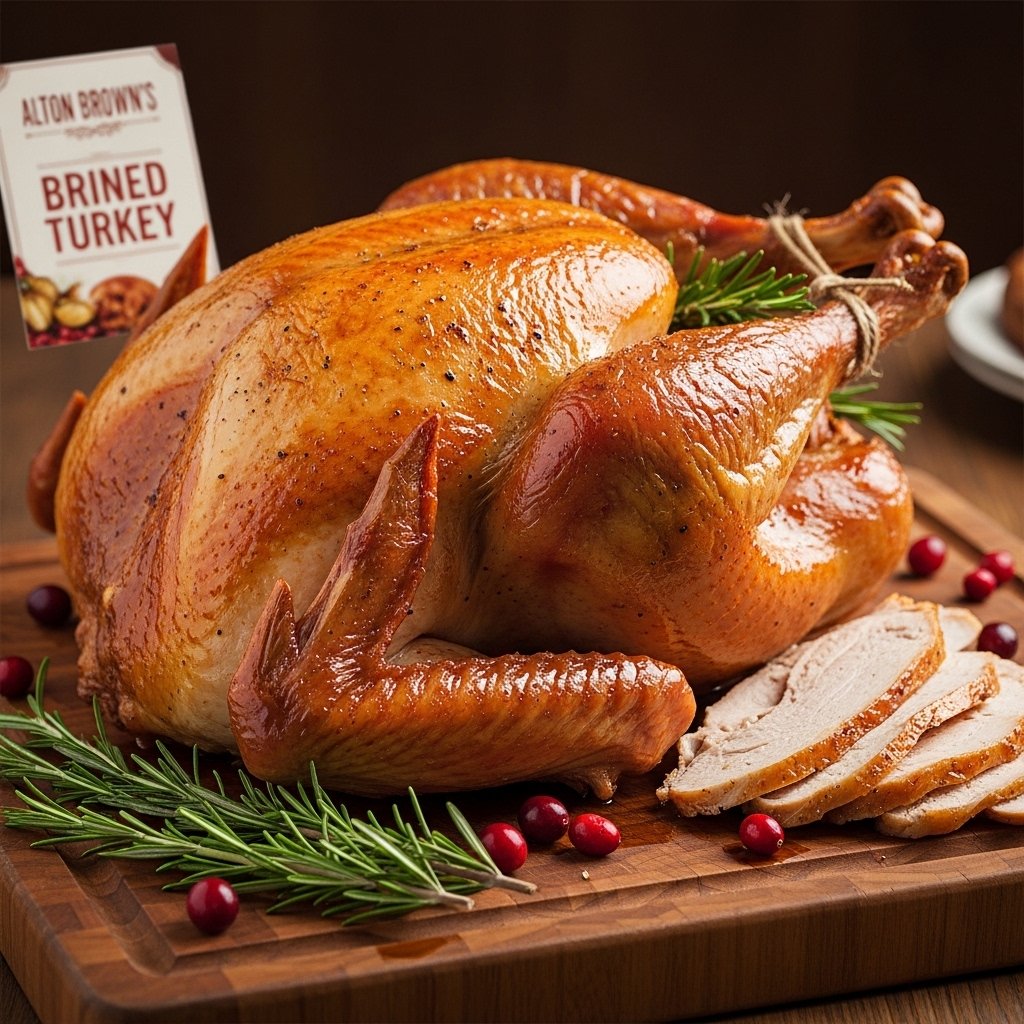
This isn’t just “any brined turkey.” It’s a carefully balanced Alton Brown–style brine that seasons the bird from the inside out. The result is moist white meat, richly flavored dark meat, and skin that can brown rather than stay pale and soggy.
Brining uses salt, sugar, and aromatics in water or broth to draw moisture into the turkey and gently tenderize the meat. The result is a holiday centerpiece that stays juicy even if you overcook it at the table.
Ingredients You’ll Need
For a 12–16‑lb turkey (roughly 8–12 servings):
- 1 whole fresh or thawed young turkey (12–16 lb; giblets removed)
- 1 cup kosher salt (not table salt)
- ½ cup light brown sugar
- 1 gallon good‑quality vegetable stock (not low‑sodium)
- 1 tablespoon whole black peppercorns
- 1½ teaspoons whole allspice berries
- 1½ teaspoons chopped candied ginger (optional, for warmth)
- 1 gallon of heavily iced water
- Neutral oil (like canola or vegetable oil), for rubbing skin
- Aromatics: 1 sliced apple, ½ sliced onion, 1 cinnamon stick, 1 cup water, 4 sprigs of rosemary, 6 sage leaves
Optional extras: cracked black pepper or additional spices for the cavity, plus a probe thermometer, a roasting rack, and a half‑sheet pan.
Step‑by‑Step Brined Turkey Method
1. Thaw and Prep the Turkey Safely
If your turkey is frozen, thaw it in the fridge at least 2–3 days ahead (3 days for a 14–16 lb bird). Place it on a tray or rimmed baking sheet so juices don’t leak onto other foods.
Once thawed, remove the plastic bag and giblets, then gently rinse inside and out under cold running water. Pat the turkey dry with paper towels and keep it chilled until your brine is fully cooled.
2. Make the Brine Mixer
Pour the vegetable broth into a large stockpot along with the kosher salt, brown sugar, black peppercorns, allspice berries, and candied ginger, if using. Bring to a gentle boil over medium‑high heat, stirring to dissolve the salt and sugar.
Boil for 2–3 minutes, then remove from heat and let the mixture cool to room temperature. Once cool, transfer the pot to the fridge and chill for 3–4 hours, or until thoroughly chilled. This precooled base will be added to a second gallon of iced water later, so plan.
3. Set Up the Brining Bucket
Find a clean 5‑gallon food‑safe bucket or very large cooler that can hold the whole turkey plus at least 1–2 extra gallons of liquid. Drain the brine into the bucket, then add the gallon of heavily iced water.
Stir gently to melt some of the ice and chill the liquid further. The mixture should be cold but still liquid so the turkey submerges easily.
4. Brine the Turkey Overnight
Place the turkey in the bucket breast-side down so both breasts stay under the surface. Add more ice cubes if needed to keep it cold. If the top of the bird sticks out, use a clean plate weighted with cans or small bowls to hold it under.
Cover the bucket loosely or snap the cooler lid shut and keep it in the refrigerator or in a cool garage or basement where the temperature stays below 40°F. Brine for 8–16 hours, flipping the bird halfway through to ensure even exposure on both sides.
5. Rinse and Dry the Bird
Once brining is done, lift the turkey out of the brine without letting it drip into the sink area. Rinse the cavity and skin briefly under cold running water; you don’t need a soak, as the salt and sugar are already embedded. Discard the brine and do not reuse it.
Pat the turkey very thoroughly with paper towels, including inside the cavity. The drier the skin, the better the browning. Take a few extra minutes here; dry skin can lead to crisp edges around the legs and breast.
6. Preheat the Oven and Add Aromatics
Set an oven rack to the lowest position and preheat to 500°F. This high heat helps crisp the skin quickly and safeguards the breast from scorching at lower temperatures later.
In a microwave-safe bowl, combine the sliced apple, sliced onion, cinnamon stick, and 1 cup water. Microwave on high for about 5 minutes until the apples and onion soften and the house smells like the holidays. Drain most of the liquid, then tuck the warm fruit and aromatics into the cavity with the rosemary and sage. Tuck the wing tips behind the bird to keep them from burning.
Lightly coat the skin with a thin layer of oil. This helps the surface heat up faster and promotes golden‑brown edges.
7. Roast to Perfect Internal Temp
Place the turkey on a roasting rack set inside a half-sheet pan to catch drippings and promote airflow. Slide the bird into the hot oven on the lowest rack and roast for 30 minutes without opening the oven.
After the 30-minute blast, reduce the oven temperature to 350°F. If you have a probe thermometer, insert it into the thickest part of the breast, avoiding bone. Aim for about 160–161°F in the breast; it will rise about 5°F as it rests. A typical 14–16 lb turkey needs about 2–2½ hours at this lower temperature after the initial high heat.
Check for doneness by gently jiggling the drumstick. It should feel loose and the juices should run almost clear. Thigh or drumstick meat helps balance the leaner breast.
8. Rest Before Carving
Remove the turkey and let it rest tented under foil or inverted over a large bowl for 15–20 minutes. Resting relaxes the muscle fibers and redistributes juices so every slice is moist.
Carve the turkey by removing the legs and thighs first, then slicing the breasts against the grain. Save any remaining stuffing or cavity aromatics to toss into a quick gravy or dressing base.
Pro Tips from the Test Kitchen
- Use kosher salt only—its coarser crystals dissolve well and are less harsh than table salt in a 24‑h brine.
- Always brine cold: if the bucket isn’t fridge‑safe, keep it in a cool space under ice and check it once.
- A probe thermometer is non‑negotiable; overcooked breast meat is irreversible.
- For extra‑crispy edges, dry‑brine the skin lightly with salt after rinsing and let it sit in the fridge for a few hours before roasting.
- Start with the high-heat blast on the lowest rack; this blocks airflow and prevents over‑browning the top while crisping the skin.
How to Store and Reheat Leftovers
Leftover brined turkey slices well and tastes great cold or reheated. Store portions in shallow airtight containers in the fridge for up to 4 days. For moist slices, reheat in an oven-safe dish at 300°F or in a covered skillet on low with a splash of broth or gravy. For freezer storage, slice and portion the meat, then wrap tightly in plastic and foil or place in a freezer-safe zipper bag with as much air removed as possible. Label with the date; best quality within 2–3 months.
FAQs
How long should you brine a turkey for the best results?
Brine a turkey 8–16 hours; outside that window, the meat can become too salty.
Can you use table salt instead of kosher salt for the brine?
Use only table salt, and reduce the amount by about one‑third to avoid oversalting.
Should I rinse the turkey after taking it out of the brine?
Yes, rinse briefly under cold water to remove surface salt and sugar, then dry.
Why does brined turkey cook faster than unbrined?
Brined meat absorbs liquid, allowing heat to transfer faster and internal temperatures to rise more quickly.
Can you stuff this turkey with conventional stuffing before roasting?
For food‑safety reasons, cook stuffing separately or only use a light aromatic cavity mix.