
Orchid Yellow Leaves: 7 Common Causes & Easy Fixes for Healthy Plants
Orchid Yellow Leaves: 7 Common Causes & Easy Fixes for Healthy Plants
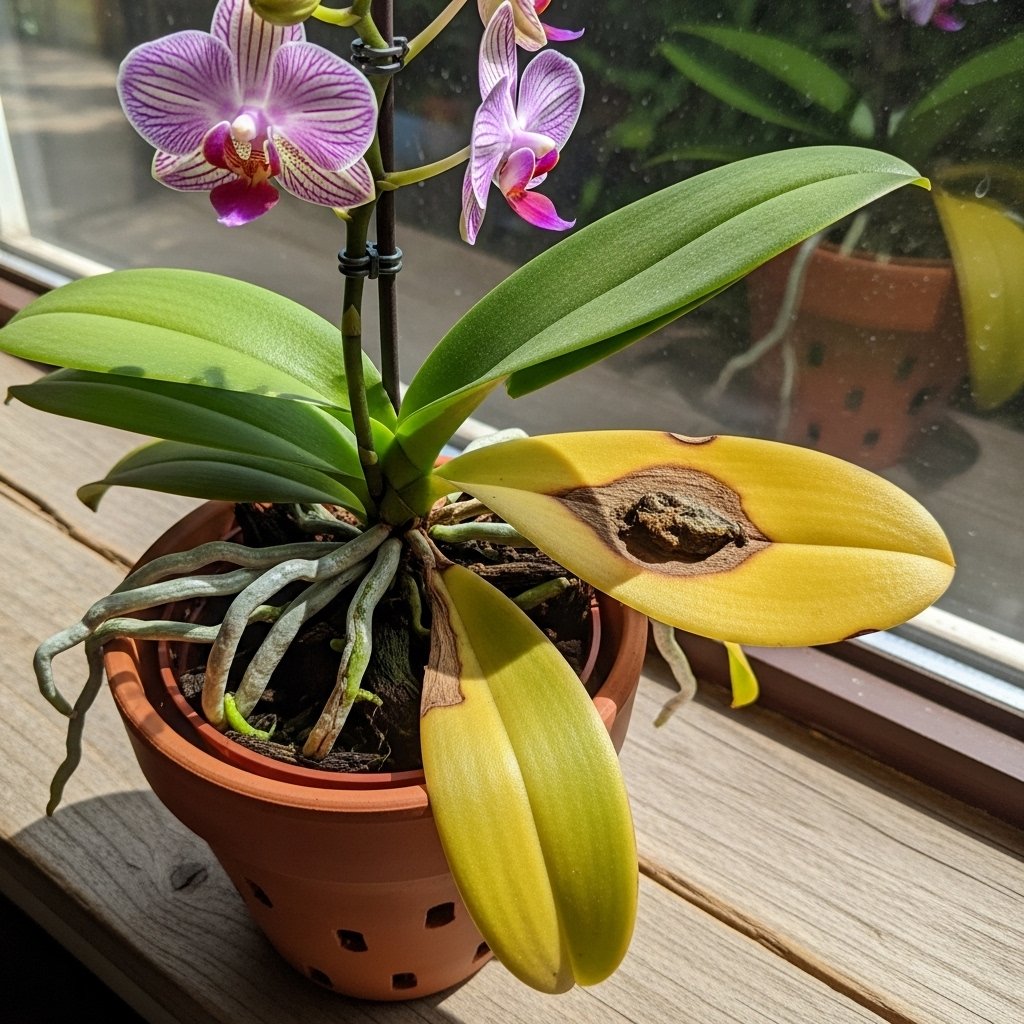
Seeing yellow leaves on your orchid can be worrying, but most of the time, it just means you need to adjust your care routine. It usually isn’t a sign that your plant is dying.
This is a common problem for people growing Phalaenopsis and other popular orchids. If you figure out the cause quickly, your plant can bounce back and look healthy again.
Normal Aging Process
The oldest leaves at the base often turn yellow as part of the plant’s natural process. This means the orchid is putting its energy into new growth.
You don’t need to do much except gently remove the yellowed leaf. Wait until it’s completely yellow and limp, then use clean, sterilized scissors to snip it off.
Healthy orchids usually lose one or two bottom leaves each year. This is normal, especially for plants older than two years.
Overwatering Woes
Too much water can suffocate the roots, leading to rot and yellow leaves. If the bark or moss stays wet for a long time, it’s a sign of overwatering.
Overwatered roots turn brown and mushy, while healthy roots are firm and greenish-white. You can check by gently removing the plant from its pot.
To fix this, let the potting mix dry out halfway before watering again. If you see root rot, repot your orchid in fresh orchid bark.
Underwatering Signs
Dry conditions wrinkle and yellow leaves. Roots shrivel, appearing gray or brittle.
Orchids need moisture, but not too much. You can check if it’s time to water by lifting the pot—if it feels light, it’s time to water.
To revive a dry orchid, soak it in lukewarm water for 10 to 15 minutes until the potting mix is rehydrated. Make sure to let it drain completely afterward.
Light Imbalance Effects
If your orchid gets too much direct sunlight, the leaves can turn yellow with brown tips. Not enough light will make the leaves look pale.
Aim for bright, indirect light, such as from an east-facing window. Leaves should be medium green, not dark and floppy.
If your orchid is near a south-facing window, use sheer curtains to filter the light. Turn the pot every week so the plant grows evenly.
Nutrient Shortfalls
Nitrogen deficiency yellows older leaves first—spot-check younger ones for magnesium or iron deficiencies.
Fertilize sparingly: balanced orchid formula at half-strength weekly during growth.
Once a month, flush the pot with plain water to prevent mineral buildup from tap water.
Temperature Swings
Drafts or sudden temperature changes can cause random leaf yellowing. Orchids do best with daytime temperatures between 65 and 85°F, and nighttime temperatures between 55 and 65°F.
Sudden cold below 50°F shocks foliage. Keep away from vents and windows at night.
A stable spot near an east-facing window is ideal for orchids. You can also use a tray of pebbles and water to increase humidity around the plant.
Pests and Diseases
Spider mites suck sap, causing stippled yellow. Scale leaves waxy bumps with yellow halos.
Fungal infections can cause yellow spots that eventually turn into rot. Bacterial infections often appear as wet, water-soaked patches on leaves.
To treat pests, wipe the leaves with cotton dipped in alcohol. Keep the plant separate from others and apply neem oil once a week.
Inspect undersides regularly. Quarantine new plants for 2 weeks.
Root and Pot Issues
Old potting mix can become compacted, blocking air from reaching the roots. If the sphagnum moss becomes too acidic, the leaves may turn yellow because the plant can’t absorb nutrients well.
Repot your orchid every one to two years after it finishes blooming. Clay pots with slits are best because they provide good drainage.
Use a chunky bark mix for repotting. Trim away any dead roots and sprinkle cinnamon on the cuts to help them heal.
Step-by-Step Diagnosis
Look at the pattern of yellowing. If it starts at the bottom, it’s usually due to age or a nutrient issue. If all the leaves are yellow, it’s more likely a water or light problem.
Gently remove the plant from its pot and check the roots. Healthy roots are plump and white or silver, while unhealthy ones are black and hollow.
Test the pH of the potting mix; it should be between 5.5 and 6.5. If it’s outside this range, use rainwater or distilled water to adjust it.
Recovery Action Plan
- Remove yellow leaves only after they are completely dry. Always sterilize your tools with alcohol before using them.
- Repot if the medium smells sour or the roots rot. Fresh start prevents spread.
- For beginners, try the ice cube method: place one ice cube on the bark each week to water your orchid.
- Fertilize your orchid lightly once it has recovered. If the plant is still in shock, wait before adding fertilizer.
Monitor weekly. New green growth in 4-6 weeks signals success.
Prevention Essentials
Group orchids for humidity 50-70%. Mist mornings only; avoid crowns.
During the darker months, use grow lights for 12 to 14 hours a day, aiming for 1,000 to 2,000 foot-candles.
Keep a journal to track your orchid care. Write down when you water and any changes you notice.
Phalaenopsis orchids usually recover the fastest. Other types, such as Cattleyas, may require more specific care.
Yellow leaves rarely kill an orchid. With the right care, your plant will recover and bloom even better than before.
FAQs
Why are orchid leaves turning yellow at the base?
Oldest leaves naturally age and yellow. Remove only if limp; no other fix needed.
Can yellow orchid leaves turn green again?
No, damaged leaves won’t recover. Focus on new growth with proper care adjustments.
Is overwatering killing my orchid’s yellow leaves?
Yes, root rot from soggy soil causes it. Repot in dry bark and reduce watering.
How to fix yellow leaves from too much sun?
Move to indirect light; sheer curtains help. Expect recovery in weeks with stability.
What’s the best fertilizer for yellow orchid leaves?
Use half-strength balanced orchid food weekly. Flush monthly to avoid salt buildup.