
Slow Roasted Turkey Recipe: Juicy, Tender & Foolproof (Oven Method)
Slow Roasted Turkey Recipe: Juicy, Tender & Foolproof (Oven Method)
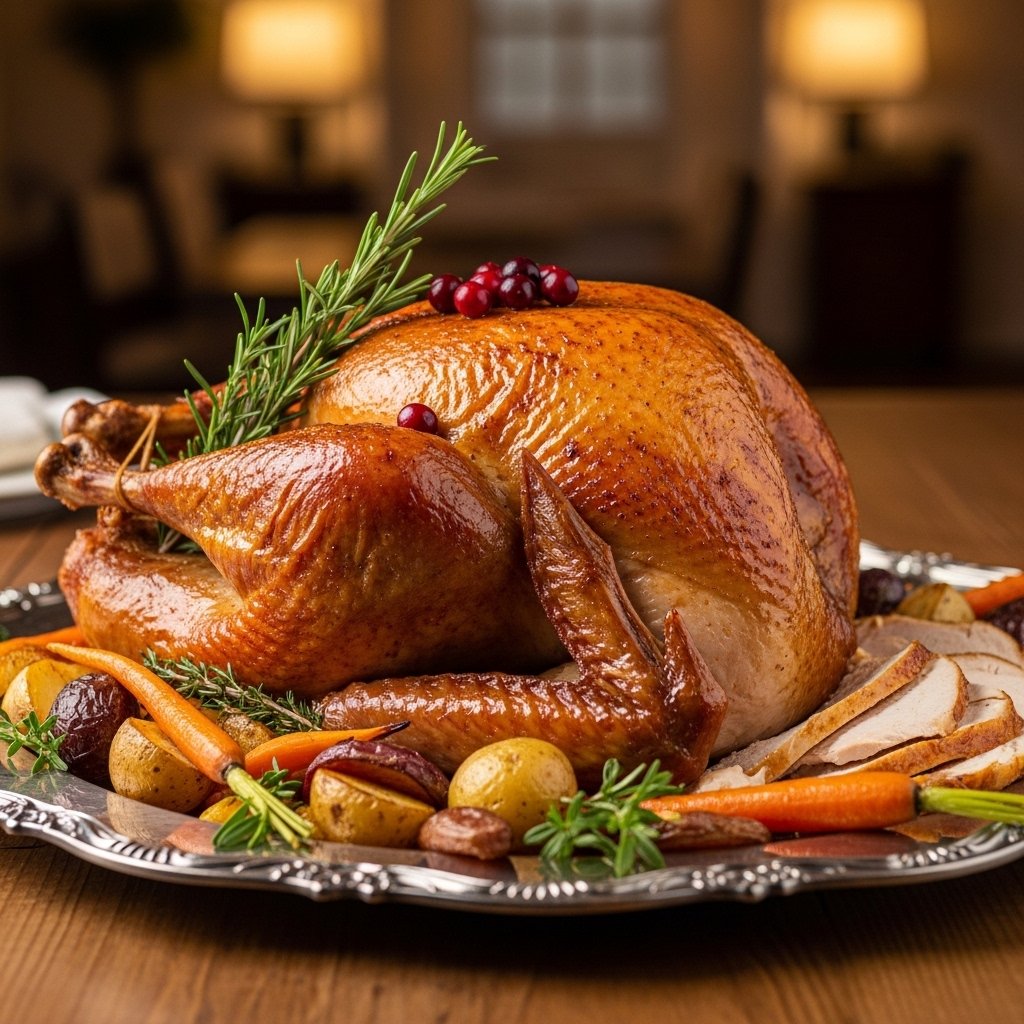
Slow-roasted turkey can sometimes end up dry or unevenly cooked, which can be frustrating during holidays or family get-togethers. My recipe uses a low oven temperature to keep the meat moist and flavorful, without having to check it constantly. After years of cooking, I’ve found that a simple dry-brine gives even seasoning and crispy skin with juicy meat underneath. With this method, you’ll get great results using tools you already have at home.
What Is Slow-Roasted Turkey?
Slow-roasted turkey means cooking the whole bird at a low temperature, usually between 250 and 275°F, for several hours. This slow heat helps break down tough parts of the meat and keeps it juicy. Unlike roasting at high heat, it stops the outside from drying out before the inside is fully cooked. You end up with tender, tasty meat and crisp, golden skin. It’s a great choice for holidays, easy for beginners, and gives reliable results.
Why You’ll Love This Recipe
- Incredible juiciness: Low heat keeps the turkey moist, so every slice stays tender and juicy. No dry turkey here.
- Hands-off ease: Prepare the turkey once, then relax as it cooks. You won’t need to baste it much.
- Time-saving flexibility: You can start cooking early and keep the turkey warm without it drying out.
- Perfect texture contrast: The skin turns golden and crispy, while the meat stays soft and tender.
- Reliable every time: Dry-brining delivers even seasoning and makes cooking easy, even if it’s your first time.
Ingredients
Serves 10–12 | Prep time: 20 minutes (plus 12–24 hours brining) | Cook time: 6–8 hours | Total time: 7–9 hours
For the Turkey and Brine
- 12–14 pound fresh or fully thawed turkey (giblets and neck removed)
- 3 tablespoons kosher salt
- 1 tablespoon black peppercorns, lightly crushed
- 4 garlic cloves, smashed
- 6 sprigs fresh thyme
- 4 sprigs fresh rosemary
- 2 lemons, quartered
- 1 large onion, quartered
- ½ cup unsalted butter, softened (for rubbing under skin)
For the Roasting Pan
- 2 carrots, roughly chopped
- 2 celery stalks, roughly chopped
- 1 large onion, roughly chopped
- 4 cups low-sodium chicken broth (divided)
- 2 tablespoons olive oil
Optional Gravy Base
- Drippings from the roasting pan
- ¼ cup all-purpose flour
- 2 cups additional chicken broth
- Salt and pepper to taste
Substitutions
- Turkey size: Scale salt to 1 teaspoon per pound for smaller/larger birds.
- Herbs: Swap thyme/rosemary for sage or oregano if preferred.
- Butter: Use ghee or olive oil for a dairy-free option.
- Kosher salt: Reduce table salt by half.
Step-by-Step Cooking Instructions
- Dry-brine the turkey: Pat the turkey dry inside and out with paper towels. Mix the salt and crushed peppercorns. Rub two-thirds of the mixture inside the cavity and under the skin over the breasts and thighs. Stuff the cavity with garlic, herbs, lemons, and onion quarters. Place the turkey, uncovered, on a rack over a baking sheet, and refrigerate for 12 to 24 hours. The skin will dry out, making it crispier.
- Prep for roasting: Remove the turkey from the fridge 1 hour before cooking to bring it to room temperature. Preheat the oven to 250°F. Scatter the carrots, celery, and onion in a large roasting pan. Place the turkey breast-side up on a V-rack over veggies. Tuck the wing tips under. Rub skin with olive oil.
- Butter it up: Gently loosen skin over breasts and thighs. Spread softened butter evenly underneath. Tie legs with kitchen twine for an even shape. Pour 2 cups of broth into the pan.
- Start roasting: Insert an oven-safe thermometer into the thickest part of the thigh, making sure it doesn’t touch the bone. Roast at 250°F. After about 3 hours, the skin will turn pale gold, and your kitchen will smell of herbs and citrus.
- Boost the crisp: Tent loosely with foil if browning too fast (unlikely at low heat). Continue until the thermometer reads 160°F in the thigh, for a total of about 6–8 hours. Meat feels firm yet yielding when pressed.
- Rest and check: Remove from oven. Temp will rise to 165°F while resting. Tent with foil and rest 30–45 minutes on a carving board. Juices run clear, not pink.
- Carve and serve: Slice the breast meat across the grain into quarter-inch pieces, then separate the legs and thighs. The meat should come off the bone easily, and the skin will be crisp.
Variations and Customizations
- Dietary swaps: For a gluten-free option, use a cornstarch slurry instead of flour in gravy. Make keto by skipping gravy and serving with cauliflower mash.
- Flavor variations: Add smoked paprika (1 tablespoon) to the brine for subtle smokiness. Stuff cavity with oranges and sage for a citrus twist. Spice lovers: Mix 1 teaspoon cayenne into the butter rub.
- Equipment alternatives: No V-rack? Use an upside-down muffin tin or coil foil into logs in a pan. Convection oven? Drop the temperature by 25°F and check 30 minutes early. Smoker? Maintain 250°F indirectly.
Expert Cooking Tips
Bring the turkey to room temperature before roasting, since cold spots can cause uneven cooking. Always use a probe thermometer, as cooking times can vary depending on the bird’s size and your oven. For extra flavor, save the brining juices to deglaze the pan for gravy. If you’re hosting, you can roast the turkey the night before. Let it cool, wrap it tightly, refrigerate, and then reheat it covered at 300°F with a little broth. This frees up your oven on the big day. After brining, always pat the turkey dry so the skin crisps rather than steams.
Common Mistakes to Avoid
- Skipping the dry brine results in bland, uneven seasoning—salt draws out moisture and then reabsorbs it.
- Roasting straight from the fridge: Causes long cook times and dry outer layers.
- Over-basting: Opens the oven too often, drops the heat, and steams the skin.
- Carving too soon: If you cut the turkey right away, the juices will run out, and the meat will dry. Always let it rest for at least 30 minutes.
- High initial heat blast: Dries the surface before the inside cooks; stick to a steady low temp.
Real Cooking Scenario
Last Thanksgiving, my sister-in-law hosted 14 people in her small apartment kitchen. She used this slow-roast method while making the side dishes. The turkey went into the oven at dawn, and by noon the whole place smelled like garlic and herbs. We carved it at 2 PM, and it was the juiciest turkey she’d ever made. The kids even fought over the crispy skin. The leftovers were perfect for sandwiches the next day. It was easy, and everyone loved it.
FAQs
How long does slow-roasted turkey take per pound?
Plan 30–40 minutes per pound at 250°F. A 12-pound bird needs 6–8 hours to reach 165°F safely.
Can I stuff the turkey for slow roasting?
No—stuffing slows internal cooking and risks bacteria. Bake separately at 350°F for 45 minutes.
Why dry brine instead of wet brine?
Dry-brining seasons food more deeply without a watery texture; skin crisps better after air-drying overnight.
Is it safe to roast at such a low temperature?
Yes, if the turkey hits 165°F internally. Probe thermometer ensures food safety every time.
How do I store leftovers?
Refrigerate carved meat in airtight containers up to 4 days. Freeze up to 3 months; thaw in fridge.