
Perfect Bisquick Dumplings
Perfect Bisquick Dumplings
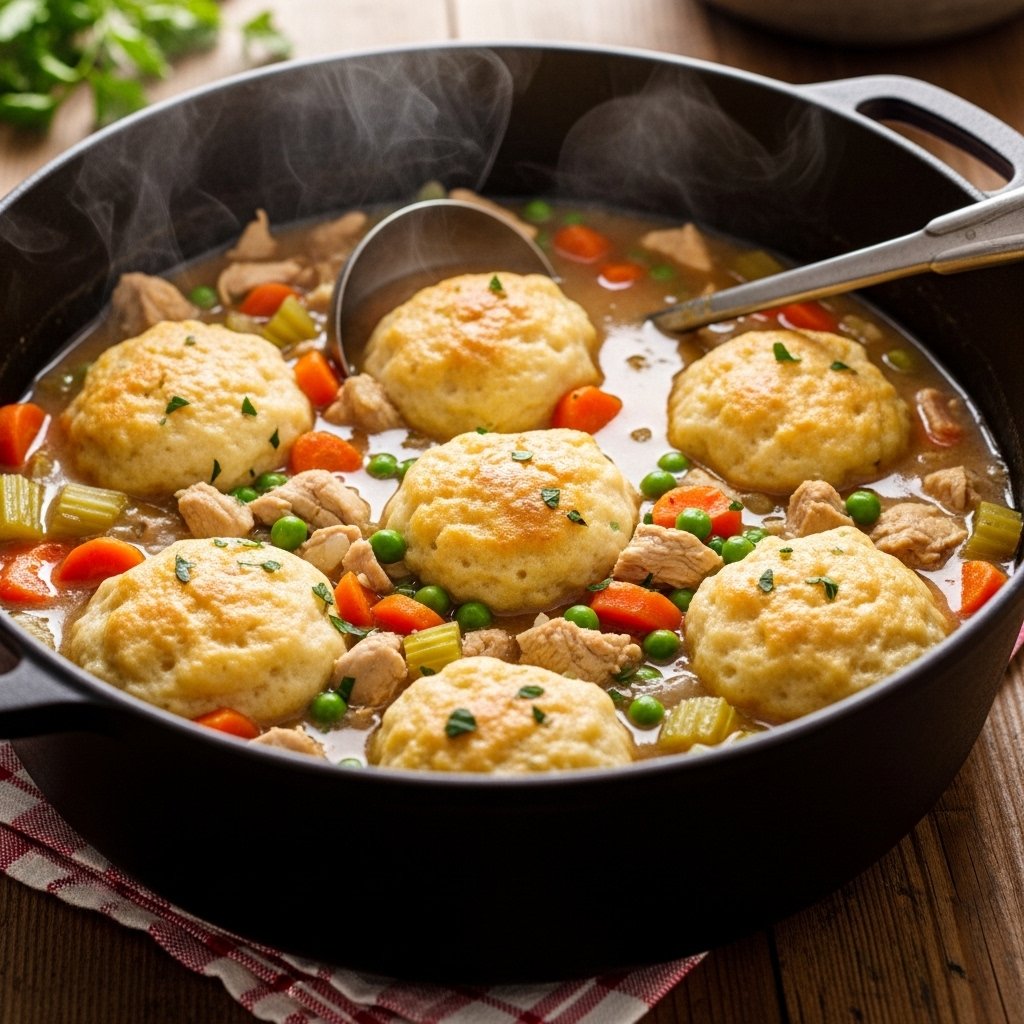
Bisquick dumplings turn a simple pot of soup or stew into a cozy, one‑bowl meal with almost no extra effort. With just baking mix and milk—plus optional herbs or cheese—you get soft, pillowy dumplings that steam right on top of your simmering broth.
They’re ideal for beginner cooks, weeknight dinners, and anyone craving homestyle chicken and dumplings, hearty beef stew, or a creamy veggie soup without complicated doughs or techniques.
Essential Ingredients for Bisquick Dumplings
The core recipe really is as simple as it gets.
Basic Dumpling Ingredients
- Bisquick baking mix – 2 cups
- Use original or any basic pancake/baking mix.
- Make sure it’s fresh for best rise and flavor.
- Milk – ⅔ cup
- Whole milk gives the richest, most tender dumplings.
- 2% milk works fine; dairy alternatives (like unsweetened oat or almond) can be used in a pinch, but texture may change slightly.
Optional Add-Ins
- Fresh herbs:
- Chopped parsley, chives, or thyme for color and freshness.
- Cheese:
- Shredded cheddar, parmesan, or smoked gouda for extra richness.
- Seasonings:
- Garlic powder, onion powder, Italian seasoning, black pepper, paprika, dried dill, or poultry seasoning.
- Finishing herbs:
- Extra chopped herbs sprinkled on top at serving.
If you add cheese or moist vegetables, you may want to slightly reduce the milk to keep the dough from becoming too wet.
How to Make Bisquick Dumplings Step by Step
This method works over any bubbling soup, stew, or gravy with enough liquid for the dumplings to sit on.
1. Mix the Dumpling Dough
- In a medium mixing bowl, combine:
- 2 cups Bisquick
- ⅔ cup milk
- Stir just until a soft, lumpy dough forms.
- Do not beat until smooth—small lumps are normal and help keep dumplings tender.
2. Heat Your Soup or Stew
- Bring your prepared soup, stew, or broth to a gentle boil over medium to medium‑high heat.
- Make sure there’s plenty of visible liquid; dumplings need liquid to cook and will absorb some as they steam.
If your mixture is very thick, thin it slightly with broth or water before adding dumplings.
3. Drop the Dumplings
- Reduce the heat so the liquid is at a steady, gentle boil (not an aggressive rolling boil).
- Using a tablespoon or small scoop, drop spoonfuls of dough onto the surface of the hot liquid.
- Space them out so they’re not touching too closely; they will puff and expand as they cook.
Important:
Once the dumplings are in, do not stir the pot—this can break them apart.
4. Simmer Uncovered
- Let the dumplings cook uncovered for 10 minutes.
- Keep the heat at a gentle simmer; vigorous boiling can cause them to fall apart or cook unevenly.
This uncovered step helps set the exterior of the dumplings.
5. Cover and Steam to Finish
- After 10 minutes, cover the pot with a tight‑fitting lid.
- Continue cooking for another 10–15 minutes, letting the dumplings steam.
Avoid lifting the lid frequently; trapped steam is what makes the dumplings light and fluffy inside.
6. Check for Doneness
- Insert a toothpick or skewer into the center of a dumpling.
- If it comes out clean (no wet, doughy streaks), the dumplings are done.
- The interior should be cooked through—soft and bread‑like, not gummy.
Once done, remove the pot from heat and serve immediately.
Pro Tips for Light, Fluffy Bisquick Dumplings
- Don’t over‑mix the dough:
Overworking the dough develops gluten and can make dumplings tough. Stir only until the Bisquick and milk are just combined. - Simmer, don’t boil hard:
A gentle simmer keeps dumplings intact and tender; a hard boil can break them up or cook them too fast on the outside. - No stirring after dropping dough:
Leave the dumplings alone so they can set and rise properly. - Keep the lid on during steaming:
Steam is crucial for finishing the dumplings; lifting the lid too often releases heat and can result in undercooked centers. - Watch your liquid level:
Start with enough broth or stew so the dumplings sit on top and are partially surrounded by liquid as they cook. - Cook near serving time:
Dumplings are best eaten fresh. Over time they can soak up too much liquid and become heavy.
Flavor Variations and Add‑Ins
Once you’ve mastered the basic dumplings, you can easily customize them.
Herb Dumplings
- Add 1–2 tablespoons chopped fresh herbs (parsley, thyme, chives, dill).
- Stir into the Bisquick before adding milk so they distribute evenly.
Cheesy Dumplings
- Stir in up to 1 cup shredded cheese (cheddar, smoked gouda, Monterey Jack, or parmesan).
- Reduce milk slightly if the mixture feels very loose.
- These are great with chicken and vegetables or creamy stews.
Savory Seasoned Dumplings
- Add to the dry mix:
- ½–1 teaspoon garlic powder
- ½ teaspoon onion powder
- ½ teaspoon Italian seasoning or dried thyme
- Freshly ground black pepper
These pair well with chicken soups, turkey stews, or herb‑heavy dishes.
Veggie-Boosted Dumplings
- Fold in a small amount of finely diced scallions, green onions, or chives.
- Keep pieces tiny so the dumplings still hold together.
Serving and Pairing Ideas
Bisquick dumplings pair well with a wide range of comforting dishes:
- Chicken and dumplings:
Classic chicken soup or stew with carrots, celery, and peas. - Beef stew:
Rich, savory beef with potatoes and vegetables, topped with dumplings for extra heartiness. - Creamy vegetable soup:
Brothy or creamy soups with potatoes, corn, beans, and greens. - Slow cooker meals:
Crockpot chicken and dumplings or turkey stew—add dumplings near the end and simmer on high. - Southern‑style dishes:
Chicken and gravy, turkey and gravy, or creamy sausage stews.
Round out the meal with:
- A crisp green salad for freshness.
- Roasted seasonal vegetables (like carrots, Brussels sprouts, or green beans).
- A light dessert if you’re going for full comfort‑food night.
Nutritional Overview (Per Dumpling)
Exact nutrition varies with the brand of baking mix, milk type, and any add‑ins, but for a classic dumpling made from Bisquick and whole milk, a typical range per dumpling is:
- Calories: ~76–100
- Total fat: ~1.5–3 g
- Saturated fat: ~0.5 g
- Carbohydrates: ~11.7–19 g
- Dietary fiber: ~0–0.4 g
- Sugars: ~1.9–2 g
- Protein: ~1–1.7 g
- Sodium: ~240 mg
Adding cheese, butter, or richer dairy increases fat and calorie counts; using low‑fat milk or smaller dumplings lowers them.
Quick Bisquick Dumplings Recipe (Card-Style)
Ingredients
- 2 cups Bisquick baking mix
- ⅔ cup milk
- Optional: 1–2 tbsp chopped fresh herbs, up to 1 cup shredded cheese, seasoning to taste
Instructions
- In a medium bowl, combine Bisquick and milk; stir just until a soft dough forms.
- Bring your soup or stew to a gentle boil with enough liquid showing.
- Drop dough by rounded tablespoonfuls onto the simmering liquid, spacing them slightly apart.
- Cook uncovered for 10 minutes at a gentle simmer.
- Cover and cook an additional 10–15 minutes until dumplings are cooked through (toothpick comes out clean).
- Serve hot, spooning dumplings and broth into bowls. Garnish with fresh herbs if desired.
FAQs
Can I make Bisquick dumplings ahead?
Yes, mix batter and chill up to 1 hour. Drop into hot fresh stew for the best rise.
Why are my dumplings dense?
Likely overmixed or the lid lifted too soon. Stir lightly and cover fully next time.
Bisquick dumplings in soup or stew only?
Mostly, but try it over pot pie filling or chili. Avoid thin broths—they make them mushy.
How to freeze uncooked dumplings?
Portion on parchment, freeze solid, then bag. Cook from frozen, adding 5 minutes.
Do vegetarian Bisquick dumplings work?
Absolutely—use veggie broth and skip meat. Add peas or spinach for color.