
How to Deep Fry a Turkey
How to Deep Fry a Turkey
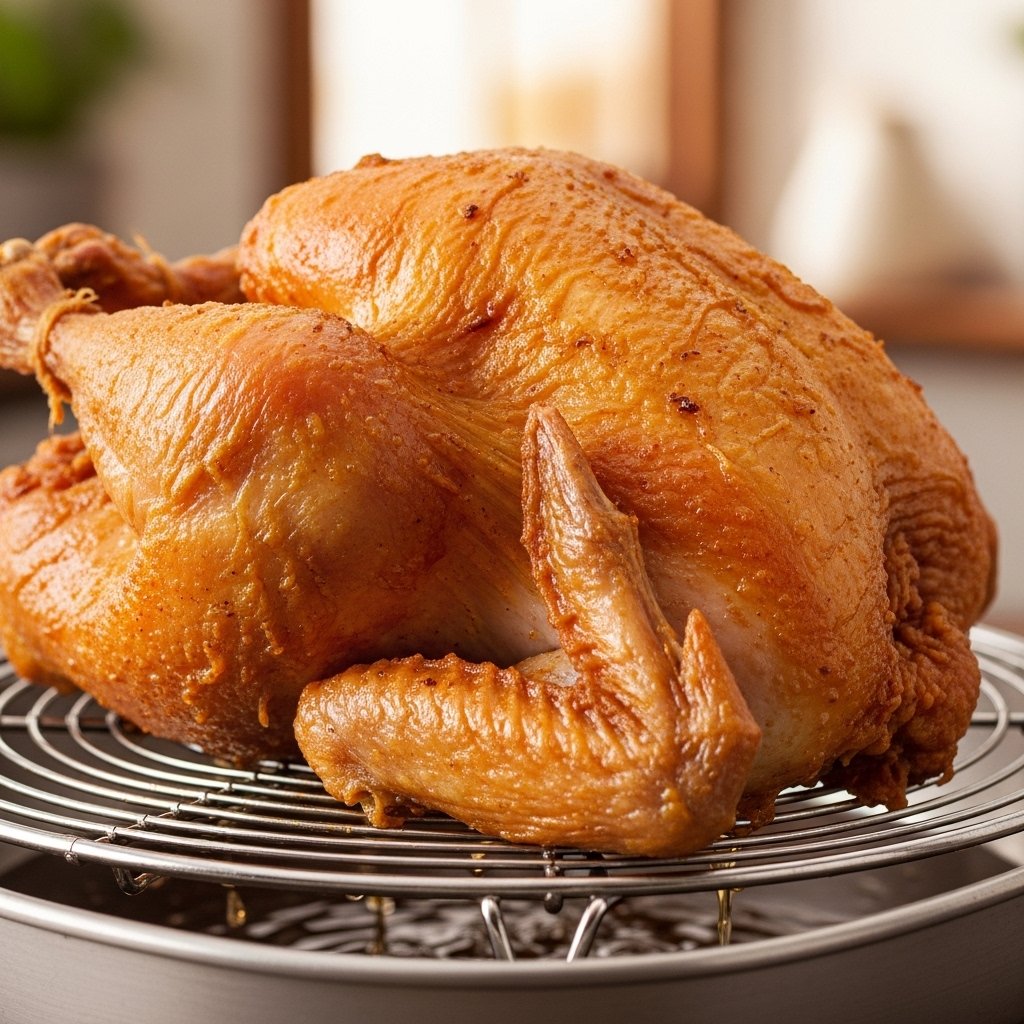
Deep-frying a turkey can sound intimidating, but it’s actually pretty simple. This recipe will help you get crispy skin and juicy, flavorful meat every time. I’ve spent 30 years frying turkeys and testing different brines and oils, so I know what works. It’s perfect for Thanksgiving or game day, and it cooks much faster than roasting. Ready to impress your guests? Let’s make a deep-fried turkey.
What Is Deep-Fried Turkey?
Deep-fried turkey is made by lowering a whole turkey into hot oil, which quickly cooks it. This method keeps the meat juicy and makes the skin extra crispy. It began in the Southern U.S. and usually uses peanut oil at 350°F, cooking for about 3 minutes per pound. The result is moist meat and crisp skin, often better than oven roasting. You won’t get a dry turkey, just plenty of flavor.
Why You’ll Love This Recipe
- Incredible texture: Skin turns ultra-crispy, meat stays juicy and tender.
- Fast cooking: Done in 45-60 minutes, freeing up your oven.
- Reliable results: Step-by-step brine and temp checks prevent disasters.
- Flavor-packed: Simple seasoning shines through, no overpowering tastes.
- Crowd-pleaser: Feeds 10-12 with leftovers that reheat beautifully.
- Beginner-safe: Clear safety steps make it stress-free for first-timers.
Ingredients
For a 12-14 lb turkey (serves 10-12):
Brine (prepare 24 hours ahead):
- 1 gallon of water
- 1 cup kosher salt
- 1/2 cup brown sugar
- 1/4 cup black peppercorns
- 4 bay leaves
- 1 gallon of ice water (to chill)
Turkey and Fry:
- 12-14 lb fresh or fully thawed turkey (giblets and neck removed)
- 4-5 gallons peanut oil (or vegetable oil; see substitutions)
- 2 tbsp olive oil (for rubbing)
- 1 tbsp garlic powder
- 1 tbsp onion powder
- 2 tsp smoked paprika
- 1 tsp cayenne pepper (optional, for heat)
- Kosher salt and black pepper (to taste)
Optional sides prep: Celery sticks, lemon wedges for stuffing cavity.
Substitutions
- Oil: Canola or corn oil if peanut allergies are a concern—similar smoke point.
- Brine: Apple cider vinegar (1 cup) for a tangier flavor.
- Sugar: Maple syrup for subtle sweetness.
Step-by-Step Cooking Instructions
- Brine the turkey: In a large pot, heat 1 gallon of water with salt, sugar, peppercorns, and bay leaves until everything dissolves. Let it cool completely, then add the ice water. Put the turkey in so it’s fully covered and brine it in the fridge for 18 to 24 hours. Rinse the turkey and dry it very well. Dry skin is important for crispiness.
- Prep the turkey: Take the turkey out of the brine and rinse it inside and out. Dry it with paper towels until the skin feels slightly sticky. Rub the turkey with olive oil. Mix the garlic powder, onion powder, paprika, cayenne, salt, and pepper, then sprinkle this mix all over the turkey, inside and out. Let the turkey sit at room temperature for 30 minutes.
- Set up the fryer safely: Use a turkey fryer kit outside on flat ground, away from any buildings. Fill the pot with oil up to the maximum line (you can test this with the turkey hanger). Heat the oil to 325°F over a propane burner. The oil should shimmer a little but not smoke.
- Test if the oil is ready by adding a small splash of water; it should sizzle and move around (be careful!). Put on gloves, hook the fryer tool into the turkey legs, and slowly lower the turkey into the oil. At first, bubbles will surge up, then settle down.
- Fry the turkey: Keep the oil at 350°F, adjusting the flame if needed. Fry the turkey for 3 minutes per pound, so a 12-14 pound turkey takes 36 to 42 minutes. The skin should turn a deep golden color, and a meat thermometer in the thigh should read 165°F. You’ll notice a rich, savory smell as it cooks.
- Rest and carve: Lift the turkey out slowly and let it drain over the pot for 10 minutes. Move it to a platter and cover it loosely with foil. Let it rest for 20 minutes before carving. The juices should run clear and the skin will be crisp.
Variations and Customizations
Dietary swaps: For gluten-free, skip any flour dredge (not needed here). Low-sodium? Halve the salt in the brine, and use herbs instead.
Flavor variations: Cajun rub with thyme and oregano for a spicy kick. Asian twist: Ginger, soy, and sesame oil in brine. Herb lover? Stuff cavity with rosemary sprigs and oranges.
Equipment alternatives: No fryer kit? Use a tall stockpot on a stable outdoor grill with a candy thermometer. An indoor electric fryer works for smaller 10-lb birds.
Expert Cooking Tips
Make sure the turkey skin is completely dry because any moisture can cause the oil to splatter. Always fry outside, and pick a day without wind if you can. Check the oil temperature every 5 minutes. If it’s too low, the meat will be greasy; if it’s too high, the skin will burn. A clip-on thermometer helps you keep the right temperature. For even crispier skin, let the brined turkey air-dry uncovered in the fridge overnight. Always thaw the turkey fully in the fridge, allowing 24 hours for every 5 pounds, to prevent cracks.
Common Mistakes to Avoid
- Skipping the brine leads to dry, bland meat. Always salt the turkey overnight.
- Wet turkey in oil: Causes violent splattering or fire; pat extra dry.
- Frying indoors greatly increases the risk of fire. Always fry the turkey outside.
- Overcrowding pot: Oil overflows—use the exact fill line.
- Ignoring temp: Under 325°F = soggy; over 375°F = charred exterior.
Real Cooking Scenario
Last Thanksgiving, my sister had 15 people over in her small backyard. The turkey thawed just right, and we finished the brine the day before. We started the fryer early in the morning and got the oil to 350°F. When we lowered the 13-pound turkey in, golden bubbles appeared and the smell drew everyone in. After forty minutes, the turkey rested while we made mashed potatoes. The first slice was juicy and perfect, and the kids couldn’t get enough of the crispy skin. It was easy and everyone loved it.
FAQs
How long to deep-fry a turkey?
Fry 3 minutes per pound at 350°F. A 12-14 lb turkey takes 36-42 minutes for the thigh to reach 165°F.
Is peanut oil best for frying turkey?
Yes, its high smoke point prevents burning. Use 4-5 gallons; canola works as a neutral substitute.
Can I fry a frozen turkey?
No—explosive reaction from ice. Thaw fully in fridge, 24 hours per 5 lbs.
How do I know when the oil is hot enough?
Heat to 325°F; water droplets sizzle and dance. Aim for a steady 350°F during fry.
Safe to reuse the oil?
Strain and store cooled oil for up to 2 uses. Discard if dark or smells off.