
How to Deep Fry a Turkey
How to Deep Fry a Turkey
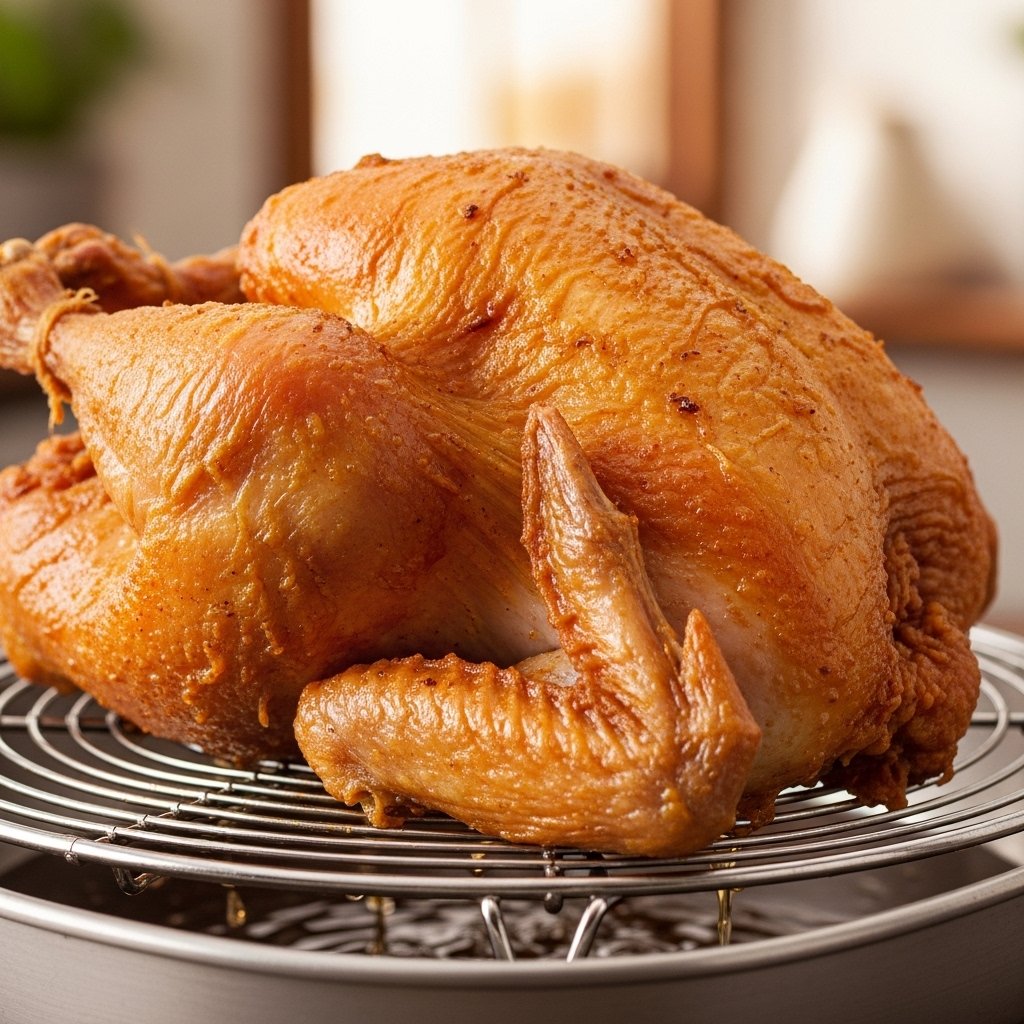
Deep-frying a turkey turns the traditional holiday bird into something truly spectacular: shatteringly crisp skin on the outside and tender, juicy meat inside, all in less than an hour of cook time for a 12–14 pound bird. It’s a fantastic choice when you want big flavor, faster cooking, and a dramatic centerpiece for Thanksgiving, Christmas, or any celebration.
Because it involves lots of hot oil, it’s crucial to follow a clear, safe process. This guide covers everything you need—from choosing the right turkey and oil to managing safety, timing, and cleanup.
Why Deep Fry a Turkey?
Deep-fried turkey has become a holiday favorite because:
- Incredible texture: Ultra-crisp skin with moist, flavorful meat throughout.
- Fast cooking: Roughly 3–4 minutes per pound, so most turkeys cook in under an hour.
- Even browning: Immersing in hot oil browns the bird uniformly.
- Oven space freed up: Your oven stays open for sides and desserts.
- Impressive presentation: Lowering a whole turkey into hot oil and lifting out a perfectly browned bird is a show in itself.
Essential Equipment & Safety Gear
Deep-frying a turkey must be done with the right tools and precautions. Always fry outdoors.
Core Equipment
- Turkey fryer kit
- Large stockpot (typically 26–32 quarts)
- Sturdy propane burner
- Turkey stand/holder or basket
- Lifting hook
- Propane tank
- A full tank to maintain oil temperature throughout frying.
- Oil thermometer
- Long-stem thermometer clipped to the pot to monitor oil temperature.
- Meat thermometer
- Instant-read or probe thermometer for checking internal turkey temperature.
- Protective gear
- Heavy-duty gloves
- Apron
- Long sleeves and closed-toe shoes
- Fire extinguisher
- Rated for grease/oil fires (Class K or B). Never use water on an oil fire.
- Paper towels or wire rack
- For draining the turkey after frying.
Critical Safety Tips for Deep-Frying Turkey
- Always fry outdoors:
On a flat, stable, non-flammable surface, far from buildings, garages, decks, trees, or cars. - Never leave the fryer unattended:
Hot oil can escalate quickly; always have an adult monitoring. - Keep children and pets away:
Establish a clear “no-go” safety zone around the fryer. - Ensure turkey is fully thawed and dry:
- A partially frozen or wet turkey can cause dangerous oil splatter and boil-over.
- Thaw in the refrigerator (allow about 24 hours per 4–5 pounds).
- Don’t overfill the pot with oil:
Too much oil plus a large turkey = overflow and potential fire. - Turn off the burner when lowering turkey:
If oil splashes, it’s far safer without an open flame.
Choosing the Turkey and the Oil
Best Turkey Size for Deep Frying
- Pick a turkey between 10 and 14 pounds.
- Larger birds can be harder to submerge safely and may cause oil to bubble over.
- Avoid pre-brined or self-basting turkeys if you’re not confident about drying them very thoroughly—they often hold more moisture.
Best Oils for Deep-Frying Turkey
Choose oils with a high smoke point and neutral flavor:
- Peanut oil – Classic choice, ~450°F smoke point, great flavor.
- Canola oil – Widely available, high smoke point, mild flavor.
- Sunflower or safflower oil – Also good high-heat options.
You’ll typically need 3–4 gallons of oil for a 12–14 lb turkey, but always follow your fryer’s maximum fill line and instructions.
How to Measure the Correct Oil Level
Do this test before seasoning or brining, and before adding oil:
- Place the thawed, bagged turkey in the empty pot.
- Fill the pot with water until the turkey is fully covered, leaving 2–3 inches between the waterline and the top of the pot.
- Remove the turkey and let the water drain back into the pot.
- Mark or note the water level—this is your maximum oil fill line.
- Discard the water and dry the pot completely before adding oil.
This step prevents dangerous oil overflow when you lower the turkey into hot oil.
Turkey Prep: Thawing, Drying, Seasoning
Thawing
- Thaw turkey in the refrigerator: allow about 24 hours per 4–5 pounds of turkey.
- Make sure the turkey is completely thawed (no ice in the cavity or around bones).
Drying
- Remove the turkey from packaging.
- Take out the neck and giblets from the cavities.
- Pat the turkey very dry inside and out with paper towels.
- Let it sit uncovered in the fridge for a short time (if desired) to dry the skin further.
Seasoning Options
- Dry rubs:
- Rub the turkey with a mixture of salt, pepper, garlic powder, paprika, and other spices under and over the skin.
- Avoid excessively salty or wet rubs that leave a lot of moisture on the skin.
- Injection marinades:
- Use a flavor injector to inject seasoned liquid into breasts and thighs for added flavor and moisture.
- Be sure the exterior is still dry before frying.
- Brining:
- Only if you can thoroughly rinse and dry the turkey afterward.
- Any remaining brine or water on the surface is a splatter risk.
Step-by-Step: How to Deep Fry a Turkey
1. Set Up Your Frying Station
- Place the fryer outdoors on a flat, stable, non-combustible surface (concrete is ideal).
- Ensure there’s plenty of open space around the fryer.
- Keep the propane tank a safe distance from the burner per your kit’s instructions.
2. Add and Heat the Oil
- Pour oil into the pot up to your pre-measured oil line.
- Attach the oil thermometer to the side of the pot.
- Turn on the burner and heat oil to 325–350°F (163–177°C).
- Aim for about 325–340°F before adding the turkey, as temperature will drop when you lower the bird.
Monitor the thermometer closely to avoid overheating.
3. Prep and Secure the Turkey
- While the oil heats, pat the turkey dry one more time.
- Season or inject if you haven’t already.
- Thread the turkey onto the fryer’s holder or into the basket, legs down, neck cavity up, following manufacturer directions.
- Make sure it’s secure and balanced.
4. Lower the Turkey Carefully
- Turn off the burner before lowering the turkey into the hot oil.
- Slowly, gradually lower the turkey into the oil using the lifting hook.
- You may see bubbling and steam—go slowly to prevent splashing or boil-over.
- Once the turkey is fully submerged and bubbling has stabilized, relight the burner and adjust flame to maintain oil temperature.
5. Fry and Monitor
- Maintain the oil at 325–350°F throughout cooking.
- General guideline: 3–4 minutes per pound.
- For a 12 lb turkey: ~36–48 minutes.
- For a 14 lb turkey: ~42–56 minutes.
Start checking internal temperature near the lower end of the estimated time.
6. Check Internal Temperature
- Carefully raise the turkey slightly from the oil (without removing it fully) and check the thickest part of the breast and thigh with a meat thermometer.
- Turkey is safely done when:
- Internal temperature reaches 160–165°F (71–74°C) in the breast.
- Dark meat should also be at least 165°F, often a bit higher.
If not done, lower the turkey back in and continue frying, checking again after a few more minutes.
7. Remove and Rest
- Turn off the burner before fully lifting the turkey out.
- Use the hook to slowly lift the turkey, allowing excess oil to drain back into the pot.
- Transfer the turkey to a wire rack set over a tray or to a platter lined with paper towels.
- Let it rest for at least 20 minutes before carving.
Resting helps juices redistribute so the meat stays moist when sliced.
Troubleshooting & Tips for Deep-Frying Success
- Oil smokes before 350°F:
- The oil may be old or overheated. Turn off the burner and let it cool slightly, then relight and keep closer to 325°F.
- Excessive bubbling or splashing:
- Turkey may be too wet or oil level too high.
- Carefully remove turkey, dry it more thoroughly, and verify oil level.
- Undercooked turkey:
- Always rely on a meat thermometer, not just minutes per pound.
- If underdone, return turkey to oil in small increments until temp is correct.
- Overcooked or too dark skin:
- Oil temperature may have been too high.
- Next time, stay near 325°F, and check internal temperature earlier.
- Greasy skin or meat:
- Let turkey drain well and rest on a rack, not flat on a tray where it sits in oil.
Oil Cooling, Reuse, and Disposal
Cooling
- Turn off burner and let oil cool completely—this can take several hours.
- Do not move the pot until the oil is cool to avoid spills and burns.
Reusing Oil
- Once cool, strain oil through a fine mesh strainer lined with cheesecloth or coffee filters to remove crumbs.
- Store filtered oil in a clean, sealed container in a cool, dark place.
- Reuse within about a month, and discard if it smells off or smokes at lower temperatures than usual.
Disposal
- To dispose, pour completely cooled oil into a sealed container.
- Take it to a local oil recycling center or follow your municipality’s disposal guidelines.
- Never pour oil down the drain, in the toilet, or directly onto the ground.
Carving and Serving Deep-Fried Turkey
Carve a deep-fried turkey just like a roasted one:
- Remove the legs and thighs at the joints.
- Slice off the breast meat in large slabs from each side of the breastbone, then cut crosswise into slices.
- Separate wings and arrange all pieces on a platter.
Serve with your favorite sides—mashed potatoes, stuffing, mac and cheese, roasted vegetables, salads, and rolls all pair wonderfully with the rich, crispy turkey.it.
FAQs
How long to deep-fry a turkey?
Fry 3 minutes per pound at 350°F. A 12-14 lb turkey takes 36-42 minutes for the thigh to reach 165°F.
Is peanut oil best for frying turkey?
Yes, its high smoke point prevents burning. Use 4-5 gallons; canola works as a neutral substitute.
Can I fry a frozen turkey?
No—explosive reaction from ice. Thaw fully in fridge, 24 hours per 5 lbs.
How do I know when the oil is hot enough?
Heat to 325°F; water droplets sizzle and dance. Aim for a steady 350°F during fry.
Safe to reuse the oil?
Strain and store cooled oil for up to 2 uses. Discard if dark or smells off.