
Alton Brown’s Brined Turkey
Alton Brown’s Brined Turkey
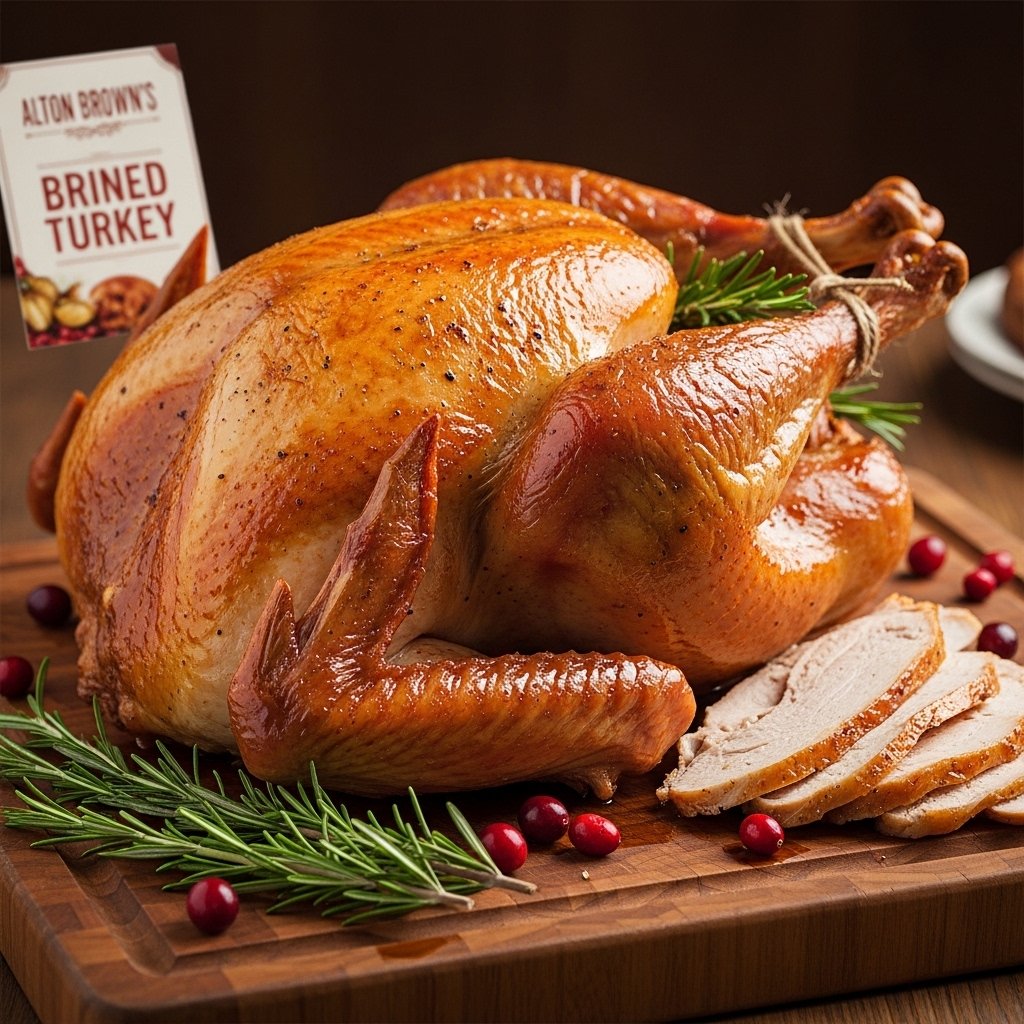
Alton Brown’s turkey method combines a flavor-packed wet brine with a high-heat roast and careful temperature control to produce moist white meat, succulent dark meat, and crisp, deeply browned skin. The brine seasons the meat all the way through, while the intense initial roast and lower finishing temperature build color without drying the bird.
This approach is ideal for Thanksgiving or any holiday where the turkey is the main event.
Brined Turkey Ingredients and Equipment
Turkey and Brine Ingredients
For a 14–16 lb natural young turkey:
Brine
- 1 (14–16 lb) frozen natural, young turkey
- 1 gallon vegetable broth (not low-sodium)
- 1 cup kosher salt
- ½ cup light brown sugar
- 1 tablespoon black peppercorns
- 1½ teaspoons allspice berries
- 1½ teaspoons chopped candied ginger
- 1 gallon heavily iced water
Aromatics for Roasting
- 1 red apple, quartered
- ½ yellow onion, quartered
- 1 cup water
- 4 sprigs fresh rosemary
- 6 fresh sage leaves
- Canola oil (for rubbing the skin)
Hardware
- 5-gallon cooler (or large food-safe bucket) for brining
- Large stockpot (for cooking the brine)
- Probe or instant-read thermometer
- Roasting pan with rack
- Aluminum foil (for tenting the breast)
Thawing and Prep Timeline
Start your turkey several days before roasting for safest and best results.
- 2–3 days before roasting:
- Begin thawing the turkey in the refrigerator or in a cooler kept around 38°F (3°C).
- A 14–16 lb turkey typically needs 3–4 days to thaw in the fridge.
- Day before or morning of roast:
- Prepare and chill the brine completely before adding the turkey.
Important: Never thaw at room temperature. If you’re behind schedule, use the cold water method (submerge in cold water, changing water every 30 minutes).
How to Make Alton Brown’s Turkey Brine
1. Combine Brine Ingredients
In a large stockpot, add:
- 1 gallon vegetable broth
- 1 cup kosher salt
- ½ cup light brown sugar
- 1 tablespoon black peppercorns
- 1½ teaspoons allspice berries
- 1½ teaspoons chopped candied ginger
Stir to combine.
2. Heat and Dissolve
- Bring mixture to a boil over medium-high heat, stirring occasionally.
- Once the salt and sugar are fully dissolved, remove from heat.
- Cover and let cool to room temperature, then refrigerate until thoroughly chilled.
Chilling is essential—warm brine can raise the turkey into an unsafe temperature zone and start “cooking” it prematurely.
3. Prepare the Brining Vessel
- In a clean 5-gallon cooler, pour in the chilled brine.
- Add 1 gallon heavily iced water.
- Stir to evenly chill the mixture.
Brining the Turkey (8–16 Hours)
- Remove turkey from packaging and take out giblets and neck from the cavities.
- Rinse briefly and pat dry.
- Place the turkey breast-side down into the brine in the cooler.
- Add additional ice if needed to keep the brine cold.
- If the turkey floats, weigh it down with a heavy plate to keep it fully submerged.
- Brine 8–16 hours, ideally about 12 hours, turning the bird halfway through for even brining if possible.
Food safety note: Keep the brine at refrigerator-like temperatures (around 36–40°F / 2–4°C) throughout.
Prepping the Turkey for Roasting
After brining:
- Remove the turkey from the brine.
- Discard the used brine—do not reuse or cook with it.
- Rinse the turkey inside and out with cold water to remove excess surface salt.
- Pat the turkey very dry with paper towels, including in creases and under wings and legs.
- Place the bird on a roasting rack set in a shallow roasting pan.
Now you’re ready to add aromatics and oil.
Aromatics: Adding Holiday Flavor to the Cavity
Alton Brown uses heated aromatics to infuse the turkey from the inside.
- Place the apple quarters and onion quarters in a microwave-safe bowl with 1 cup water.
- Microwave on high for about 5 minutes to soften and heat.
- Stuff the turkey cavity with:
- Warm apple and onion
- 4 rosemary sprigs
- 6 sage leaves
- Tuck the wing tips under the bird to prevent burning.
- Rub the entire skin liberally with canola oil to encourage browning and a crisp finish.
No extra salt is needed; the brine has already seasoned the meat thoroughly.
Roasting Instructions (Alton Brown’s High-Heat Method)
1. Preheat the Oven
- Adjust oven rack so the turkey will sit on the lowest level.
- Preheat the oven to 500°F (260°C).
This high temperature jump-starts browning and crisping of the skin.
2. Start with a High-Heat Blast
- Place the turkey (on its rack and pan) into the preheated oven.
- Roast at 500°F for 30 minutes.
- This step develops deep color and begins caramelization.
3. Shield the Breast and Lower the Temperature
After 30 minutes:
- Carefully remove the turkey just enough to cover the breast with a double layer of aluminum foil formed into a shield.
- Reduce the oven temperature to 350°F (175°C).
- Return the turkey to the oven.
4. Roast to Target Internal Temperature
- Insert a probe thermometer into the thickest part of the breast (not touching bone).
- Continue roasting at 350°F until the breast reaches about 155–160°F (68–71°C).
For a 14–16 lb turkey, this typically takes about 2–2.5 hours total cooking time, including the initial 30 minutes at high heat, but always rely on the thermometer rather than the clock.
Food Safety Note:
USDA recommends turkey reach 165°F (74°C) in all parts. Alton Brown removes the bird at 155–160°F, allowing carryover cooking during resting to bring the temperature up into the safe zone.
Resting and Carving the Brined Turkey
Resting (Crucial for Juiciness)
- When the turkey reaches 155–160°F in the breast, remove it from the oven.
- Leave it on the roasting rack and loosely tent with foil.
- Let it rest at least 15–30 minutes (up to 45 minutes for large birds).
Resting redistributes juices, so they stay in the meat instead of running onto the cutting board.
Carving
- Transfer the turkey to a large cutting board.
- Remove and discard the cavity aromatics.
- Remove legs and thighs, then wings.
- Carve the breasts off the bone and slice crosswise into even slices.
- Arrange all pieces on a platter and garnish with fresh herbs or roasted vegetables if desired.
Alton Brown Brining Secrets and Pro Tips
- Use a cooler:
A 5-gallon drink cooler offers plenty of room and good insulation for keeping the brine cold. - Keep the bird submerged:
Use a heavy plate or weight if needed to keep the turkey fully underwater in the brine. - Chill the brine fully:
Never pour warm brine over the turkey; always cool it completely and combine with ice-cold water first. - Don’t add extra salt before roasting:
The brine has pre-seasoned the turkey. Additional salting can make it too salty. - Plan ahead:
Thawing + brining + roasting all require time. Start thawing 3–4 days before and brine 8–16 hours before roasting for best results. - Discard brine:
Do not reuse brine for safety reasons; it’s been in contact with raw poultry.
Variations on Alton Brown’s Brined Turkey
- Smoked turkey:
- After brining and drying, move the turkey to a smoker or grill set up for indirect heat.
- Use wood chips (apple, hickory, or cherry) for smoke.
- Monitor internal temperature carefully, aiming for similar breast temps.
- Herb-focused brine:
- Add thyme, bay leaves, citrus peels, or extra herbs to the brine for a custom flavor profile.
- Browned butter baste:
- In the last phase of roasting at 350°F, you can baste the turkey with browned butter for extra nutty richness.
FAQs
How long should you brine a turkey for the best results?
Brine a turkey 8–16 hours; outside that window, the meat can become too salty.
Can you use table salt instead of kosher salt for the brine?
Use only table salt, and reduce the amount by about one‑third to avoid oversalting.
Should I rinse the turkey after taking it out of the brine?
Yes, rinse briefly under cold water to remove surface salt and sugar, then dry.
Why does brined turkey cook faster than unbrined?
Brined meat absorbs liquid, allowing heat to transfer faster and internal temperatures to rise more quickly.
Can you stuff this turkey with conventional stuffing before roasting?
For food‑safety reasons, cook stuffing separately or only use a light aromatic cavity mix.