
Harvesting Pumpkins: 5 Signs, Timing, Curing & Storage Tips
Harvesting Pumpkins: 5 Signs, Timing, Curing & Storage Tips
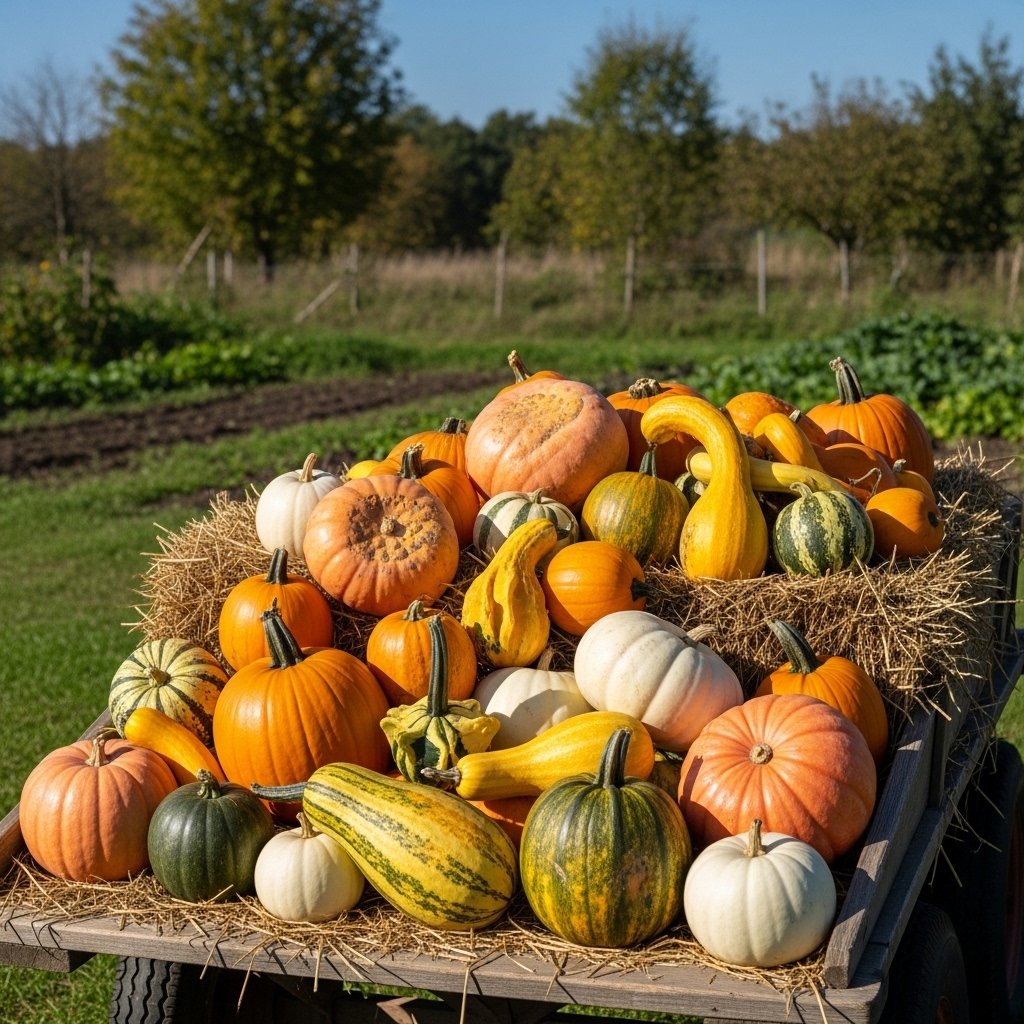
Pumpkins are one of the most rewarding crops to grow—nothing says autumn like seeing those orange globes fill out along the vines. But knowing exactly when to harvest them is where many gardeners get stuck. Pick too early and the skin is soft, flavor is flat, and the pumpkin shrivels in storage. Leave them too long and frost, rot, or pests can undo months of work.
Fortunately, pumpkins are generous with their signals. Once you know what to look for—beyond just “it looks orange”—you can harvest confidently and then cure and store them for months of soups, pies, and front‑porch decor.
How Long Do Pumpkins Take to Mature?
Most pumpkins need 90–120 days from sowing to reach full maturity, depending on the variety and growing conditions.
- Small pie and decorative types often mature toward the shorter end of that range.
- Large carving or giant pumpkins usually take closer to the full 120 days.
Pumpkin harvest season typically falls between late August and late October in temperate climates, but calendar timing is only a starting point—you should always confirm with visual and physical tests on the fruits themselves.
7 Reliable Signs Your Pumpkins Are Ready to Harvest
1. Mature, Uniform Color
Color is the easiest sign to spot from a distance.
- For classic carving types, the pumpkin should be a deep, uniform orange with no large green patches.
- Specialty varieties may mature white, blue, red, yellow, or bicolor; check your seed packet to know the mature color for your cultivar.
If the fruit is still mostly green, it needs more time on the vine unless a hard frost is imminent. A few small green streaks or a bit of shading on the bottom can sometimes finish off the vine or indoors.
2. Hard Rind (The Fingernail Test)
Color alone isn’t enough. A fully ripe pumpkin has a tough outer rind that resists puncture.
- Press your fingernail firmly into the skin on the back or underside (where a tiny mark won’t matter).
- If your nail easily pierces or leaves a deep groove, the pumpkin is still underripe.
- If the skin feels very firm and your nail barely marks it, the rind has hardened and the pumpkin is mature.
A strong rind is critical for storage: pumpkins picked with soft skin tend to shrivel or rot within days or weeks.
3. Brown, Corky Stem
The stem is your direct line to the vine’s status.
- Immature pumpkins have green, smooth, flexible stems.
- Mature pumpkins have stems that turn brownish, corky, and hard when touched.
A dry, woody stem indicates that the fruit has stopped actively drawing nutrients and is effectively “finished” on the vine.
Many growers also watch the small curly tendril nearest the fruit; when that tendril has turned tan or brown and dried up, it’s a strong sign the pumpkin below is ripe or very close.
4. Hollow Sound When Thumped
It may sound old‑fashioned, but the “thump test” works.
- Give the pumpkin a firm tap with your knuckles.
- A ripe pumpkin typically sounds dull and hollow, rather than bright and echoing with a “green” resonance.
This hollow sound suggests that the flesh has thickened and dried enough for long storage.
5. Ground Spot Turned Cream or Pale
Most pumpkins rest on the soil as they grow, forming a “ground spot” where the sun doesn’t hit.
- On immature fruits, that spot is usually green or very pale.
- As the pumpkin ripens, the ground spot turns from greenish to a pale, creamy yellow or orange, depending on the variety.
This change indicates the fruit has reached full color and maturity almost all the way around.
6. Vines and Leaves Starting to Die Back
Pumpkin vines tell their own story as the season ends.
- When leaves begin yellowing and dying back and the vine’s vigor clearly declines, most of the fruit that will ripen has already done so.
- In many climates, this happens naturally in early to mid‑fall as nights cool and day length shortens.
If your vines are still lush and green but the pumpkins meet all the other ripeness tests, you can still harvest; just don’t rely on vine die‑back alone as your only signal.
7. Timing vs. Frost: Don’t Wait Too Long
Pumpkins tolerate light frost on the vines, but hard frost can damage fruits and drastically reduce storage life.
- Many extension services recommend harvesting before the first hard frost if your pumpkins are fully colored and have hard rinds.
- Some gardeners wait until a light frost kills the vines, then harvest on the next dry day, but you should always check that fruit itself shows the other signs of maturity first.
If a significant freeze is forecast and your pumpkins are close (mostly colored, rind fairly hard), it’s better to harvest slightly early and cure them indoors than gamble and lose them to frost.
How to Harvest Pumpkins Without Damaging Them
How you cut and handle pumpkins has a huge impact on how long they store.
- Choose a dry day. Harvest when foliage and fruits are dry to reduce the risk of rot.
- Use sharp pruners, shears, or a knife. Do not yank or twist pumpkins off the vine.
- Leave a long handle. Cut the stem 5–10 cm (2–4 inches) above the fruit. A good stem “handle” helps prevent rot; stemless pumpkins are much more vulnerable.
- Handle gently. Don’t drop, throw, or carry pumpkins by the stem; bruises and stem breakage are common entry points for decay.
Set freshly cut pumpkins in a single layer, not stacked, so air can circulate around them.
Why Curing Matters (And How to Do It)
Curing is the process of letting pumpkins sit in warm, dry conditions so the skin hardens fully and small wounds heal. This step is key for long storage and better flavor.
Curing Conditions
- Temperature: ideally around 24–29 °C (75–85 °F).
- Location: sunny, sheltered spot outdoors (like a porch or patio table) in dry weather, or a warm, well‑ventilated indoor space such as a greenhouse or garage.
- Time: typically 10–14 days.
Spread pumpkins in a single layer on cardboard, pallets, or shelves. Rotate occasionally so all sides get some warmth and air.
After curing:
- The rind should be fully hardened and slightly glossy.
- Stems should be dry and firm.
Long-Term Storage Tips
Correctly cured pumpkins can last for 2–4 months or longer if stored properly.
Ideal storage conditions:
- Temperature: cool, around 10–15 °C (50–59 °F).
- Humidity: moderate—enough to prevent shriveling, but not so high that mold thrives.
- Light: dark or low‑light area; avoid direct sun.
Practical tips:
- Store pumpkins in a single layer on shelves or slatted racks; avoid stacking.
- Place cardboard or straw between pumpkins and cold floors to avoid condensation damage.
- Check monthly and remove any fruits showing soft spots, mold, or shriveling so they don’t affect neighbors.
Small blemishes are fine if the rind is still hard; use those pumpkins first.
What If You Picked Too Early?
If you had to harvest early due to disease, pests, or frost warnings:
- Slightly underripe pumpkins (mostly colored, somewhat soft rind) can sometimes finish ripening and firm up during curing.
- Expect shorter storage life and potentially milder flavor; plan to use these pumpkins first in cooking.
Very green, small, or thin‑rinded pumpkins generally don’t store well; treat them like summer squash and use fresh in soups or roasted dishes rather than trying to keep them for months.
FAQ Section
1. Can pumpkins ripen off the vine?
Partially ripe pumpkins that have turned mostly to their mature color and have started developing a firm rind can continue to color up and harden off the vine during curing; very green, immature fruits generally won’t ripen well.
2. Should I wait for frost before harvesting pumpkins?
You don’t have to; many gardeners harvest mature pumpkins before frost to be safe. If fruits are fully colored with hard rinds, pick them before or right after a light frost, but always before a hard freeze.
3. How do I tell the difference between ripe pumpkins and those that will keep growing?
Ripe pumpkins show uniform mature color, a hard rind that resists a fingernail, a dry or corky stem, and often a hollow sound when tapped; immature ones are partly green, have soft skin, and green stems.
4. Is it OK to eat pumpkins that have been lightly frosted?
If only the foliage was frosted and the fruits were harvested promptly, they’re usually fine. If the rind itself became soft, translucent, or sunken from frost, storage life is very short, so use those pumpkins immediately and cut away damaged areas.
5. How long will cured pumpkins last in storage?
Properly mature, cured pumpkins stored in a cool, dry, well‑ventilated place often last 2–4 months, and sometimes up to 5–6 months for certain varieties under ideal conditions.