
Classic Potato Latkes Recipe: Easy Step-by-Step Guide
Classic Potato Latkes Recipe: Easy Step-by-Step Guide
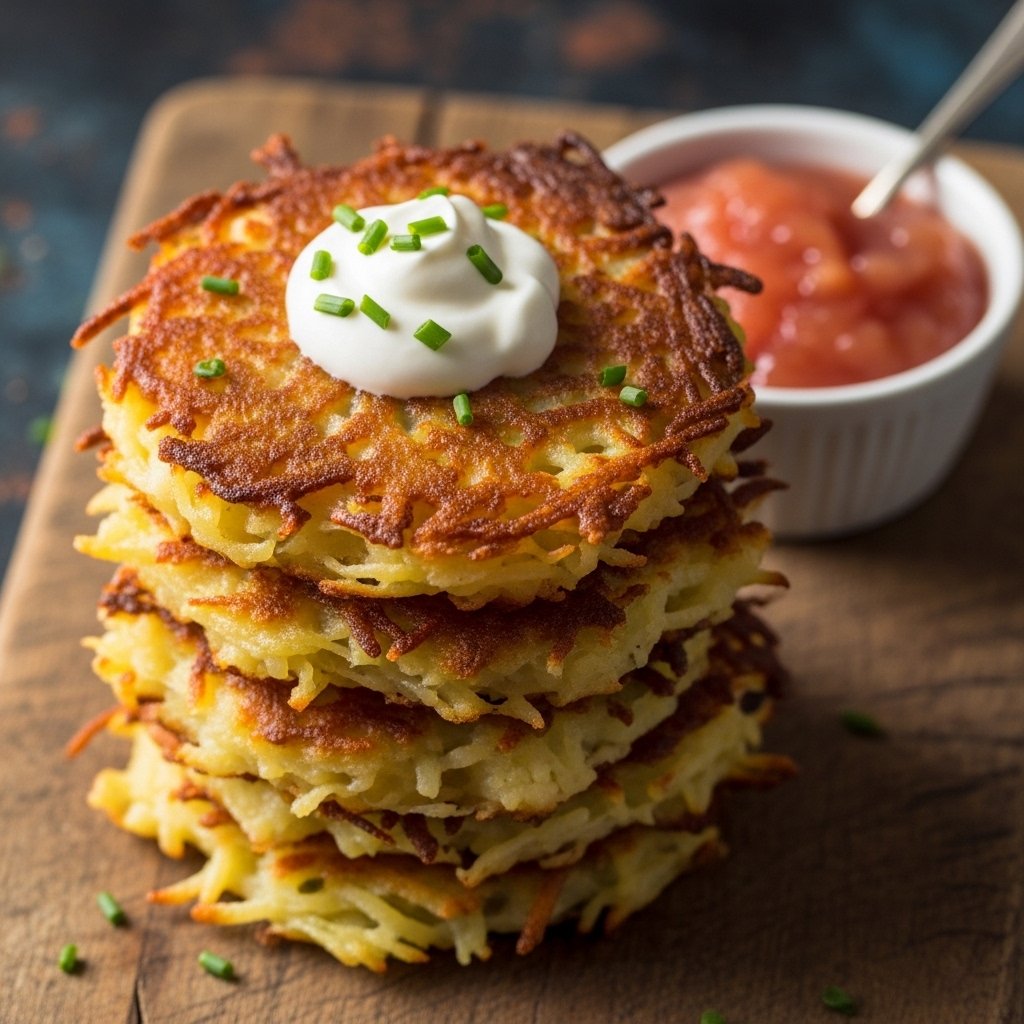
Nothing beats the crunch of fresh potato latkes right out of the pan. If you’ve had trouble with soggy centers or lLatkes are classic Ashkenazi Jewish potato pancakes: shredded potatoes and onions bound with egg and a bit of flour or potato starch, then fried until deeply golden and crisp. Traditionally enjoyed during Hanukkah to honor the miracle of oil, they’ve also become a beloved comfort food any time of year.
The best latkes hit a perfect balance—shatteringly crisp edges, a tender interior, and rich potato-onion flavor—with just enough binder to hold together without feeling heavy or cakey.
Best Ingredients for Crispy Latkes
Choosing the right ingredients is the first step toward consistently great latkes.
Potatoes
- Best choice: Starchy potatoes like russet or Idaho.
- Why: Their higher starch content and lower moisture make them ideal for crispness and structure. Waxy potatoes (like red or new potatoes) tend to stay firmer and less crispy.
Onion
- Best choice: Yellow onion.
- Why: It adds natural sweetness, a bit of moisture, and savory depth that balances the potato.
Binder: Egg and Flour or Potato Starch
- Egg: Provides structure and keeps the latkes from falling apart in the pan.
- Flour or potato starch:
- All-purpose flour is traditional and widely available.
- Potato starch is perfect for a gluten-free option and helps keep the potato flavor true.
Oil for Frying
- Use a neutral, high-heat oil:
- Vegetable oil
- Canola oil
- Peanut oil (if no allergy concerns)
Olive oil can be used in a pinch, but its lower smoke point and stronger flavor can make frying more finicky.
Optional Ingredients
- Scallions or chives for fresh oniony bite
- Matzo meal for a thicker, more traditional-style pancake
- Baking powder for a touch more lightness
- Shredded vegetables (zucchini, sweet potato, carrot) for variations
Prepping Potatoes and Onions: The Critical Moisture Step
Great latkes start before you touch the frying pan.
1. Grate the Potatoes and Onion
- Peel 2 large russet potatoes (about 1 pound total) and 1 medium yellow onion.
- Grate both using the coarse side of a box grater or the shredding disk of a food processor.
- Coarse shreds give a more classic, lacey, crispy texture; very fine grating leads to softer, more pancake-like latkes.
2. Squeeze Out as Much Liquid as Possible
This step is non-negotiable if you want crisp latkes.
- Place the grated potatoes and onion onto a clean kitchen towel or several layers of cheesecloth.
- Fold the towel over and wring hard over a bowl or sink to squeeze out liquid.
- Let the squeezed liquid sit for a minute—starch will settle at the bottom as a white layer. If you like, pour off the water and keep that starch to stir back into the mixture later for extra binding.
If the mixture still looks very wet after a few minutes, squeeze again. The drier the shreds, the better they crisp.
3. Work Quickly to Avoid Browning
- Grated potatoes oxidize and turn brown when exposed to air.
- To slow this:
- Grate potatoes just before mixing.
- If you must prep ahead, keep whole peeled potatoes submerged in cold water, then dry thoroughly before grating.
- A little discoloration won’t ruin flavor, but working briskly keeps the color brighter.
Easy Step-by-Step Latke Recipe
This version yields crisp, savory latkes with a classic texture.
Ingredients (Makes about 10–12 medium latkes)
- 2 large russet potatoes (about 1 lb), peeled
- 1 medium yellow onion, peeled
- 1 large egg
- ¼ cup all-purpose flour or potato starch
- 1 teaspoon kosher salt
- Several grinds black pepper
- Neutral oil for frying (vegetable, canola, or peanut)
Optional:
- 2–3 tablespoons finely sliced scallions
- ⅓ cup matzo meal (for thicker latkes; add an extra egg if using)
- Pinch of baking powder for slightly lighter texture
Step 1: Prep the Vegetables
- Coarsely grate potatoes and onion.
- Transfer to a towel and squeeze hard to remove moisture.
- Let the squeezed liquid stand for a minute in a bowl, then pour off water and scrape any settled potato starch into your mixing bowl (optional but helpful).
Step 2: Mix the Latke Batter
- Add the squeezed potato-onion mixture to a large bowl.
- Stir in:
- 1 egg
- ¼ cup flour or potato starch
- 1 teaspoon kosher salt
- Several grinds black pepper
- Mix until everything is evenly combined and coated. The mixture should be cohesive but still loose and shaggy—not a thick dough.
If the mixture seems very wet and loose, sprinkle in a bit more flour or potato starch. If it seems dry and crumbly, add a small extra splash of beaten egg.
Step 3: Heat the Oil
- Place a heavy skillet (cast iron or a good nonstick) over medium-high heat.
- Add enough oil to create about ¼ inch depth in the pan.
- Heat until the oil shimmers and a shred of potato sizzles immediately when added.
Keeping oil hot (but not smoking) is key to preventing greasy latkes.
Step 4: Form and Fry the Latkes
- For each latke, scoop up a generous tablespoon of the mixture (or slightly more for bigger latkes).
- Gently pat into a rough patty in your hand or directly in the pan—avoid compressing too firmly if you want lacey, crispy edges.
- Place carefully into the hot oil, then lightly flatten with a spatula.
- Fry, undisturbed, for 2–3 minutes per side, until deep golden brown and crisp.
- Adjust heat as needed:
- If they brown too quickly, lower the heat.
- If they aren’t sizzling, raise the heat a touch.
Cook in batches without overcrowding; too many latkes at once cool the oil and lead to soggier results.
Step 5: Drain and Keep Warm
- Use tongs or a slotted spatula to transfer latkes to a paper towel–lined tray or a wire rack set over a baking sheet.
- Optionally sprinkle with a little extra salt while they’re still hot.
- To keep them warm and crisp while you fry remaining batches, place the tray in a low oven (about 175°F / 80°C).
Latkes are at their absolute best not long after frying, when the edges are still glassy and crisp.
Recipe Variations and Oven-Baked Option
Oven-Baked Latkes (Lower Oil)
If you prefer to use less oil:
- Preheat oven to 425°F (220°C).
- Generously oil a rimmed baking sheet and preheat it in the oven for a few minutes.
- Spoon latke-sized mounds of mixture onto the hot sheet and flatten gently.
- Bake about 12 minutes, then flip carefully.
- Bake another 8–10 minutes until crisp and golden.
They won’t be quite as shatteringly crisp as pan-fried latkes, but they’re still tasty and lighter.
Scallion Latkes
- Add 2–4 sliced scallions to the mixture for extra onion flavor, color, and freshness.
Matzo Meal Latkes
- Add ⅓ cup matzo meal plus an extra egg, which yields a slightly thicker, more traditional-style pancake that holds together very well.
Mixed Vegetable Latkes
- Replace part of the potato with shredded zucchini, carrot, or sweet potato.
- Be sure to squeeze these vegetables very dry as well to avoid excess moisture.
Pro Tips for the Crispiest Latkes
- Drain thoroughly:
The more water you remove from the grated potatoes and onion, the better your latkes will crisp. - Use enough oil:
Shallow-frying is not the time to be too timid with oil; a thin layer in the pan ensures even browning. - Maintain heat:
The oil should stay hot enough to sizzle but not smoke. Adjust burner heat continuously as needed. - Avoid crowding:
Fry in batches so each latke has space and the oil temperature stays stable. - Shape lightly:
Loosely formed patties create ragged edges that crisp beautifully. - Season while hot:
A light sprinkle of salt right after frying enhances flavor.
Serving Suggestions: Traditional and Modern
Classic Toppings
- Applesauce: Sweet, tangy contrast to the salty, crisp latkes.
- Sour cream: Cool and creamy, great with savory latkes.
Many people serve both side by side so guests can choose—or top with both.
Modern and Creative Toppings
- Smoked salmon, crème fraîche, and capers
- Fresh herbs like dill, chives, or parsley
- Caramelized onions or onion jam
- A fried or poached egg on top for breakfast or brunch
- Sautéed greens or roasted vegetables for a hearty vegetarian meal
Making Latkes a Meal
- Serve with eggs and salad for brunch.
- Pair with roast chicken, brisket, or roasted vegetables for dinner.
- Use mini latkes as a base for bite-sized appetizers with fancy toppings.
Make-Ahead, Storage, and Reheating
Making Latkes Ahead
- Cook latkes fully and cool completely on a wire rack.
- For freezing, place them in a single layer on a baking sheet and freeze until solid, then transfer to a freezer bag or container.
- They keep in the freezer for about 2 weeks (and often longer with good wrapping).
Reheating
- Re-crisp in a 375°F (190°C) oven on a baking sheet or rack.
- If frozen, there’s no need to thaw; just add a few extra minutes.
- Heat until hot inside and edges are crispy, usually 12–15 minutes.
Holding Latkes for Serving
- If you’re serving shortly after frying, keep latkes on a wire rack in a low oven (about 175°F / 80°C) for up to 30–60 minutes.
- This helps maintain crunch without overcooking.
Common Latke Problems and How to Fix Them
Soggy Latkes
Likely cause: Too much moisture in the potatoes/onion or oil not hot enough.
Fix:
- Squeeze harder and longer.
- Make sure oil is properly heated before adding the next batch.
Latkes Falling Apart
Likely cause: Not enough binder.
Fix:
- Add a bit more flour, potato starch, or an additional egg white.
- Chill the mixture briefly to let starch hydrate and help it hold.
Greasy Latkes
Likely cause: Oil too cool or crowding the pan.
Fix:
- Preheat oil properly; test with a shred of potato.
- Fry fewer latkes at once and let oil return to temperature between batches.
- Drain on paper towels or a rack.
Undercooked Centers
Likely cause: Latkes too thick or oil too hot.
Fix:
- Form thinner patties so they cook through quickly.
- Lower the heat slightly so the outside doesn’t burn before the inside is done.
FAQs
Can I make potato latkes ahead of time?
Yes, fry them until fully cooked, cool, and refrigerate for up to 2 days. Reheat at 400°F for 5 minutes on a wire rack to restore crunch.
Why are my latkes falling apart?
This usually happens because of too much moisture. Next time, squeeze the mixture more thoroughly, or add an extra tablespoon of flour to help bind the latkes.
What oil is best for frying latkes?
Neutral oils like canola or grapeseed, with high smoke points, work well; avoid olive oil, as it burns easily.
Are latkes gluten-free?
Not as written, but swap flour for potato starch or rice flour for a 1:1 gluten-free version.
How do I know when latkes are done frying?
Golden-brown edges, firm middles when pressed, and a nutty potato aroma after 3 minutes per side.