
How to Make Soft-Boiled Eggs
How to Make Soft-Boiled Eggs
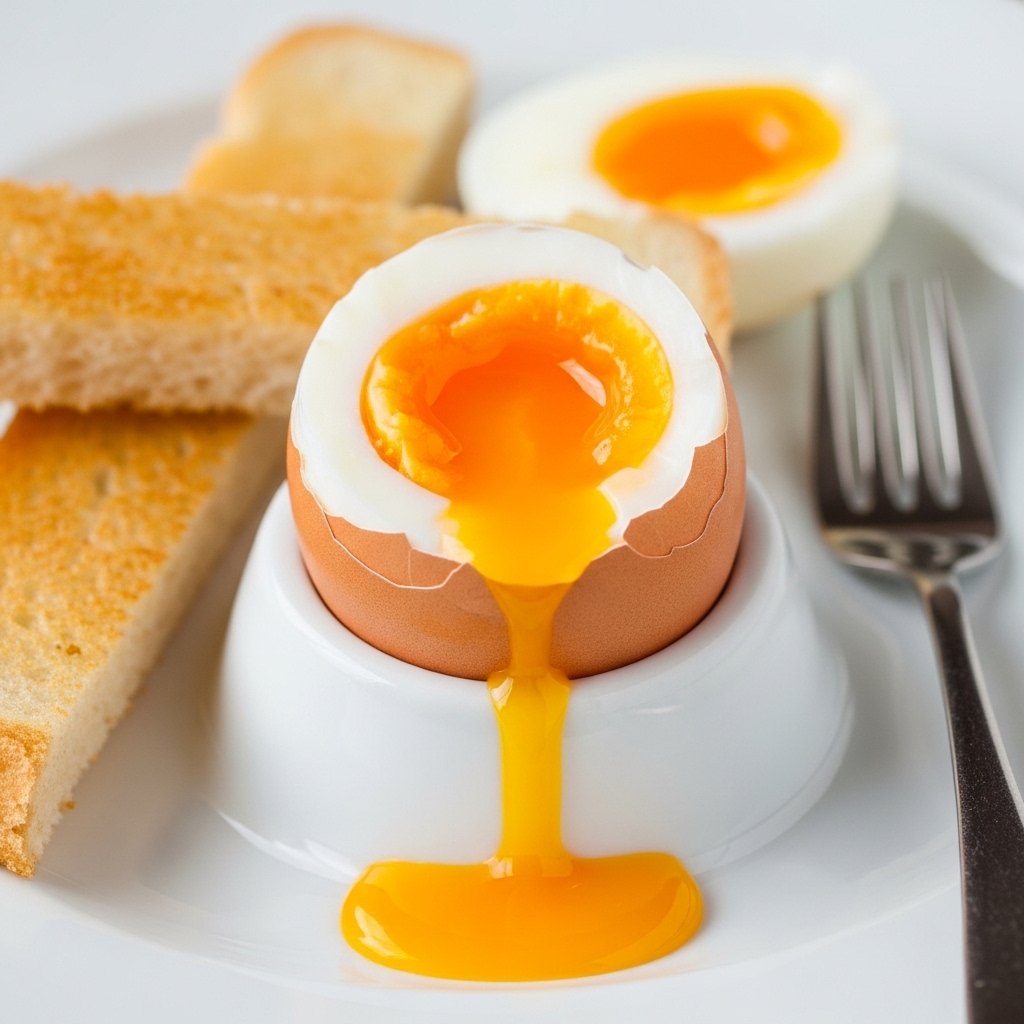
Soft-boiled eggs can be tricky. If they’re too firm, they turn out hard-boiled; if they’re too runny, they’re still raw. I’ve spent years perfecting this method in my kitchen, boiling thousands of eggs for breakfasts, salads, and ramen bowls. This stovetop technique uses careful timing and an ice bath to create creamy whites and jammy yolks. You’ll get consistent results with any egg size, so making soft-boiled eggs on busy mornings is simple and stress-free.
What Is a Soft-Boiled Egg?
A soft-boiled egg has a fully set white that is tender and smooth, with a yolk that is partially cooked, soft and custardy in the center, sometimes called “jammy.” Unlike hard-boiled eggs with crumbly yolks or poached eggs that require vinegar, soft-boiled eggs are cooked in their shells, making them easy to peel and ensuring precise doneness.
This method uses a 6-minute cook time for medium eggs, giving you a texture perfect for dipping toast soldiers or slicing over avocado. Soft-boiled eggs are a staple in home cooking around the world, from British breakfasts to Japanese onsen tamago.
Why You’ll Love This Recipe
- Reliable texture: You get creamy whites and jammy yolks every time, with no guesswork, thanks to precise timing and an ice bath.
- Quick and easy: These eggs are ready in under 10 minutes, perfect for weeknight dinners or busy mornings.
- Versatile base: Soft-boiled eggs elevate salads, ramen, grain bowls, or even just buttered toast.
- Budget-friendly: Uses everyday eggs, no fancy gadgets needed.
- Foolproof for beginners: Works with fridge-cold eggs; no boiling over or green rings.
Ingredients
For 4 medium eggs (scale up as needed):
- 4 medium eggs (straight from the fridge for best results)
- 2 quarts of water (enough to cover eggs by 1 inch)
- Ice (for a large bowl of ice water)
Optional substitutions:
- Large eggs: Use 6-7 minutes instead of 6.
- Extra-large eggs: Go for 7 minutes.
- Older eggs (7-10 days old): Peel more easily. Fresh ones work but may stick slightly.
Step-by-Step Cooking Instructions
- Prepare the pot: Fill a medium saucepan with 2 quarts of water. Bring to a rolling boil over high heat. The water should bubble vigorously.
- Add the eggs gently: Use a slotted spoon to lower cold eggs from the fridge into the boiling water one at a time. This prevents cracking caused by a sudden temperature change.
- Start the timer: Set it for exactly 6 minutes if you’re using medium eggs (adjust for other sizes as needed). Keep the water at a gentle boil, using medium-high heat for best results.
- Watch for color change: Whites turn opaque white within 2 minutes; yolks stay bright yellow underneath.
- Prepare an ice bath: While the eggs cook, fill a large bowl with ice and cold water, enough to fully submerge the eggs.
- Shock in ice: After 6 minutes, use a slotted spoon to transfer the eggs directly into the ice bath. Let them sit for 2-3 minutes until cool, and the shells are firm.
- Peel carefully: Tap each egg on a hard surface to crack the shell all over. Roll it gently to loosen the shell, then peel under cool running water. The white should come off smoothly, revealing a glossy, jammy yolk.
Variations and Customizations
Swap for dietary needs:
- Vegan: Use marinated tofu or potato “eggs” simmered similarly.
- Low-cholesterol: Use only egg whites (cook for 4-5 minutes).
Flavor twists:
- Soy-marinated: After peeling, soak the eggs in soy sauce, mirin, and green onions for 1-2 hours. They make a great topping for ramen.
- Herbed: Sprinkle peeled eggs with everything bagel seasoning or fresh chives.
- Spicy: Dust with chili flakes and sea salt.
Equipment swaps:
- No saucepan? Microwave in a covered mug with ½ cup water (2-3 minutes, watch closely).
- Instant Pot: 5 minutes at high pressure, quick release, then ice bath.
Expert Cooking Tips
Start with room-temperature water if your stove heats slowly. It speeds up boiling without overcooking. Test one egg first if trying new sizes. Yolks firm up fast past 7 minutes. For high-altitude kitchens above 3,000 feet, add 30 seconds to account for the lower boiling point.
Store peeled soft-boiled eggs in an airtight container with a damp paper towel for up to 2 days. To warm them, reheat gently in hot water. If you’re serving runny-yolk eggs to kids or older adults, use pasteurized eggs for extra safety.
Common Mistakes to Avoid
- Skipping the ice bath: Eggs keep cooking from residual heat, turning yolks firm.
- Overcrowding the pot: If you add too many eggs, the water temperature drops, and the eggs cook unevenly. Use a bigger pan if you’re making more eggs.
- Using boiling water from the start: Cracks shells; always lower into already-boiling water.
- Peeling too soon: Hot eggs tear; chill fully first.
- Ignore egg age: Super-fresh eggs stick to the shell—let them sit a week if possible.
Real Cooking Scenario
Picture this: It’s a hectic Tuesday morning in my Hyderabad kitchen. The kids need breakfast fast, so I grab four eggs from the fridge, boil water while toasting bread, and set the timer for exactly 6 minutes. An ice bath cools the eggs, and peeling reveals perfect jammy centers. We dip toast soldiers in butter drizzled with yolk. Everyone’s happy, and there’s no rubbery disappointment. This method saves my sanity every week.
FAQs
How long to soft-boil an egg?
Medium eggs take 6 minutes to boil, then an ice bath for jammy yolks.
Why did my soft-boiled egg crack?
Cold eggs expand too quickly if dropped straight into boiling water. Lower them gently with a spoon to prevent cracking.
Can I soft-boil eggs in the microwave?
Yes, but carefully: 2-3 minutes in a covered mug with water, then ice bath to avoid explosions.
How do you peel soft-boiled eggs easily?
Ice bath for 2-3 minutes, tap and roll the shell, peel under running water.
Are soft-boiled eggs safe to eat?
Yes, for a 6-minute cook time, use pasteurized eggs as an extra precaution for vulnerable groups.