
Juicy Roasted Pork Loin Recipe
Juicy Roasted Pork Loin Recipe
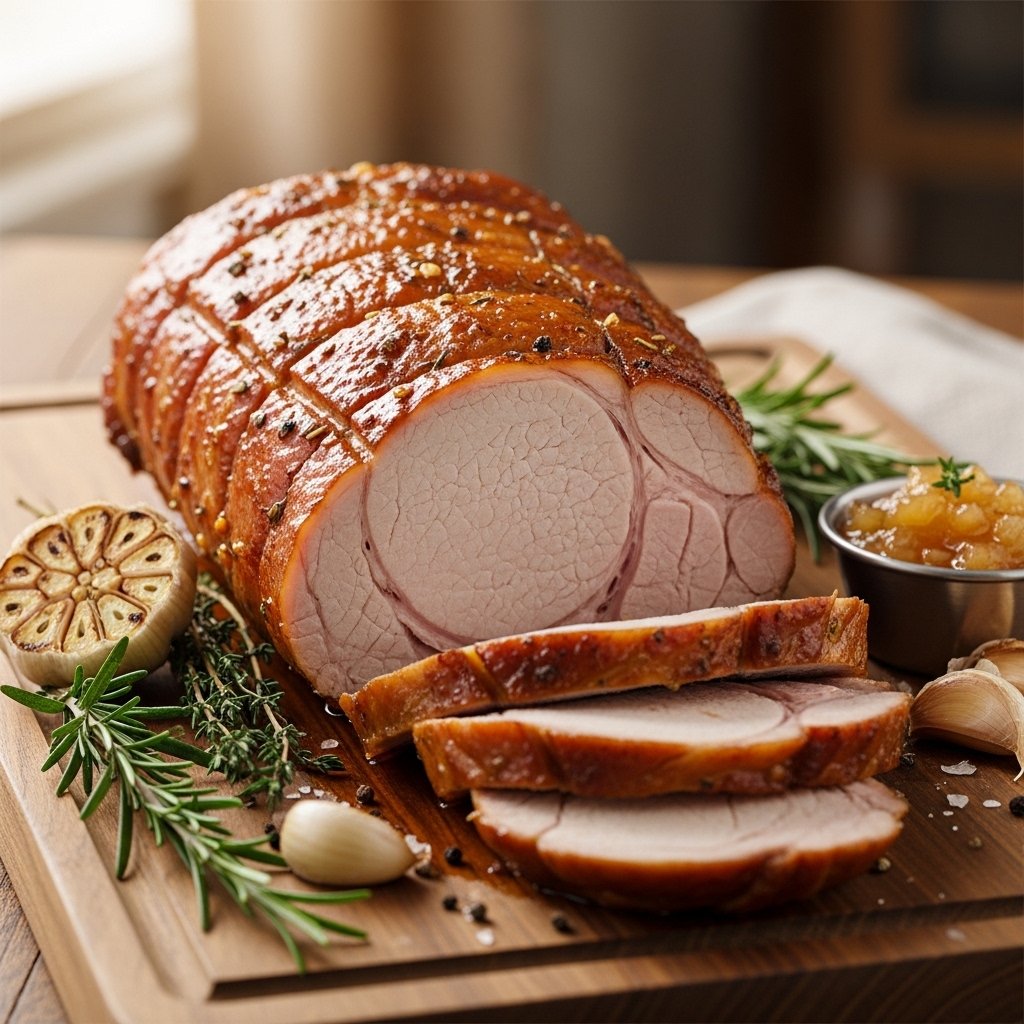
Roasting a pork loin doesn’t need to be stressful or complicated. With the right temperature, timing, and a proper resting period, you can reliably turn this lean cut into a juicy, tender centerpiece for anything from a simple family dinner to a special gathering.
Here is a completely rewritten, polished version of your article with clear structure, strong flow, and clean grammar.
Why Pork Loin Is a Great Roast
Pork loin is one of the best cuts for home roasting because it’s:
- Lean but tender: When cooked correctly, it stays juicy without feeling heavy.
- Even in shape: Its uniform size helps it cook evenly from edge to center.
- Budget-friendly and versatile: It’s often more affordable than many beef roasts and pairs well with a wide range of flavors.
Because pork loin is lean, it doesn’t have the built-in insurance of heavy marbling. That’s why careful temperature control and resting are essential. The method below uses a two-stage oven temperature: a high-heat start for a flavorful crust, followed by a lower, gentle roast to keep the inside moist.
Essential Ingredients for Roasted Pork Loin
You don’t need complicated marinades or long ingredient lists—simple seasonings and good technique do the work.
You’ll need:
- 1 boneless pork loin roast (about 2 to 3 pounds)
- Kosher salt
- Worcestershire sauce
- Paprika
- Onion powder
- Garlic powder
- Dried rosemary (crushed or finely chopped)
- Freshly ground black pepper
- Olive oil or cooking spray (for the pan)
These seasonings form a savory, aromatic crust that complements the natural flavor of the pork instead of overpowering it.
Prepping the Pork Loin
Proper prep sets you up for success in the oven.
- Bring to room-ish temperature:
Remove the pork loin from the fridge about 20 minutes before cooking. Letting the chill come off helps it roast more evenly. - Trim excess fat:
Leave a thin layer of fat on top to baste the meat as it cooks, but trim away any thick, hard fat that won’t render. - Make the seasoning rub:
In a small bowl, combine:- Kosher salt
- Paprika
- Onion powder
- Garlic powder
- Crushed dried rosemary
- Black pepper
Mix until evenly blended.
- Season the pork:
- Brush the entire surface of the pork with Worcestershire sauce. This adds subtle depth and helps the rub adhere.
- Generously coat all sides with the spice mixture, pressing it into the meat. Don’t be shy—you want a visible, even layer all over.
- Prepare the roasting pan:
Line a roasting pan or rimmed baking sheet with aluminum foil for easy cleanup. Lightly coat the foil with olive oil or cooking spray.
Place the pork loin in the pan fat side up, so the fat can melt and baste the meat as it roasts.
The Two-Temperature Roasting Method
This method gives you both a flavorful crust and a juicy interior.
Stage One: High-Heat Searing
- Preheat your oven to 425°F (220°C).
- Once the oven is hot, place the pan with the pork loin on the middle rack.
- Roast at 425°F for 15 minutes.
This initial high heat kickstarts browning through the Maillard reaction, forming a deep, savory crust on the outside.
Stage Two: Gentle, Even Cooking
- After 15 minutes, reduce the oven temperature to 375°F (190°C).
- Continue roasting for another 40 to 60 minutes, depending on the size and thickness of your roast.
The lower temperature allows the center to cook through gently while preventing the exterior from drying out or burning. This slower, more controlled stage is where the meat becomes tender and juicy.
How to Use a Thermometer for Perfect Doneness
Time is just a guideline—temperature is the real key.
- Start checking early:
After about 30 minutes at 375°F, begin checking the internal temperature with an instant-read thermometer. - Where to measure:
Insert the thermometer into the thickest part of the pork loin. Avoid any bone (if present) and don’t press all the way to the pan. - When to remove from the oven:
Take the pork out when it reaches 140°F to 143°F internally.- Even though the recommended safe serving temperature for pork is 145°F, the roast will continue to cook from residual heat after it leaves the oven.
- This “carryover cooking” usually raises the internal temperature by a few degrees, bringing it right into the ideal 145°F range as it rests.
Pulling the roast at 140–143°F instead of waiting for 145°F inside the oven is one of the most important steps for preventing dryness in this lean cut.
Remember: every oven and every roast is a little different. Rely on the thermometer rather than just the clock.
The Critical Resting Step
Once your roast hits 140–143°F and you’ve removed it from the oven:
- Tent with foil:
Loosely cover the pork loin with aluminum foil. Don’t wrap it tightly—trapping steam can soften the crust. - Rest for 5–10 minutes:
During this time:- The internal temperature rises a few degrees, reaching about 145°F.
- The muscle fibers relax and reabsorb juices that have been driven toward the center during cooking.
Skipping the rest can cause juices to spill out onto the cutting board as soon as you slice, leaving the meat dry. Resting is a small step that makes a big difference.
Slicing and Serving the Pork Loin
After resting:
- Transfer the roast to a clean cutting board.
- Use a sharp carving or chef’s knife to slice the pork into pieces about ½ inch thick. This thickness keeps each slice moist but easy to eat.
- Look in your roasting pan—you’ll see flavorful golden juices left behind.
- Spoon these pan juices over the sliced meat just before serving.
- Or use them as the base for a simple gravy (see below).
Serve immediately while warm, alongside your favorite sides.
Making a Simple Pan Gravy
To turn those pan drippings into a silky, savory gravy:
- Collect the juices:
Pour the pan juices (and any browned bits) into a small saucepan. - Make a butter-flour paste:
In a separate bowl, mix together:- 2 tablespoons butter
- 2 tablespoons flour
Stir until smooth.
- Thicken the gravy:
- Warm the pan juices over medium heat.
- Whisk in the butter-flour mixture gradually, whisking continuously to avoid lumps.
- Add about 1 cup of chicken broth, a little at a time, until you reach your desired consistency.
- Simmer for 5–10 minutes, whisking occasionally, until thickened. Remember it will thicken more as it cools slightly.
Taste and adjust seasoning with salt and pepper if needed, then serve over the sliced pork and sides.
Side Dish Ideas That Pair Beautifully
Roasted pork loin works with a wide variety of side dishes. Try:
- Roasted potatoes (white or sweet) for a classic, hearty plate.
- Roasted vegetables such as broccoli, Brussels sprouts, carrots, zucchini, or bell peppers.
- Green vegetables like green beans, asparagus, or sautéed spinach for freshness and color.
- Comforting starches such as mashed potatoes, mashed cauliflower, or a creamy polenta.
- Root vegetables (parsnips, carrots, sweet potatoes) roasted with herbs for earthy sweetness.
Choose sides you love—pork loin is flexible enough to pair with simple weeknight vegetables or dressed-up holiday favorites.
Scaling the Recipe for Bigger Roasts
This method adapts easily for larger pork loins:
- Keep the 425°F first stage at 15 minutes for browning.
- For the 375°F stage, plan roughly 15–20 minutes per pound, but always confirm doneness with a thermometer.
Example:
- A 4-pound roast:
- 15 minutes at 425°F
- Then about 60–80 minutes at 375°F, checking temperature toward the end.
The larger the roast, the more carryover cooking you’ll see during resting, so pulling around 140–143°F is still important.
Cooking from Frozen (When You Have To)
For best texture and even cooking, it’s strongly recommended to thaw pork loin in the refrigerator for about 24 hours before roasting.
If you must cook from frozen:
- Expect cooking to take roughly 50% longer than usual.
- Use the same two-temperature approach, but rely heavily on your thermometer to avoid under- or overcooking.
Even so, thawed pork will almost always give better results in terms of tenderness and juiciness.
FAQs
How long to cook a 3-pound pork loin?
Roast at 325°F for 45-60 minutes, until the internal temperature reaches 140°F. Rest to 145°F. Total under 1.5 hours active oven time.
Can I use pork tenderloin instead?
Yes, but it’s thinner—reduce time to 25-35 minutes. Check at 140°F for juiciness.
What if I don’t have time to brine?
Dry brine: Rub the salt mix on the pork, then refrigerate for 1 hour, uncovered—still juicy, less deep flavor.
Safe internal temperature for pork loin?
Pull at 140°F; rests to 145°F. USDA safe, keeps it tender, not dry.
How to store leftovers?
Fridge in an airtight container up to 4 days. Reheat slices gently in the microwave with a splash of broth.