
Perfect Baked Chicken Breast
Perfect Baked Chicken Breast
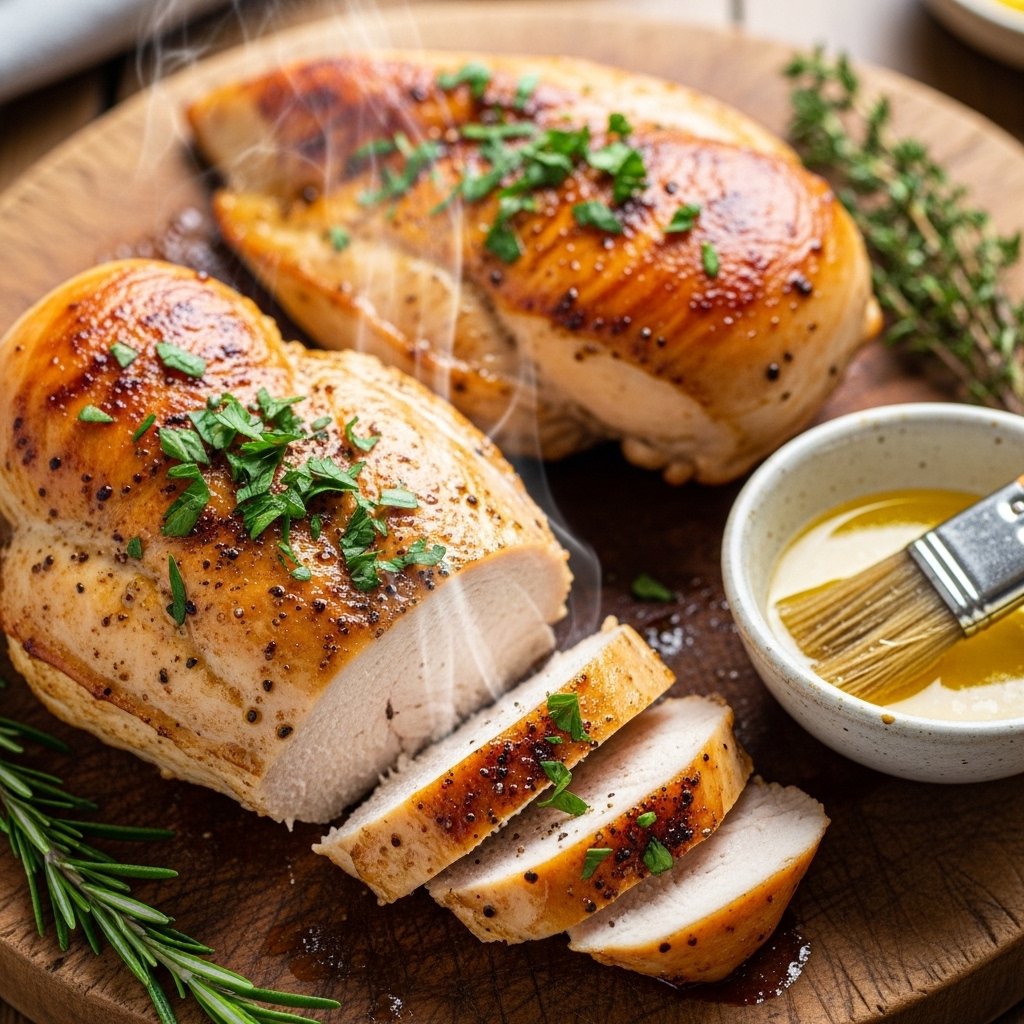
Boneless, skinless chicken breasts can be incredibly juicy and flavorful—you just need the right method. This parchment-covered baking technique keeps the meat moist, tender, and perfectly cooked, making it ideal for beginners and busy home cooks alike.
Why This Oven Method Works
Chicken breasts are lean and can dry out quickly, especially when baked uncovered. This approach solves that problem with:
- Moderately high heat (400°F/205°C): Cooks the chicken quickly enough to retain moisture.
- Snug parchment cover: Buttered parchment sits directly on top of the chicken, trapping gentle steam and effectively basting the meat in its own juices as it cooks.
- Resting time: A short rest lets juices redistribute so they stay in the meat, not on your cutting board.
The result is tender, juicy chicken that’s ready to slice, shred, or cube for almost any dish.
Essential Equipment
You’ll need:
- Oven
- Baking dish (glass, ceramic, or metal—just large enough to fit the breasts without crowding)
- Parchment paper (cut to fit inside the baking dish)
- Kitchen shears or a sharp knife (for trimming and portioning)
- Butter or nonstick spray (for greasing dish and parchment)
- Instant-read thermometer (strongly recommended for best results)
Ingredients
For about 3 medium chicken breasts:
- 1.5 pounds boneless, skinless chicken breasts
- 1–2 tablespoons olive oil (or melted butter for extra richness)
- Salt and freshly ground black pepper
- Optional: fresh herbs (such as parsley or thyme) and lemon wedges for flavor and garnish
Step-by-Step: Oven-Baked Chicken Breasts
1. Preheat the Oven
- Set your oven to 400°F (205°C).
- This temperature is hot enough to cook the chicken quickly while still allowing it to stay moist.
2. Prepare the Baking Dish and Chicken
- Lightly grease the baking dish with butter or oil to prevent sticking and add flavor.
- Trim any excess fat or ragged pieces from the chicken breasts with kitchen shears or a knife.
- Arrange the chicken in a single layer in the dish, leaving a bit of space between each piece.
- Drizzle the tops with olive oil or melted butter and rub to coat.
- Season generously with salt and pepper on both sides.
- If you like, scatter fresh herb sprigs and a few lemon wedges around the chicken.
3. Cover with Buttered Parchment
- Cut a piece of parchment paper slightly larger than the inside of your baking dish.
- Lightly butter one side of the parchment.
- Lay the parchment buttered side down directly on top of the chicken breasts.
- Tuck the edges down inside the dish so the paper fits snugly over the chicken.
This creates a loose seal that traps moisture and lets the chicken gently steam and baste as it bakes.
4. Bake
- Place the covered baking dish in the oven.
- Bake for 30–40 minutes, depending on the size and thickness of the breasts.
Check doneness with an instant-read thermometer:
- Insert the thermometer into the thickest part of a breast (without touching the pan).
- The chicken is done when it reaches 165°F (74°C).
If your breasts are very small or thin, start checking around 25 minutes; if they’re quite thick, they may need closer to 40 minutes.
5. Rest and Serve
- Remove the dish from the oven and leave the parchment in place.
- Let the chicken rest for 5–10 minutes.
This resting time allows juices to redistribute throughout the meat so it stays moist when you slice it.
After resting:
- Slice, cube, or shred the chicken as needed.
- Serve immediately or let it cool for meal prep and later use.
Pro Tips for Juicy, Flavorful Chicken
- Use similar-sized pieces: Breasts that are close in size and thickness cook more evenly. Lightly pound thicker ends if needed.
- Take the chill off: Let chicken sit at room temperature for about 15–20 minutes before baking for more even cooking.
- Season generously: Chicken breast is mild; a good amount of salt, pepper, and herbs makes a big difference.
- Don’t skip the parchment: It’s the key to locking in moisture. Foil traps steam but doesn’t “hug” and baste the chicken in the same way.
- Let it rest: Cutting too soon lets juices spill out. A brief rest keeps the meat tender and moist.
Flavor Variations
Use the same method with different seasonings:
- Herb-Lemon Chicken:
Add rosemary, thyme, or parsley and more lemon slices around the chicken before baking. - Spicy Chicken:
Sprinkle on chili powder, smoked paprika, cayenne, or a favorite spice blend for heat. - Garlic Chicken:
Add whole crushed garlic cloves or garlic powder along with the salt and pepper. - Southwest Style:
Season with cumin, coriander, paprika, and serve with lime wedges. - Italian-Inspired:
Add dried oregano, basil, and a little grated Parmesan to the seasoning.
Serving Ideas
This baked chicken is incredibly versatile. Try it:
- Sliced over salads, grain bowls, or pasta.
- Cubed or shredded in wraps, sandwiches, quesadillas, and burrito bowls.
- As a simple main dish with roasted vegetables, rice, potatoes, or a side salad.
Storing and Make-Ahead Tips
Refrigeration
- Let cooked chicken cool completely.
- Store whole, sliced, or shredded pieces in an airtight container.
- Keep in the refrigerator for up to 1 week.
Freezing
- Wrap individual breasts tightly in plastic wrap or place them in freezer bags.
- Press out as much air as possible.
- Freeze for up to 3 months for best texture.
- Thaw overnight in the refrigerator before using.
Reheating
Microwave: Reheat gently at medium power, again with a little broth or water to help keep it moist.
Oven: Place chicken in a covered dish, add a splash of broth or water, and warm at about 275°F (135°C) until heated through.
FAQs
How long to bake chicken breasts at 400°F?
Bake for 20-25 minutes until the internal temperature reaches 165°F. Rest 5 minutes for juiciness.
Should I cover baked chicken breasts?
No, uncover for crispy exterior. Foil only if browning too fast.
Why are my baked chicken breasts tough?
Overcooking or uneven thickness. Pound flat and use a thermometer.
Can I use frozen chicken breasts?
Thaw fully first in the fridge. Baking from frozen adds 50% to the baking time and increases the risk of uneven cooking.
What oil is best for baked chicken?
Olive or avocado oil for flavor and smoke point. Avoid butter—it burns.