
Perfect Roast Spatchcocked Turkey: Crispy Skin & Juicy Meat Every Time
Perfect Roast Spatchcocked Turkey: Crispy Skin & Juicy Meat Every Time
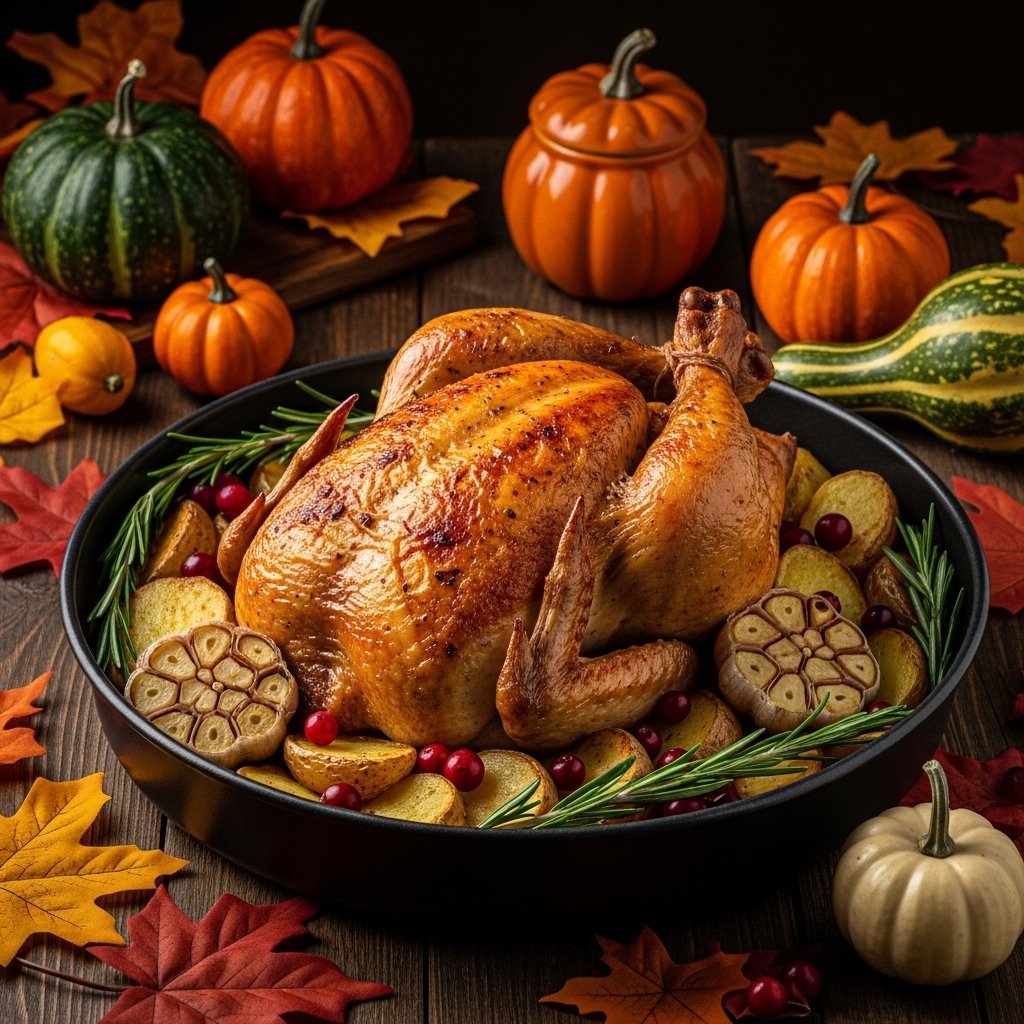
Frequently, roast turkey is both dry and unevenly cooked, and when the bird turns out on average technique depends on what cook book you consulted or how close you had your hands clean to its preparation table. Stop the failed Thanksgivings and underwhelming holiday roasts: with this guide, you win every time!
You’ll also learn how to make roast spatchcocked turkey, which is a method of butterflying the turkey that makes it cook evenly. The result is constant crispy skin and succulent flesh.
Late, you’ll find that this article goes into the details with an analytical approach. With no trouble by the end you will be capable of cooking—as a matter of course—a show-stop any turkey dinner calls for.
What Is Roast Spatchcocked Turkey?
Spatchcocked Roast turkey is a whole bird, butterflied to remove the back bone and then flattened. This method allows heat to be applied more evenly for faster and more even cooking.
Unlike conventional whole roasted turkey, spatchcocking means that the dark meat and white meat finish at the same time. It roast breast-up on a sheet pan in hot oven, giving you crispy skin without steam.
This method will take 1.5-2 hours to cook a turkey anywhere between 12 and 16 pounds. The result is a juicy interior area and beautiful to crunch as it arrives.
Key Features or Benefits
- Faster cooking: Cut the time needed by half, leaving your oven free to make more sides.
- Even doneness: The flattening effect prevents overcooked breast meat while thighs remain juicy.
- Crispiest skin: The most direct exposure of heat enables golden, skin-crisp-as-glass results—no soggy spots. Also, this allows for the juiciest meat.
- Juicier meat: Better heat distribution passes destroyer across legs, wings, and bosom.
- Easier carving: Flat shape makes even slicing simple without wrestling a hunk of unbaked chicken.
- Oven-friendly: Fits into smaller ovens and also cuts washing-up to just one pan.
- Extra flavour: More’s room for rubs and herbs to get through all parts uniformly.
Step-by-Step Guide to Roast Spatchcocked Turkey
Tools You’ll Need
A sheet pan, wire rack, kitchen shears, instant-read thermometer and roasting pan.
Prep the Turkey (30 minutes active Cooking)
Choose a fresh or thoroughly thawed turkey. Weighing 12-16 pounds, remove giblets and pat dry inside and out with paper towels. Let air-dry uncovered in the refrigerator for 4-24 hours for crispy skin.
Flip the turkey breast side down on cutting board. Use kitchen shears to cut along both sides of backbone, from tail to neck. Carefully remove and discard the backbone (save for stock).
Flip turkey over. Press firmly down on breastbone to flatten it–hear a crack, that’s normal. Tuck wing tips under body to prevent burning.
Season and Roast (1.5-2.5 hours)
Mix 3 tbsp kosher salt, 1 tbsp black pepper, 2 tsp garlic powder, 2 tsp smoked paprika, 1 tsp dried thyme. Rub generously under skin and all over. Add butter pats underneath skin for extra richness.
Put a wire rack on a foil-lined sheet pan–set turkey breast-up on rack. Allow to stand at room temp 1 hour, then preheat oven to 425°F.
At 425°F roast 30 minutes to crisp skin. Lower heat 375°F and continue 45-75 minutes, until thigh reaches 165°F (breast will have hit 160°F safely).
Rest, tented 20-30 minutes. Juices redistribute for maximum moistness. Carve, removing legs/wings first, then slicing breast against the grain. Total time is 2-3 hours. Serves 8-12.
Comparison Table: Spatchcock vs. Traditional Roast Turkey
| Aspect | Spatchcocked Roast | Traditional Whole Roast |
|---|---|---|
| Cook Time (14 lb) | 1.5-2 hours | 3.5-4.5 hours |
| Skin Texture | Ultra-crispy, even | Patchy, often soft |
| Meat Juiciness | High (even temp) | Variable (breast dries) |
| Oven Space | Fits small ovens | Needs large roaster |
| Carving Ease | Simple, flat layout | Awkward, bulky |
| Skill Level | Beginner-friendly | Intermediate |
| Best For | Weeknights, small kitchens | Classic presentations |
Use this to decide: spatchcock for speed and crunch; traditional for that upright vibe.
Customization, Variations, and Use-Case Scenarios
Tailor roast spatchcocked turkey to your crowd or occasion.
Variation with Dry Brine: Skip the salt rub; do a dry brine 24-48 hours in advance with sugar-salt mixture (2: 1 ratio). For professional chef wannabes & who want the juiciest meat.
Herb-Citrus Twist: Place orange slices, rosemary and sage under the skin. Great for holiday dinners–tinges flavors without overwhelming your senses.
Spicy BBQ Style: Rub with smoked paprika, cumin, chili powder, and dark sugar. For two smash hits at once, smoke till sizzling at 300°F for about 2 hours. This is best suited to summer picnics or game day feasts.
Family Meal on a Small Scale: Hack up a 5-7 lb turkey or use cornish hens. Roast for 45-60 minutes. Good for weeknight dinners of 4.
Gluten-Free or Low Carbs: Skip the flour gravy; thickens with cornstarch slurry. Fits keto or people with allergies.
Meal Prep Tips: Tear up leftovers for salads, Tacos or soups. Freeze up to three months. Busy parents love this–allows easy prep post-holiday.
This adapts to cooks alone or great feasts. Also for any dietary adjustments.
Expert Tips for Best Results
Check temperature on an outside thermometer as those built in often run hot by 25°F, which can come back to scorch your skin before it’s ready.
Score the skin just a bit before you apply your seasoning; this makes fat render more quickly and gives an evenly crispy coating.
In middle of roast, baste just once with pan juices mixed with soy sauce—umami and not sodden.
To get a smoky taste in the house, add wood chips to a foil pouch under your rack.
Precisely weigh your bird–every ounce counts. In contrast, for 375°F and above this is about ten minutes per pound over 12 lbs.
Brining early is only for those who do not dry-brine: oversalting will ruin texture.
Halfway through, rotate your pan for more even browning in con.vection ovens
For your rubs, use high-smoke-point avocado oil rather than butter if grilling after roasting.
Common Mistakes to Avoid
- Don’t skip the dry: Wet skin steams instead of crisps, giving it a rubbery texture.Low oven start: Under 400F leaves moisture trapped; skin remains pale and chewy.
- Overcooking thighs:Thighs should be pulled at 165F exact. Carryover bumps them to 170F and dries the dark meat right out.
- Crowded pan: If the sides are touching, airflow is blocked and not all of the turkey will taste steamed evenly.
- No rest time: Right after cutting, juices are released. Everything goes dry.
- Early foil tent is too heavy: Traps the steam, defeating our hard-won crispness.
Real-World Examples or Practical Applications
When we butchered this year’s 14-pound Thanksgiving turkey, the oven was freed for pies. Without exaggeration, every guest raved about this juicy leg, no complaints any more.
A friend did the BBQ version for a Fourth of July cookout. Smoked then roasted, it was enough to feed twelve and served as leftovers (for tacos). Neighbors even asked ‘Where’s the recipe?’
It was a scaled-down version for our small Christmas when my family split the method with a 6-pound bird. 55 minutes minute, add in some roasted veggies paired alongside roasted root vegetables and you’ve got one-pan magic for busy parents.
The low-carb version of the diabetic-friendly meals tests well in my own blood sugar—with no spike, per feedback from my glucometer.
These scenarios prove the method works for holidays, health-focused meals or casual dining.
FAQs
What does spatchcocking a turkey do?
Spatchcocking removes the backbone and flattens the bird, making for more uniform cooking. It not only speeds up the roasting time by 30-50%, it also crisps skin directly over flames while ensuring that every last bit of meat stays juicy. None of the above requires anything more than good kitchen shears, great news to home cooks everywhere
How long to roast spatchcocked turkey per pound?
Twenty minutes per pound at 375°F following the initial 425°F crisp. The result: a 14-pound bird will in 75-90 minutes have hit an internal thigh temp of 165°F. Use a thermometer each time; every oven and bird is different
Can you spatchcock and roast a frozen turkey?
Thaw fully first in fridge (24 hours per 5 pounds). A partial freeze means you can’t butterfly and risks variable cooking. Pat dry post-thawing for best skin.
Is spatchcocked turkey safe if breast reads 160°F?
Breast temp will reach 165°F during rest, under USDA guidelines. All juice should be clear then. The real critical zone is with thighs—they gotta hit 165°F now.
What’s the best way to get crispy skin on spatchcock turkey?
Sort broccoli slaw, 24 hours uncovered before roasting, start at 425°F 30 minutes, oil-and salt rub, and avoid early foil. Lift up on rack for more air exposure.
Can I make gravy from spatchcocked turkey drippings?
Sure—strain pan liquids, then cook with broth and thickener. No neck? Use stock from the backbone. The fat alone will render a strong taste.
Conclusion
Spatchcocked turkey leavens big holiday, every roast: crispy skin, juicy meat and just half your patience—what could be better? A full explanation, the advantages, full-proof steps, contrasts, variations and failures are yours for grabbing.
Get a turkey. Try to answer the prompt, and be a hero at your table. You ‘ll take the prize for sure the first time that you attempt it—your confidence grows faster than cook-time. So, when will you try this again?