
TSA Liquid Limits: What You Can Carry & How Much You Can Bring
TSA Liquid Limits: What You Can Carry & How Much You Can Bring
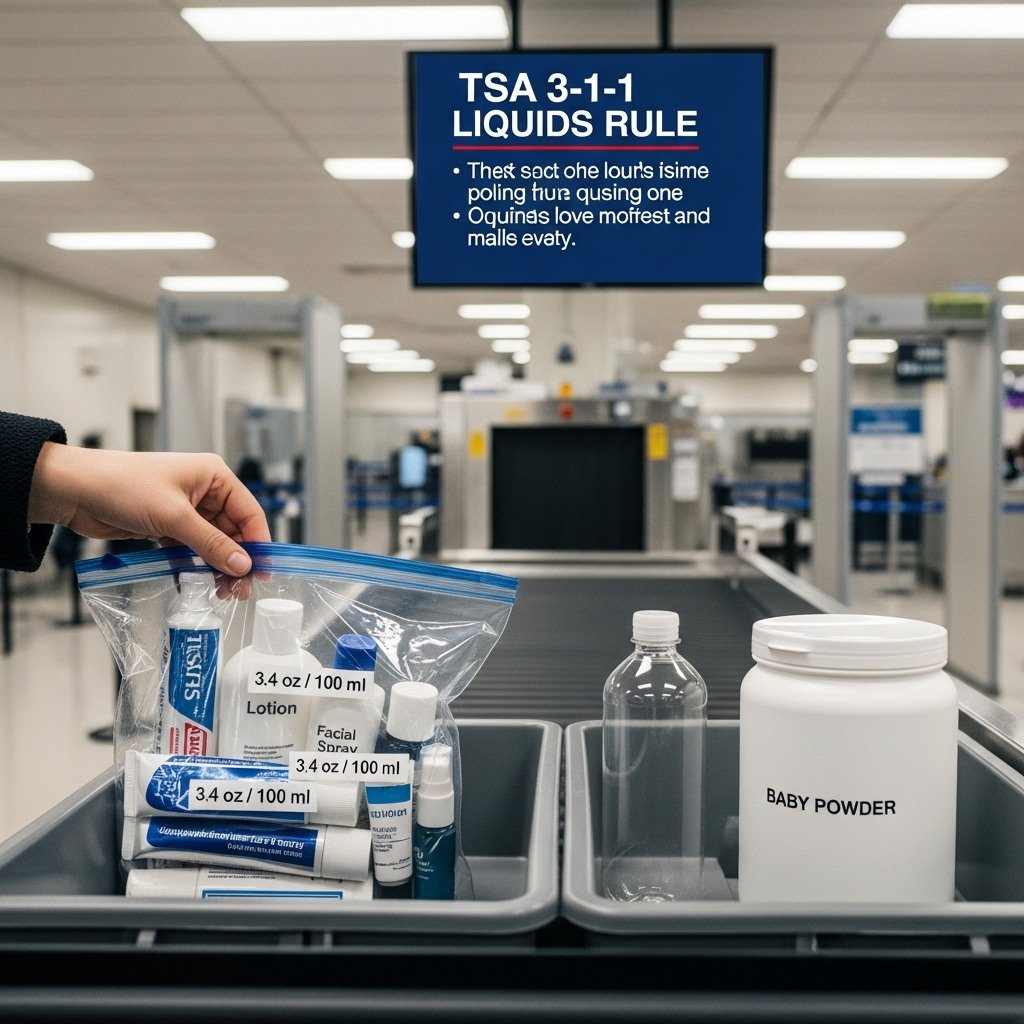
Understanding the TSA 3‑1‑1 rule is essential for anyone flying to, from, or within the United States with carry‑on luggage. This liquids rule determines what toiletries, cosmetics, and other fluid items you can bring through airport security—and in what quantities. When you know the details, you can pack efficiently, avoid having items confiscated, and move through screening much faster.
This guide explains what the 3‑1‑1 liquids rule is, how to pack step by step, expert tips to breeze through security, important exemptions, and smart non‑liquid alternatives frequent flyers swear by.
What Is the TSA 3‑1‑1 Liquids Rule?
The 3‑1‑1 rule is a simple formula established by the U.S. Transportation Security Administration to limit how much liquid, gel, and aerosol each passenger can carry through security. It’s aimed at reducing risks from liquid explosives while keeping screening relatively quick and consistent.
The numbers stand for:
- 3 – Each container of liquid, gel, aerosol, cream, or paste must be 3.4 ounces (100 milliliters) or less.
- 1 – All of these containers must fit into 1 quart‑size, clear, resealable plastic bag.
- 1 – Each passenger may bring 1 quart‑size liquids bag through security.
This rule applies to:
- All flights departing from or connecting within the United States.
- Both domestic and international flights when you’re passing through U.S. security checkpoints.
Many other countries have similar restrictions, but specific sizes and enforcement can vary slightly. Always check local regulations if you’re flying outside the U.S.
Covered items include:
- Liquids (water, drinks, toners, liquid soaps)
- Gels (hair gel, aloe gel)
- Aerosols (sprays, foams, mists)
- Creams (moisturizers, sunscreen, hair creams)
- Pastes (toothpaste, ointments, some cosmetics)
How to Comply: Step‑by‑Step Packing Guide
To avoid delays and last‑minute toss‑outs at security, follow this process when packing your carry‑on liquids.
1. Gather Travel‑Size Containers
- Make sure any liquids, gels, or aerosols you want in your carry‑on are in containers labeled 3.4 oz / 100 ml or less.
- It’s the container size that matters—not how much product is left inside. A half‑empty 6 oz bottle is still too big.
Common examples that must be in 3.4 oz or smaller containers:
- Shampoo, conditioner, and hair gel
- Liquid or gel facial cleansers
- Toothpaste and mouthwash
- Moisturizer, sunscreen, and body lotion
- Liquid foundation, mascara, liquid highlighters
- Perfume, cologne, body spray
- Hand sanitizer, liquid soap
- Spray deodorant, shaving cream
- Liquid food items like yogurt, soup, sauces
2. Use a Quart‑Size, Clear, Resealable Bag
- Choose a quart‑size bag (roughly 7 x 8 inches), clear on both sides, with a zipper or press‑to‑seal top.
- You can use a sturdy zip‑top food storage bag or a purpose‑made travel liquids pouch.
- All your 3.4 oz containers must fit comfortably inside—no bulging, stretching, or forcing it to close.
3. One Liquids Bag Per Person
- Every passenger—adults and children—gets only one quart‑size liquids bag.
- If you’re traveling as a family, each person with their own seat and carry‑on can bring their own bag, but you cannot “stack” multiple bags for one person.
4. Pack It Where You Can Reach It
- Place your liquids bag at the top or outer pocket of your carry‑on.
- At security, you’ll usually be asked to remove the bag and place it in a tray or bin for separate X‑ray screening.
5. Double‑Check for Hidden Liquids
Before you zip your carry‑on:
- Scan for “stealth” liquids you might forget: lip gloss, roll‑on perfume, gel deodorant, travel-sized mouthwash, or mini sauces.
- Remove any large bottles (full‑size shampoo, big sprays, large tubes of cream) and put them in your checked bag instead—or leave them at home.
Expert Packing Tips for Smooth TSA Security Checks
A few smart strategies will help you sail through security and keep your toiletries organized and leak‑free.
1. Pack Only What You Really Need
- Ask yourself: “Will I actually use this on the plane or before I access checked bags/hotel amenities?”
- Skip duplicates or non‑essentials to leave more room for must‑haves like medication, contacts solution, or special skincare.
2. Use Travel‑Size or Reusable Mini Bottles
- Buy travel‑size versions of common toiletries, or
- Invest in reusable, TSA‑compliant bottles and fill them with your usual products.
- Label each bottle (shampoo, conditioner, face wash) to avoid confusion on the road.
3. Keep the Bag Accessible
- Put your liquids bag in an easy‑access pouch of your personal item or carry‑on.
- Before you reach the front of the security line, have it ready in your hand so you aren’t digging for it under pressure.
4. Prevent Leaks
- Choose bottles with solid caps and seals; avoid flimsy snap tops.
- Leave a little air at the top of each container so pressure changes are less likely to cause leaks.
- Consider wrapping particularly leak‑prone items in a small secondary bag inside the quart bag.
5. Coordinate with Travel Companions
- Couples or families can share the load by splitting categories—one person carries shared skincare, another carries shared hair products—provided each person still only presents one quart bag.
- Use kids’ allowances for essentials like baby products or family medications.
6. Check for Rule Updates
- While the basic 3‑1‑1 rule is stable, details (like sanitizer allowances or special temporary policies) can change.
- Check official TSA information shortly before you fly so you’re not relying on outdated advice.
Exemptions and Special Considerations
Some items are allowed in quantities larger than 3.4 oz in your carry‑on, but you must declare them separately at security. They are not simply mixed into your standard 3‑1‑1 bag.
1. Medications and Medical Liquids
- Liquid medications (prescription and many over‑the‑counter), plus things like saline, some nutritional supplements, and certain medical solutions, can exceed 3.4 oz.
- You should:
- Pack them in a way that’s easy to remove.
- Inform the officer that you have medically necessary liquids.
- Be prepared for additional screening (such as swabbing or X‑raying).
Bringing prescriptions in their original labeled bottles and, if relevant, a doctor’s note can make the process smoother.
2. Infant and Child Nourishment
For babies and young children, TSA permits reasonable quantities of:
- Breast milk
- Infant formula
- Juice for infants/toddlers
- Baby food (purees, pouches, and jars)
Key points:
- These can be over 3.4 oz and do not need to fit in the quart bag.
- Declare them at security and remove them from your bag for separate inspection.
- Ice packs or freezer packs used to keep these items cool are allowed, even if partially melted, but may also be checked.
3. Duty‑Free Liquids
If you buy liquids like alcohol, perfume, or cosmetics at a duty‑free shop:
- They may be allowed in your carry‑on even if they exceed 3.4 oz, provided that:
- They are packed in a secure, tamper‑evident bag (STEB).
- You have the original receipt showing they were purchased within a certain timeframe (often 48 hours) and after security.
- If you have a connecting flight, especially in another country, these items can sometimes still be subject to additional screening or confiscation, so check the rules for all legs of your journey.
4. Declaring Exempt Items
For all exempt categories:
- Pack them separately from your standard 3‑1‑1 liquids bag.
- Tell the TSA officer before the screening begins.
- Expect that extra screening is possible; build a few extra minutes into your schedule.
Non‑Liquid Alternatives to Bypass the 3‑1‑1 Constraints
One of the best ways to simplify flying with toiletries is to replace liquids with solids or powders when possible. Solids and most powders:
- Do not count toward your 3‑1‑1 quart bag, and
- Do not have a specific container size limit (within reason).
Consider swapping to:
Solid Toiletries
- Shampoo bars and conditioner bars instead of bottled shampoo/conditioner
- Bar soap instead of body wash
- Solid deodorant sticks instead of spray or gel forms
- Solid lotion bars instead of liquid body lotion
These are compact, leak‑proof, and last longer than their liquid equivalents.
Powders
- Powdered toothpaste tabs or powders
- Powder sunscreen (for touch‑ups; still use a good base sunscreen)
- Powder makeup (foundation, blush, highlighter) instead of liquid or cream formulas
- Powder dry shampoo instead of aerosol cans
Stick Cosmetics and Balms
- Solid foundation sticks, blush sticks, and highlighter sticks
- Multi‑use color sticks for lips and cheeks
- Lip balms and salves (usually treated as solids and don’t go in the liquids bag in small amounts)
These alternatives free up space in your quart‑size bag for items that have no solid equivalent—like contact solution, specific serums, or prescription liquids.
Quick Reference: TSA 3‑1‑1 Rule at a Glance
| Rule Element | Requirement |
|---|---|
| Max container size | 3.4 oz / 100 ml per liquid/gel/aerosol item |
| Bag type | 1 quart‑size, clear, resealable plastic bag |
| Bags allowed per person | 1 liquids bag per passenger |
| Items covered | Liquids, gels, aerosols, creams, pastes |
| Exemptions | Medications, baby food/milk, some duty‑free items |
By understanding exactly what the TSA 3‑1‑1 liquids rule allows and planning your packing around it, you’ll reduce stress, minimize surprises at security, and keep your favorite essentials with you in the cabin. If you tell me what you typically pack (shampoo, skincare, makeup, etc.), I can help you turn it into a fully TSA‑compliant carry‑on liquids list with suggested solid swaps.
FAQs
What counts as a liquid under TSA rules?
Liquids include gels, creams, pastes, and aerosols—like toothpaste, lotion, and mascara. Even peanut butter qualifies. Solids like lipstick don’t. Stick to 3.4 oz containers in your quart bag for compliance.
Can I bring a full water bottle through TSA?
Empty bottles yes—fill post-security at fountains. Full ones no, unless medically necessary and declared. Hydro flasks work great: empty them before lines, refill after.
Are there exceptions for medications or baby items?
Yes, prescription meds, insulin, and baby formula/food are exempt from 3-1-1. Declare them, show if liquid, and keep in original packaging. Notify officers for smooth screening.
What about duty-free liquids in carry-on?
Duty-free buys in STHT (secure, tamper-evident) bags are allowed post-security. Keep receipts visible. Don’t open until destination—international flights may require this.
Do TSA liquid rules apply to international flights?
From U.S. airports, yes. Abroad, most follow 100 ml limits (e.g., EU, Canada). Always check airline and origin country rules to avoid surprises.
How do I pack liquids for checked bags?
No size limits, but use sealed plastic bags inside to contain leaks. For alcohol, cap at 5 liters under 70% ABV. Label clearly for baggage handlers.
Conclusion
TSA liquid limits boil down to the 3-1-1 rule: 3.4 oz containers in one quart bag per person. Master exemptions, pack smart with our guide and table, and dodge pitfalls like overpacking.
You’re now equipped for any flight—domestic or global. Pack confidently, check your airline’s site for updates, and enjoy worry-free travel. Safe journeys!